
Car Reviews
2026 Nissan Sentra – URBAN ROOTS, RURAL ROUTES

2026 Nissan Sentra
URBAN ROOTS, RURAL ROUTES
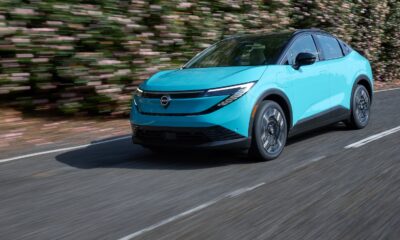
PROVO, Ark. — Beneath a crystal-blue winter sky, the 2026 Nissan Sentra leans into the winding curves and surfs the wavy roadway of Old U.S. Highway 71, a reminder that even in the ’20s and ’30s, Arkansas highways were crummy but honest, built to wrap around mountains rather than cut through them.
The road jumps across U.S. 70 and meanders into the desolate, rolling foothills west of Dierks Lake. Out here, the geography turns sly. This Provo isn’t the one near Ogden, Arkansas, and neither of them is the one in Utah. Arkansas somehow ended up with two Provos and two Ogdens if you know where to look—a quiet little joke the state plays on anyone who doesn’t.
On this sparkling morning, the Sentra makes its own point: No longer just an urban runabout, it feels comfortable everywhere.
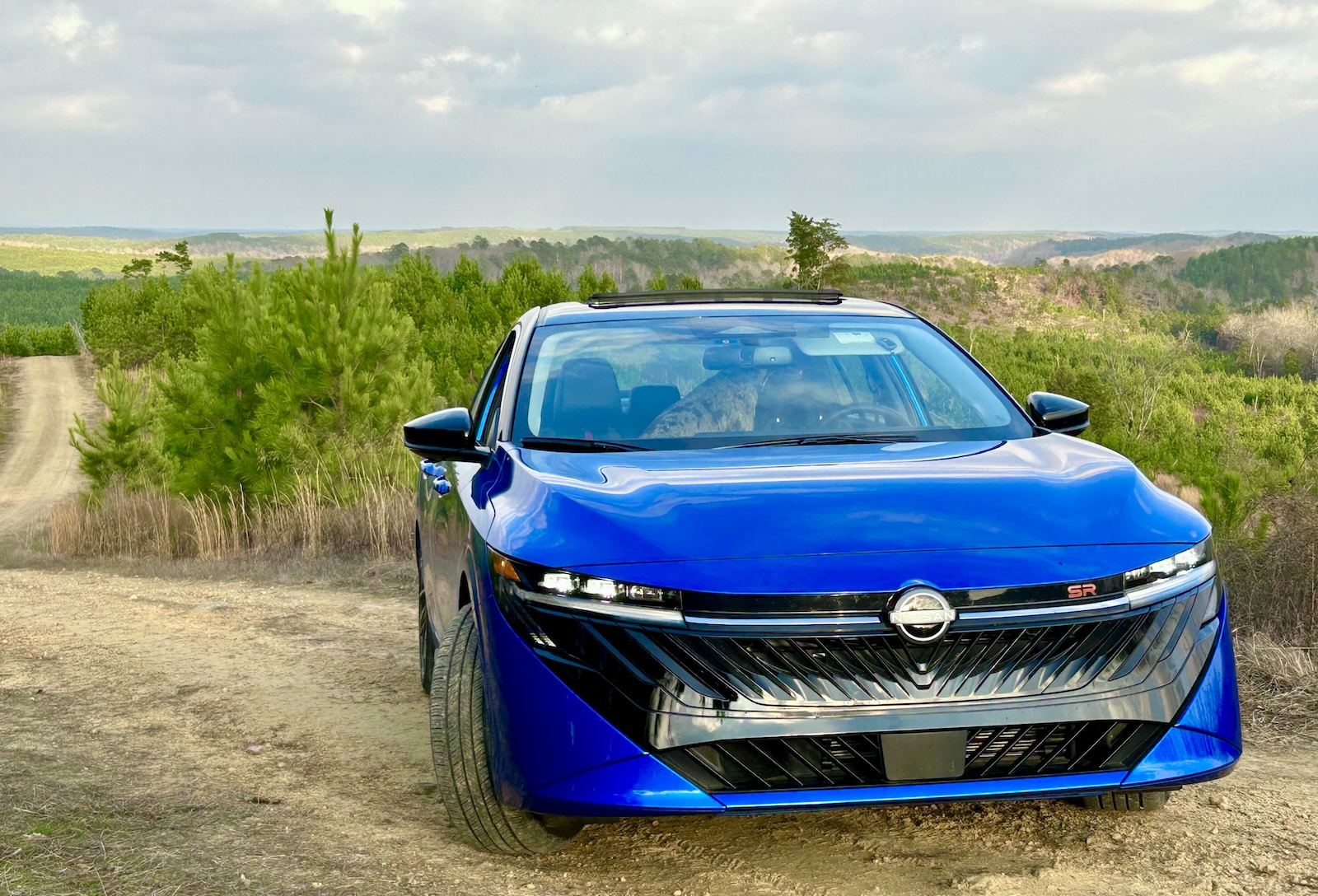
A dozen miles from pavement, a distance we covered with a light touch out of respect for the Sentra’s citified suspension, we rounded a bend, and the world opened wide—luminous green ridges rising and falling toward a dark blue lake, all of it framed vast, white-and-blue, western sky.
Against that blue-on-green-on-blue sweep, the Sentra’s Bluestone Pearl finish caught the light like a deliberate brushstroke. It is a cool, crisp blue standing steady in the wild country, though it comes with a modern asterisk: The hue is an $800 option that signals the rising cost of aesthetic flair in an increasingly expensive market.
Mechanical simplicity and e-Power
Under the hood, the Sentra remains a traditionalist. It keeps its naturally aspirated 2.0-liter four-cylinder engine, producing 149 horsepower and 146 lb-ft of torque. While the power is adequate for the rolling hills of Howard County, the ghost of Nissan’s e-Power technology haunts the spec sheet.
While the 2026 Rogue finally introduces this series-hybrid tech to the U.S. market—offering an EV-like drive where the gas engine acts only as a generator—the Sentra continues to wait in the wings. For now, American sedan buyers are tethered to the Xtronic CVT. This transmission has grown more refined over the years, but still lacks the instantaneous torque found in the e-Power units currently taking Europe and Japan by storm.
In a world of 50 mpg or better compact sedans, the Sentra struggles to reach 60% of that fuel economy.
The decision to hold back e-Power for the Sentra is likely a calculation of cost. In a segment where every dollar counts, the 2026 model must compete against a formidable roster of electrified and high-performance rivals:
- Honda Civic ($24,595–$34,690): The segment benchmark. The new hybrid trims offer up to 50 mpg city, though they demand a significant price premium over the base LX.
- Toyota Corolla ($24,120–$29,000): A reliability titan. Its hybrid variant is still the go-to for fuel-sipping efficiency at 53 mpg city, though the interior feels dated compared to the Nissan.
- Hyundai Elantra ($23,870–$30,000): A tech-heavy alternative with a futuristic cabin and a hybrid option delivering 54 mpg combined.
- Mazda3 ($25,785–$37,975): The driver’s choice. It lacks a hybrid and returns a modest 26-30 mpg combined but offers near-luxury interior materials and an available turbo.


Sticker shock: The tariff creep
Despite the howls of sticker shock echoing through dealer showrooms, consumers should prepare for new-car prices to climb even higher as we move into 2026. This isn’t just standard inflation; it is the direct result of a tectonic shift in trade.
In 2025, with the administration at peak popularity, manufacturers tried to shield buyers by absorbing some costs and covertly hitting others. The most visible “stealth tax” appeared in destination fees, which have jumped 50% and more on many models. On a heavy-duty truck, you might now pay $2,800 to have the vehicle delivered; even on this Sentra, the fee has crept up to $1,245.
North American raw material maneuvers further complicate the outlook for 2026. This year, Canada decided to skip American tariffs by shipping its high-grade steel and aluminum offshore to international markets rather than the U.S. This strategic pivot has created a domestic supply squeeze, directly boosting raw material prices for everything from automotive frames to the aluminum cans in a six-pack of beer. For the car buyer, this means the “deal” you see today is likely the best you’ll see for years.
Local research within 100 miles of Texarkana shows dealers are still offering modest incentives – such as $500 cash back or 5.9% APR for 60 months – but the days of massive “money-in-the-trunk” are over. Current inventory shows that while you might find a $1,000 dealer discount on an SV trim, the rising base costs and those $800 paint options quickly eat into any perceived savings.
Pricing summary
The 2026 Nissan Sentra remains one of the few vehicles where a sub-$25,000 entry point is still mathematically possible, but the sweet spot has moved north. The base S trim starts at $22,600, but once you add the mandatory $1,245 destination fee, the real floor is $23,845. Moving up to the SV ($23,370) or the sportier SR ($25,000) brings creature comforts or conveniences, like the 12.3-inch display and dual-zone climate control. Still, a fully loaded SR with the Premium Package and two-tone Bluestone Pearl paint will now reliably crest the $31,000 mark.
Zero Gravity sanctuary
If the pricing is a bitter pill, the interior is the sugar that helps it go down. Nissan’s Zero Gravity seats stay the standout feature of the cabin. On the long, winding stretches of Highway 71, they provide a level of spinal support that makes the four-hour trek from Texarkana to the Ozarks feel like a twenty-minute jaunt. The materials in the SR trim—complete with orange contrast stitching and soft-touch dashboard panels—rival the Mazda3 for best-in-class honors.
The tech suite is equally impressive. The dual 12.3-inch monolith display is crisp and lag-free, a significant upgrade over the aging systems found in the Corolla. Nissan Safety Shield 360 is standard across the board, providing a safety net of automatic emergency braking and blind-spot monitoring that many competitors still lock behind higher trim levels.
On the road, ProPILOT Assist manages the highway stretches with a steady hand, though it is still a hands-on system that demands your attention as you navigate the sharp curves of the Arkansas foothills.


Bottom line
The 2026 Nissan Sentra is a car defined by balance. It isn’t as fast as a turbocharged Civic or as efficient as a Corolla Hybrid, but it offers a level of poise and grown-up sophistication that is rare at this price point. It handles the crummy-but-honest roads of rural Arkansas with a grace that defies its economy-car roots.
For the buyer who can look past the sticker shock and the creeping destination fees, the Sentra offers a sanctuary. It is a reminder that you don’t need a $50,000 SUV to feel like you’ve arrived.
You need a good seat, a clear view of the ridges over Dierks Lake, and a car that doesn’t mind taking the long way home.