

Car Reviews
SILENT NIGHT, WHOLLY NIGHT – Toyota’s Sienna: The Art of the Quiet Trailhead

SILENT NIGHT, WHOLLY NIGHT
Toyota’s Sienna: The Art of the Quiet Trailhead
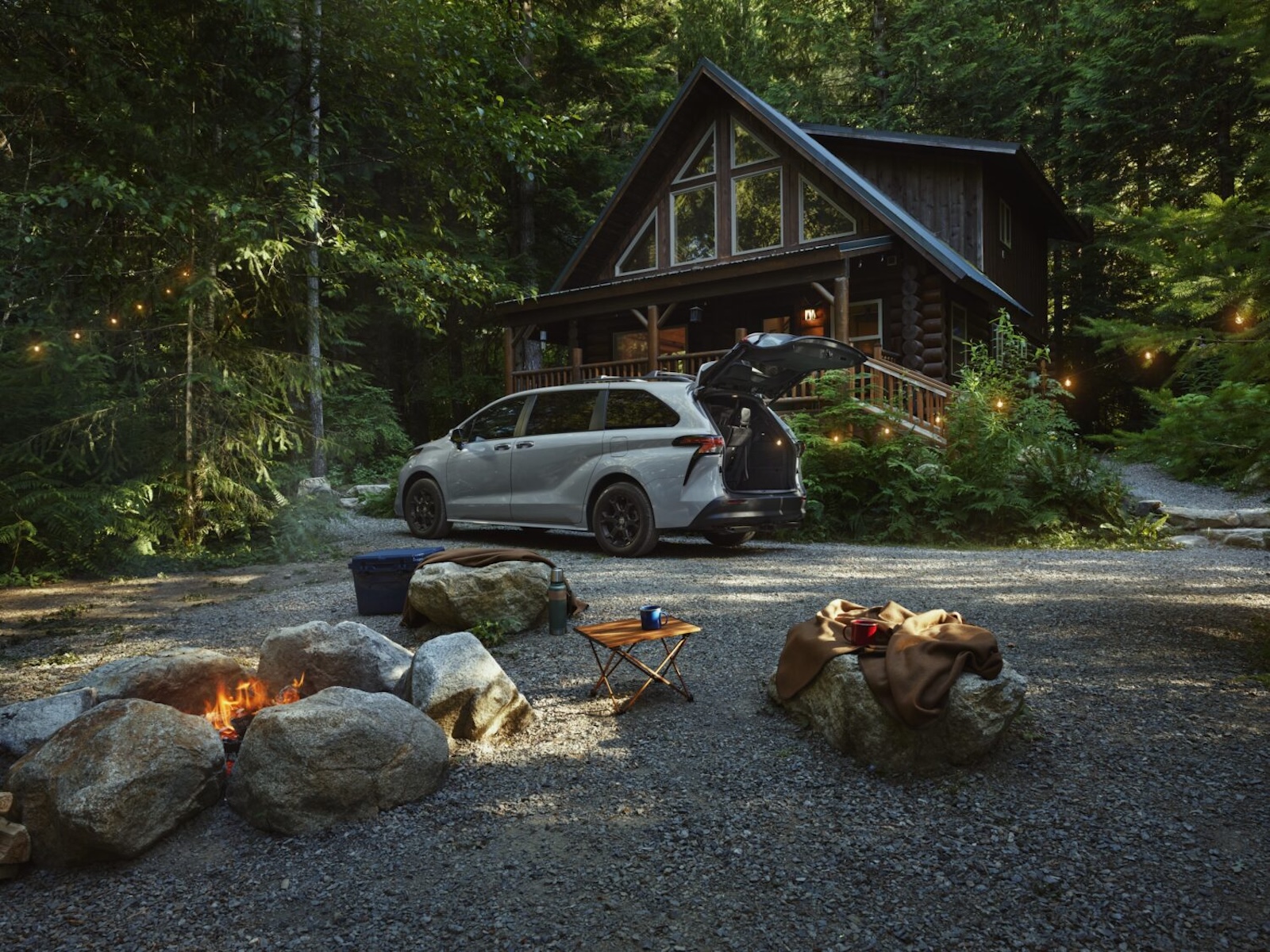
CUTTHROAT SHOALS, Ark. – Sunrise over Bull Shoals Lake had been spectacular, and at an hour when most people were pouring a first cup of coffee, we rolled up to the trail that led along the limestone outcrops of the White River. Moo and I have learned that the best way to get an early start on exploration is to sleep near the trailhead.
A specific kind of quiet settles over a forest parking lot after dusk. The last day hikers depart, the gravel begins to cool, and the owls take over the shift. The world simplifies. You are already where you need to be. The morning will not require a commute, a checklist, or a frantic scramble. You open the door and step into the day.
On New Year’s Day, after sleeping snugly in 20-degree temperatures at Lakeside Camp, we rose before dawn. We headed across northern Arkansas highways for 2 hours – a route where one does not so much travel as meander.
Even with the breathtaking drive through the heart of the Ozarks, we were early enough for a morning hike before heading back to Mountain Home for an afternoon stroll. Still, an earlier start would have been nicer. It got me thinking that the people exploring the wilderness in truck and van campers are on to something.
Rediscovery of the big box
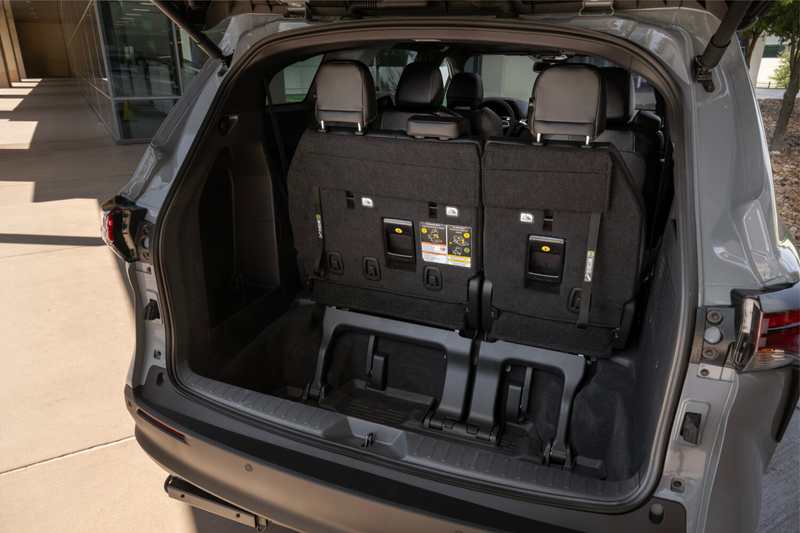
It is no surprise that minivan camping videos have saturated social media. Travelers are rediscovering what parents in the 1990s already knew: a minivan is the most practical shape ever put on wheels. It offers a low floor, a cavernous interior, sliding doors, and a ride that does not punish the spine on the long way home. While the internet is full of plywood platforms, folding beds, and fairy lights, the real genius is the platform itself.
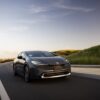
If I were to join that movement, I know exactly where I would start: a Toyota Sienna. Every Sienna produced since the 2021 model year has been a hybrid. Toyota made that decision without asking my opinion, but it has my full approval. The 2026 model, priced between $41,000 and $58,000, continues the formula. It delivers 245 total system horsepower and up to 36 mpg combined. With a full tank of regular unleaded, these vans have a range of 660 miles.
Do not go looking for discounts or incentives on Siennas. From coast to coast, Toyota maintains a mere 19-day inventory. The Sienna is currently the fastest-selling family hauler on the market, prized as much by adventurous retirees as by growing families.
Letting the night stay quiet
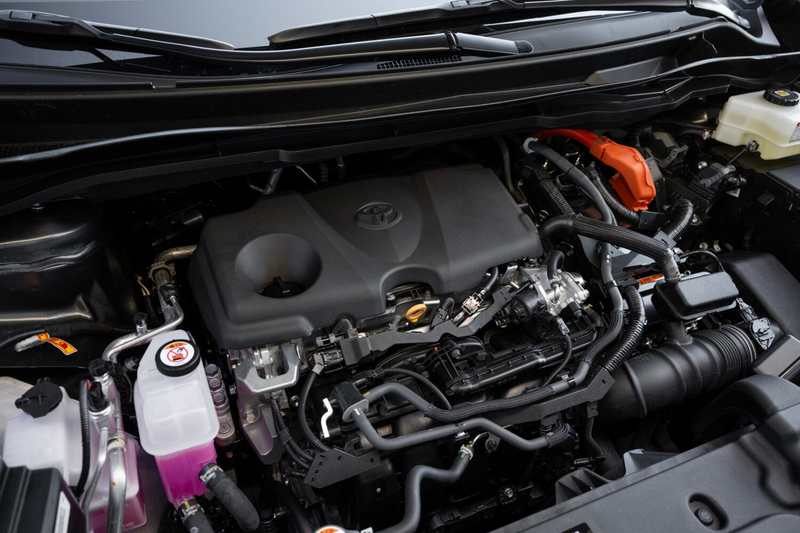
The hybrid system is more than a marketing line; it is a camping tool. When you start a Sienna hybrid at night, you do not wake an engine so much as bring a battery and an electric motor online. The gasoline engine remains in the background, stepping in only when the system calls for it. This design allows the climate control to run through the night with almost no fuel use and none of the noise or fumes associated with idling a traditional engine.
On my last overnight in a Sienna hybrid, I let the system hold the cabin at a steady temperature until dawn. By morning, the projected range had dropped by less than 15 miles – half a gallon of fuel. This is precisely what Toyota engineers intended: short, efficient engine cycles that avoid extended idling and mechanical strain. It is a whisper of consumption that makes off-grid nights comfortable. It solves the oldest problem of car camping in the South: staying warm in February and cool in August without disturbing the peace of the woods.
Enjoyment without subtraction
There is something quietly satisfying about enjoying a place without hastening its decline. My Bible does not treat stewardship of the environment as a lifestyle choice; it treats it as a calling. We are invited to enjoy creation as caretakers rather than conquerors.
Joy deepens when enjoyment and restraint travel together. When the night passes without an engine droning, without fumes pooling in the trees, and without the sense that your comfort has come at the land’s expense, the experience changes. The forest stops feeling like a resource and starts feeling like a companion. You wake knowing you have taken warmth and rest without subtraction. That restraint adds a kind of moral clarity to the morning. The stars seem sharper. The air feels earned.
Machines that age with grace
A hybrid adds years of life to the gasoline engine by offloading the tedious work. In a conventional vehicle, the engine handles every task: starting, idling, creeping through campgrounds, and powering accessories. In a Sienna, the electric motor handles the low-speed drudgery. The engine only wakes up when real power matters, then shuts down again. It never idles and never runs cold for long.
My 2006 Highlander Hybrid still behaves like it is barely broken in for this very reason. After 2 decades, it still returns its original 27 mpg, burns no oil, and the battery charges to 95% of its original capacity. If you asked what I would take for that Highlander, the answer is simple: You would have to pry the keys from my cold, dead fingers. My affection for that machine stands in line only behind my beautiful bride, my beloved brood, my gifted grandkids, and Moo. Toyota hybrids hold their value because they are engineered for the long view. A used Sienna feels less like a purchase and more like an adoption.
Carried rather than driven
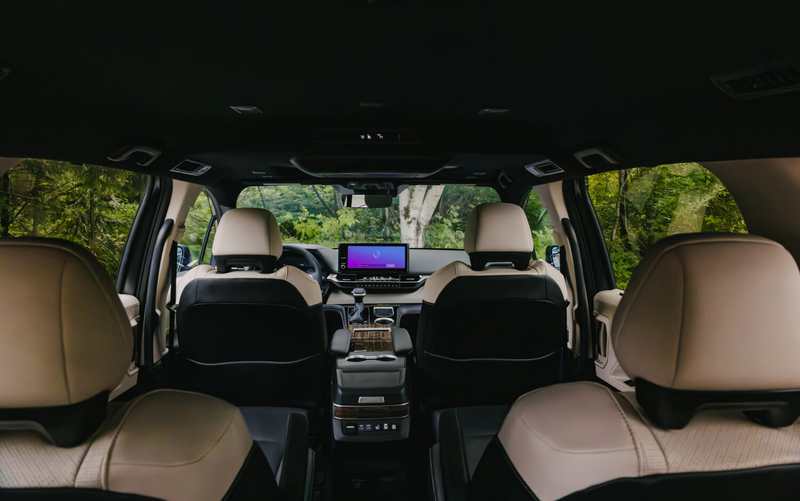
In Asia, the Sienna is often transformed into a rolling executive salon. After a recent trip to Key West in a friend’s new Sienna, I understood the impulse. I spent the drive ensconced in a middle-row captain’s chair. The seat featured long-travel cushioning, proper lumbar geometry, and enough recline to make the miles feel optional.
The hybrid drivetrain hummed beneath us, its electric motor smoothing out every surge and lull. The long wheelbase and low center of gravity kept the van gliding over causeways as if it followed a rail. I never once felt the urge to drive or sit up front with the grown-ups. The ride felt stable and serene. The tall windows framed the world in wide, cinematic panels of mangroves and bridges. The Sienna’s genius reaches beyond utility; it rests in the quiet, engineered grace of being carried.
Reaching the edge of nowhere
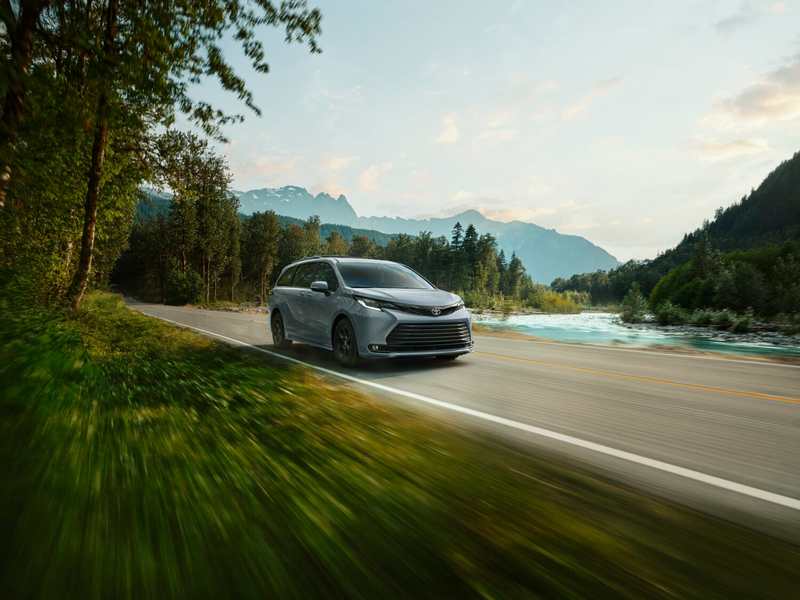
Getting to the trailhead is half the battle. The Sienna’s electronic on-demand all-wheel drive uses a dedicated rear electric motor instead of a heavy transfer case. It can send up to 80% of torque to the rear wheels during takeoff and vary distribution from 100:0 to 20:80 depending on traction needs. Pair that with a set of trail-ready tires, and you have a vehicle that makes short work of Forest Service roads. It manages this without the noise, weight, or fuel burn of a traditional truck.
Economics of trust
The used market reflects a deep confidence in this technology. Three-year-old Sienna hybrids typically sell in the low to mid $30,000s. Even 10-year-old models command around $12,000. In a market where most vehicles shed value like autumn leaves, a hybrid minivan that keeps its worth after a decade is a tool you can trust on pavement, gravel, or a forest road at the edge of nowhere.
That is the real appeal. In a world that keeps trying to sell us bigger adventures, bigger rigs, and bigger price tags, something is refreshing about a simple solution that works. You park. You rest. You wake up where you want to be. No spectacle is required.
Sometimes the best way to greet the sunrise involves sleeping as close to it as you can.