
Car Reviews
2026 Subaru Outback Wilderness – GOING OUT – GETTING BACK

2026 Subaru Outback Wilderness
GOING OUT – GETTING BACK
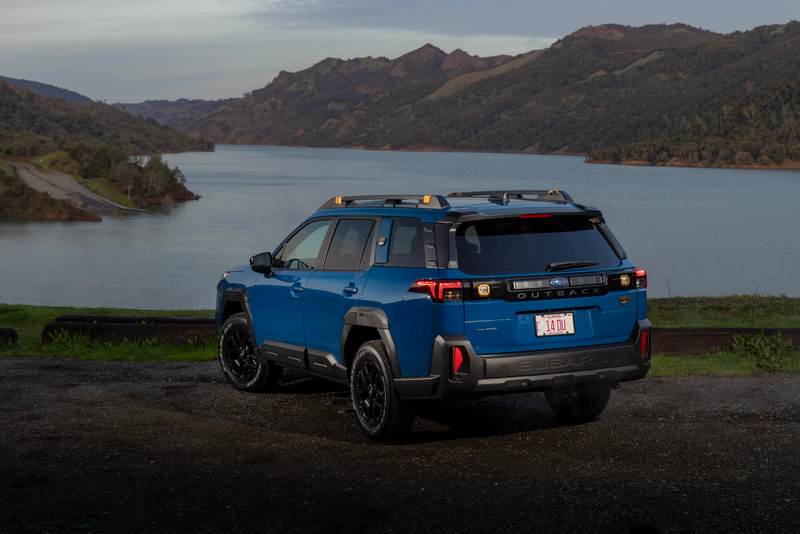
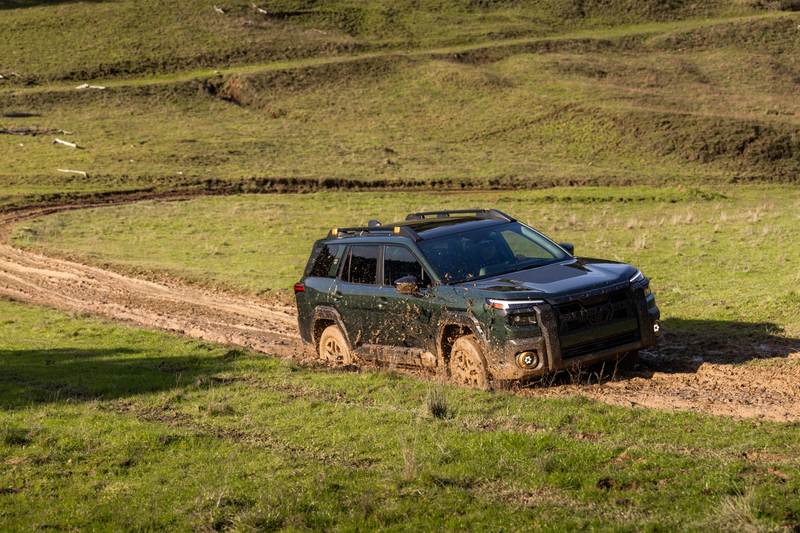
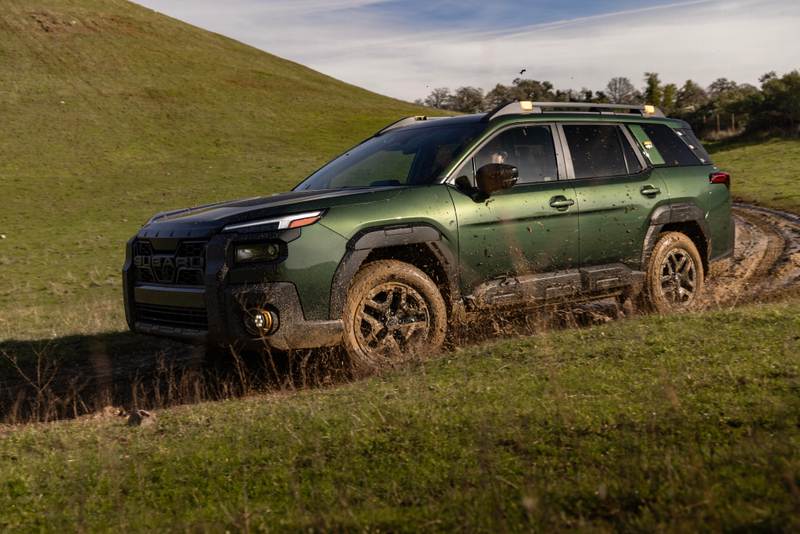
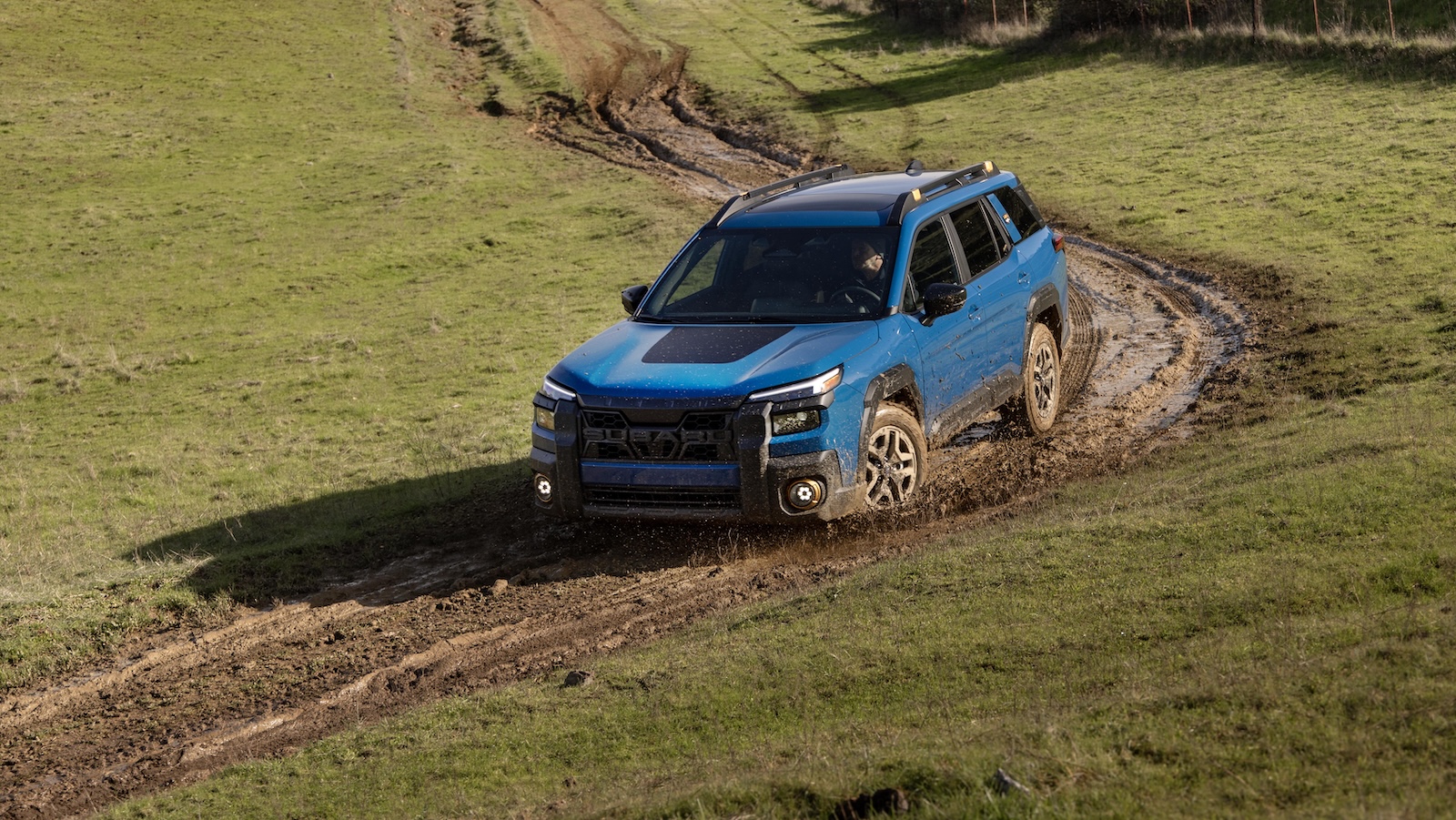
Allow me to get this off my chest. Right now. For the automotive design teams hellbent on channeling Range Rover into their crossover portfolio, they need to bring to the drawing table more than the straight edge and pane glass; they need (NEED!) to bring the footprint. Any Range Rover – including the compact Evoque – enjoys a stance that’s aggressive, one fully capable of keeping the RR’s bodywork upright, even in terrain virtually guaranteed to topple it. The Rover folks don’t (EVER!) underpin the platforms with tiny rubber hiding within undersized wheelwells. And if you’re drawing on Range Rover for inspiration – as did Subaru’s team must have when designing the newest Outback – you desperately need to go for the visual win and not, notably, their Impreza parts bin.
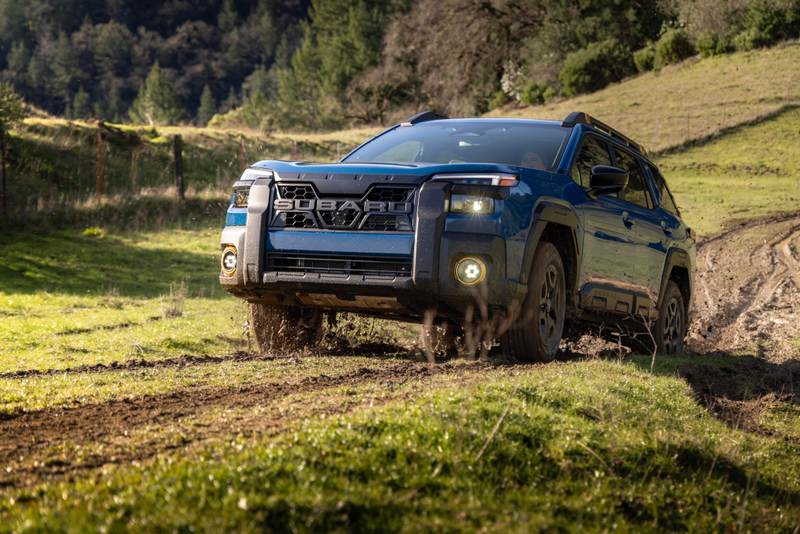
And that’s not all I have regarding the Outback’s overall design. I could take issue with the amount of plastic surrounding the undersized tire/wheel package, and the extended front overhang that has to compromise the Outback’s approach angle. Nor do I like the fascia fronting that overhang, which looks to have been drawn by a 3rd-grade art student. For the most part, that’s it…and thank you.
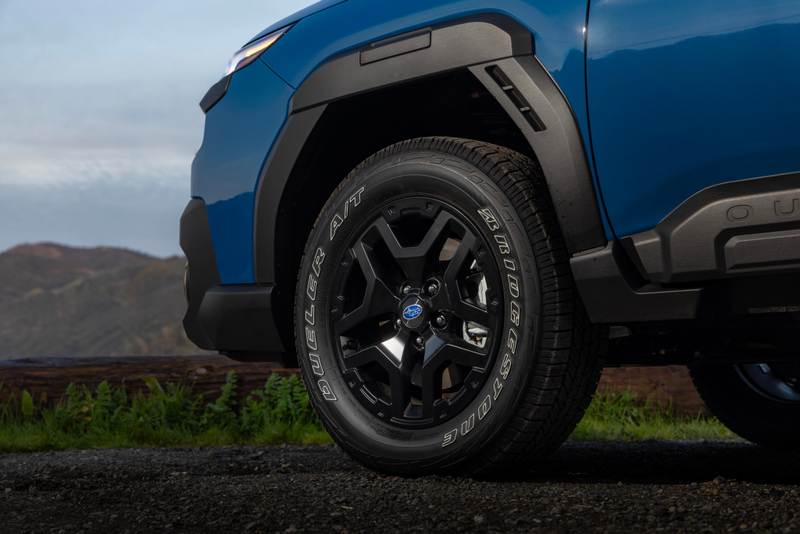
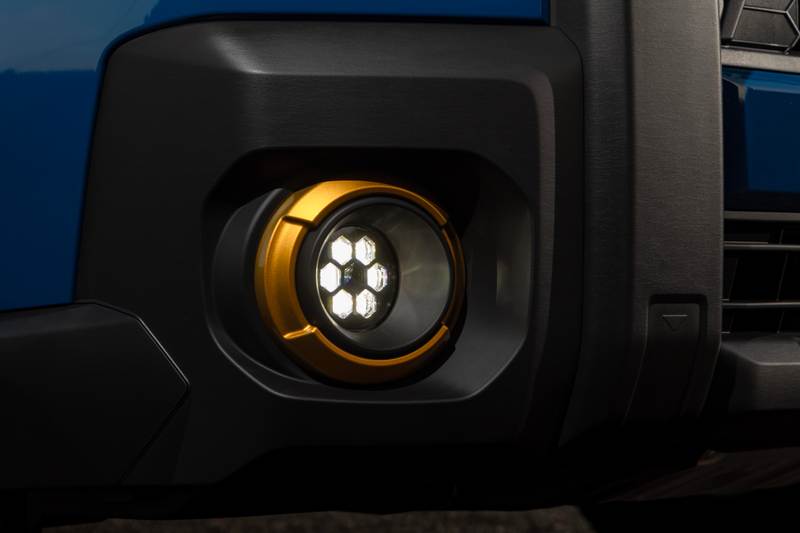
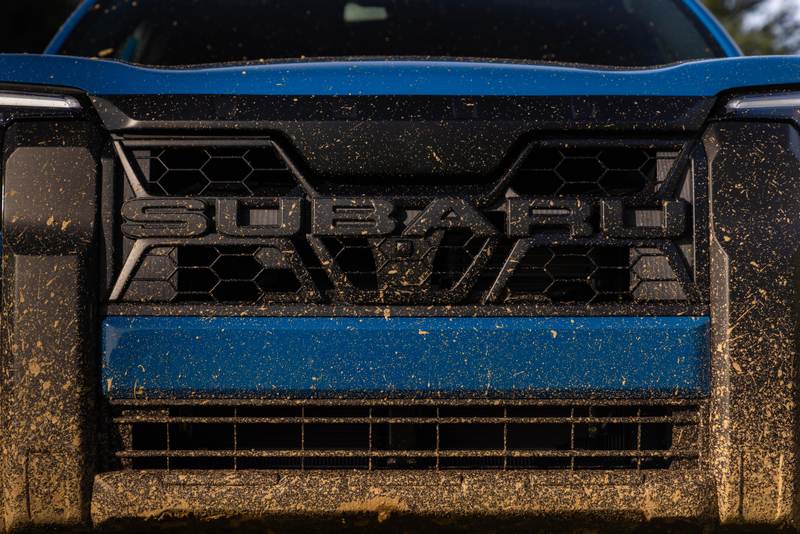
At its intro the Outback was little more than Subaru’s Legacy wagon with a modest lift and offroad-esque cladding. In this most recent edition the Outback has morphed into what we generally regard as a true crossover/SUV, offering an upright, two-box configuration more easily cross-shopped with Honda’s Passport and Toyota’s Highlander. The Wilderness trim takes those functional features that Crocodile Dundee ‘dun’ loved about the Outback and maximizes its capability on gravel and other loose stuff.
If you get beyond the exterior and go inside, there’s much here to like. Despite the more aggressive, SUV-esque proportion, this is an easy vehicle to get into and out of, even with a shortish inseam. Once inside you’re greeted by a digital instrument display immediately in front of you, along with an almost-proportional 12.3 inches of infotainment in the dashboard’s center, with HVAC controls mounted below it. The driving position is spot-on, both driver and front seat passenger are allowed their personal space, and rear seat occupants should probably know each other, but – again – will enjoy a surprising amount of room to stretch.
And notable relative to my week spent in Subaru’s Trailseeker EV: The Outback has a conventional glovebox, so miscellaneous items aren’t relegated to, well…out back!
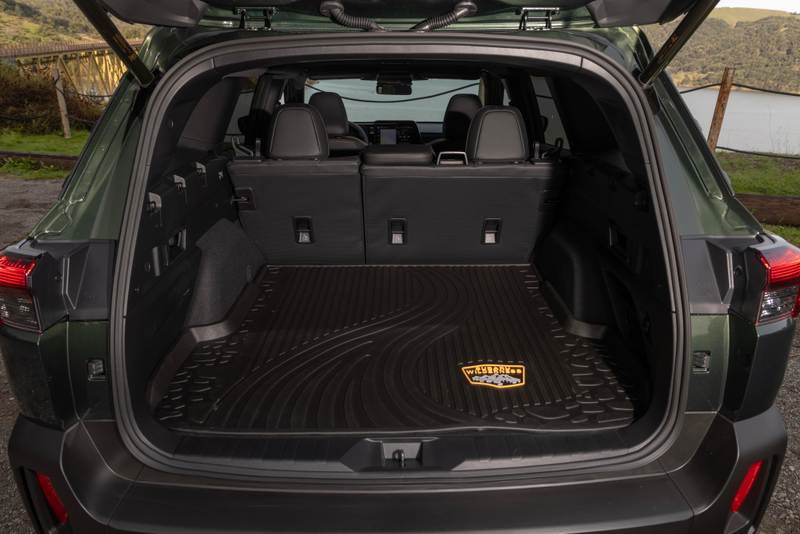
With the rear seat raised the Outback gives you roughly 35 cubic feet of load space, while with that rear seat down – which I did frequently – you have 81 cubic feet. But beyond the numbers is an almost flat load floor, and beneath it a full-size spare. That’s completely appropriate for the Outback’s off-road mission, but something few OEMs – at this point – do.
Underpinning the Outback is a lifted suspension with electronically controlled dampers. And the dampers are – to channel a memorable episode of Seinfeld – amazing! The ride on asphalt might be German, as everything is so well controlled, so well ‘damped’. And while there was no time in my week with the Outback for genuine off-roading, reviews suggest that the control and comfort remain. This is communication between man and machine as it should be, but in the context of lifted, dual-purpose platforms, rarely is.
Under the hood is one of two available powertrains for the Outback, and the only one I’d personally recommend. Offering 2.4 liters of turbocharged ‘boxer’ four connected to a well-modulated CVT, you’ll enjoy 260 hp and 277 lb-ft of torque, with that torque peaking at just 2,000 rpm. Although 0-60 comes up in a relatively quick 6.0 seconds, it’s the ease at which it gets to speed that you’re gonna’ like. This is effortless, whether accelerating or maintaining a quick pace on the freeway. And if inclined to tow your fishing rig or snowmobiles, the Outback offers up to 3,500 pounds of capability.

If there’s a downside to its pace, it’s the lack of a hybrid drivetrain. The EPA estimates you’ll achieve 21 City/27 Hwy/23 Combined. In a combo of freeway driving and errand running, I saw 25 on the dashboard, while Car and Driver achieved 18 in its stop-and-go testing. Obviously, none of that is 35 Combined, and if paying north of $4/gallon, it’s something to keep in mind.
At between $45,000 and $50K, the Outback Wilderness sits right at the median price of a new car. Given its versatility, this Subie offers at that price point a relative deal. If you can walk past the sheetmetal you’ll love it. But if, like me, you’re put off by its design excesses (or absences), get inside quickly…or keep walking.