




Car Reviews
2026 Nissan Murano – QUIETLY MOVING IN THE CROWD

2026 Nissan Murano
QUIETLY MOVING IN THE CROWD
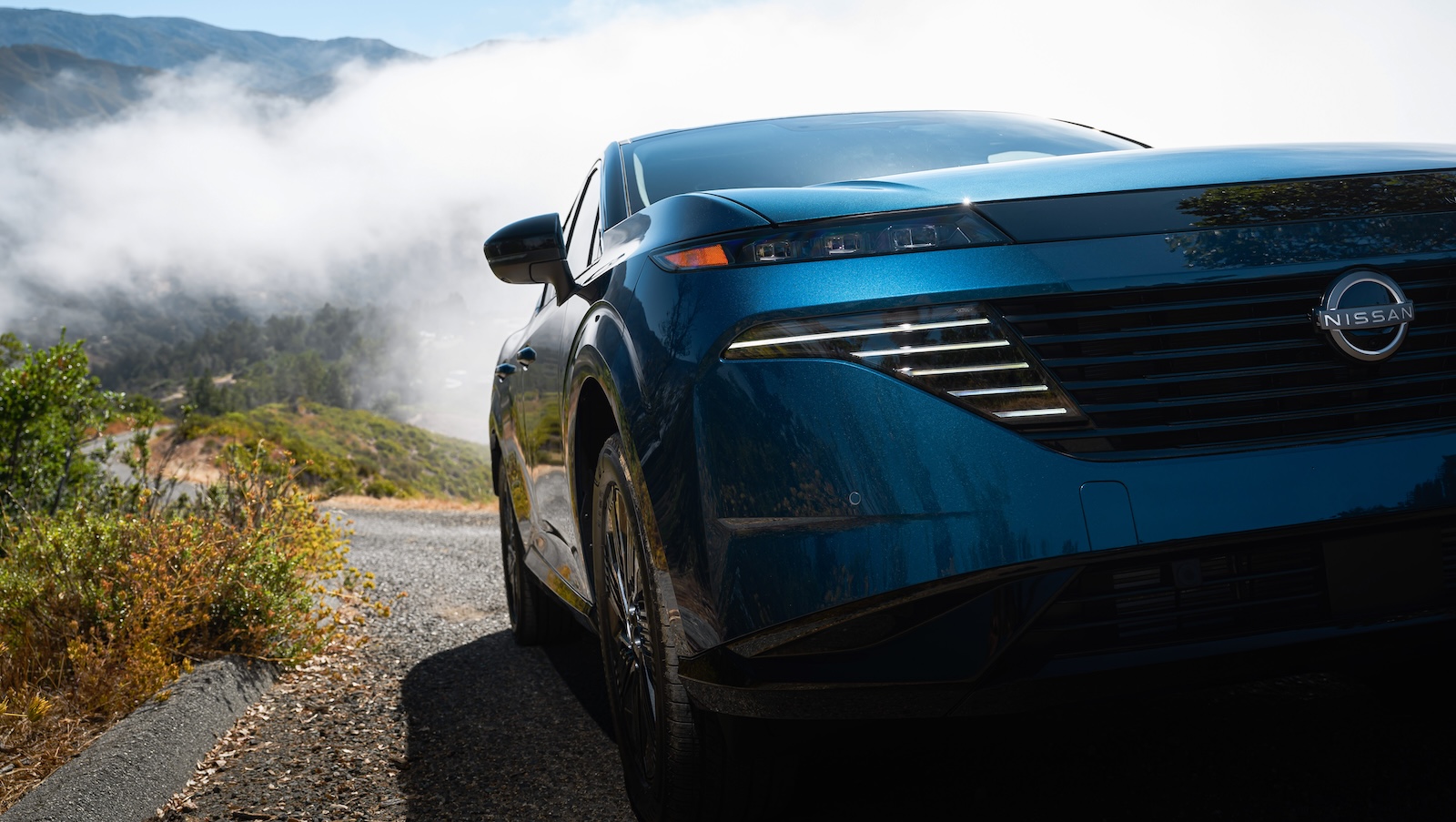
JACKSON CREEK PARK, Texas – After a week of waiting for the ice and snow to loosen their grip, I’d had enough; cabin fever had set in. I needed to move, and the 2026 Nissan Murano was more than willing. Comfortably safe and sure-footed, it felt like the right partner for a little winter wandering.
Nissan’s intelligent all-wheel drive, with torque shuttled instantly to whichever wheel needs it, inspired the kind of trust I haven’t felt since the Army handed me a Jeep and said, “Try not to break it.” Google Maps suggested the drought had pulled Lake Wright Patman’s shoreline so far back that an isolated park on the southwestern edge now offered a winter beach broad enough for beachcombing.
So off we went down dirt roads glazed with ice and sleet. Not once did the Murano slip, hesitate, or so much as clear its throat. Ten miles from the nearest mailbox, we stepped out onto a beach as wide as Galveston’s, in a lake breeze that would have humbled the unprepared.
I had multiple layers of clothing, a balaclava, and hand warmers. Moo had an orange sweater and the conviction that a frozen beach was the perfect place to uncork a week’s worth of stored-up zoom.


Bright spot in disordered industry
The first quarter was not kind to the auto industry. High interest rates, uneven inventory, and consumer fatigue pushed most brands into retreat. Against that backdrop, Nissan’s performance stands out. Retail sales rose 10 percent even as total volume fell — a split explained by one strategic choice: Nissan cut fleet sales hard.
This is more than an accounting trick. It’s good for Nissan because retail sales generate higher revenue per unit and strengthen dealer margins. And it’s good for buyers because three to five years from now, they won’t be trying to trade a vehicle competing with a flood of rental-fleet castoffs. Fewer fleet cars today means a healthier used-car market tomorrow — and better residual values for the people who buy these vehicles new.
Retail buyers responded to a lineup anchored by trucks and SUVs — Frontier, Pathfinder, Rogue, Armada — all posting double-digit gains. Even Murano, a model in its final generation, climbed nine percent. In a quarter where the industry sagged, Nissan found traction.
This is the context in which the 2026 Murano, starting at $41,670, makes sense. It’s not the flashiest vehicle in the showroom, but it delivers the kind of quiet competence that retail buyers reward. And it reminds you Nissan still knows how to build a comfortable, winter-ready, two-row crossover.
Nissan also knows how to move metal. The manufacturer is offering $4,000 in incentive cash and attractive interest rates. If you want a sweeter deal, at least one East Texas dealer has on the lot a sprinkling of 2025 models, identical to those offered for 2026.
Cabin punches above badge
Every major review starts in the same place: the interior. Motor Trend calls it premium and upscale, the kind of cabin that blurs the line between Nissan and Infiniti. U.S. News leans on near-luxury and excellent seat comfort. Edmunds highlights remarkably comfortable front seats and a quiet cabin on the highway.
They’re all describing the same thing: a calm, quiet, adult space.
The Murano doesn’t feel like it’s trying to impress you. It feels like it’s trying to take care of you — a distinction more crossovers should learn.


Ride predictable, winter-ready
The chassis isn’t new, and reviewers don’t pretend otherwise. But they all land on the same verdict: refinement over flash.
• Motor Trend: Reasonably refined with an impressively quiet cabin at speed.
• U.S. News: Generally refined, well-suited to suburban and highway use.
• Edmunds: Stable, composed, and quiet.
Where the Murano surprised me was in the week of snow and ice. Nissan’s intelligent AWD is one of those systems that doesn’t call attention to itself. It just works – no drama, no hunting, no hesitation. The Murano felt planted and predictable in conditions that expose the pretenders.
This kind of competence doesn’t show up in spec sheets but matters every day.
Engineering in search of simplicity
The Murano’s only real mechanical controversy is the VC Turbo, Nissan’s variable compression engine. On paper, it’s a marvel — a multi-link mechanism that continuously alters piston stroke to optimize efficiency or power on demand. In practice, reviewers have been consistent: Clever but complicated, and modest in benefit at a time when electrification solves the same problem with fewer moving parts.
Motor Trend calls the power delivery strange and occasionally delayed. U.S. News labels the whole setup ho-hum and notes the absence of a hybrid option. Edmunds acknowledges the VC Turbo is quicker and more refined than the old V6/CVT pairing, but still not a standout. We averaged 23 mpg in our week, a figure not so bueno in the age of SUV hybrids.
The deeper issue is philosophical.
The VC Turbo is a highly complex solution to a problem the industry now solves with electric motors; electric delivers instant torque, smoothness, efficiency, and fewer mechanical compromises. Nissan invested heavily in the technology before the EV transition accelerated, and the Murano inherits that timing.
None of this makes the engine bad. It’s quiet, reasonably efficient, and unobtrusive in daily driving. But it does make the Murano feel like a bridge — a comfortable, refined, winter-competent crossover built on an architecture from the last chapter of internal combustion, and not – notably – the next one.
Tech adds value instead of noise
Murano carries an NHTSA 5-star safety designation, the highest possible. Nissan’s ProPilot Assist 2.1 is the quiet star of the upper trims. Motor Trend and Edmunds both call out the hands-free highway capability as a meaningful addition, not a gimmick. U.S. News notes the strength of the driver assist suite relative to the segment.
I think anything that can see it needs to change lanes to overtake, turns on the turn signal, checks the blind spot, makes the maneuver, and returns to its original lane is just cool.
The infotainment system is straightforward, though some controls are buried in menus, and the buttons are small. Nothing fatal — just a reminder that the Murano is built for comfort, not for touchscreen theater.
Bottom line
In a market that rewards flash, the Murano stays grounded. It’s a crossover for people who want:
• Comfort over cornering
• Quiet over theatrics
• Stability over swagger
• Winter confidence without the bulk of a three-row
It’s a car that behaves like it knows its job.
The 2026 Murano is not a spec sheet champion. Instead, it’s a feel-good champion — a crossover that earns its keep through comfort, refinement, and winter-ready poise.
In a weak quarter for the industry, Nissan’s retail gains show that buyers still respond to affordable vehicles that deliver calm, quiet competence. The Murano does exactly that.