







Car Reviews
2026 Genesis G70: Does the Sport Sedan Still Matter?

I spent a week with the 2026 Genesis G70 3.3T, and yeah, the question in the headline is real. In a world that’s gone all-in on crossovers and trucks, does a low-slung sport sedan like this still deserve your attention? I drove it hard around the DFW area—commutes, errands, a few back roads that let it stretch its legs—and came away with a clear picture of what it does well, where it feels old-school (in both good and annoying ways), and whether I’d actually consider spending my own money on one.
The Specific Car: Prestige Graphite 3.3T AWD
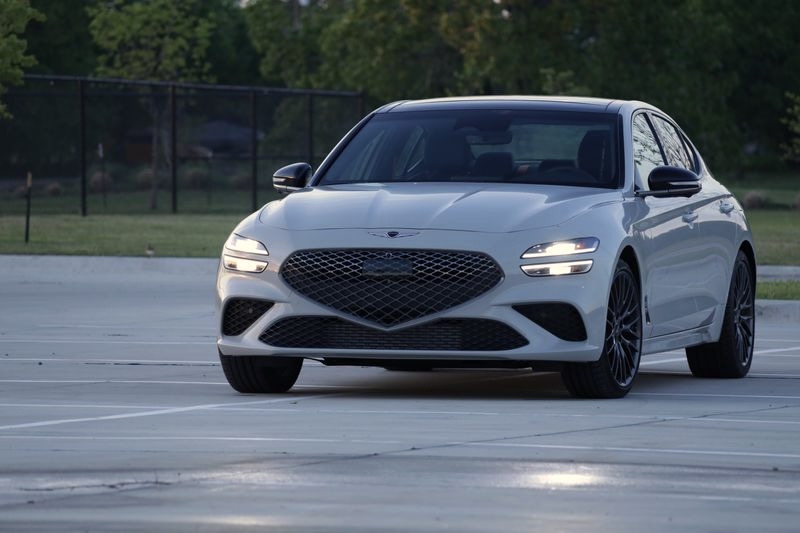
Genesis carved out a North American-exclusive Prestige Graphite package for 2026. It brings darker chrome accents, black mirror caps, unique 19-inch wheels, upgraded interior materials, and a sport-tuned electronically controlled suspension that drops the ride height about 10 millimeters. Our tester was the top-spec 3.3T version finished in a crisp white exterior over Ultramarine leather. It’s not pretending to be the budget option.
For context, the G70 lineup starts with the 2.5-liter turbo four-cylinder around $43,450–$44,800 depending on drive type and trim. This V6 Graphite AWD stickers at $58,900 before the $1,395 destination, and ours came in right at $60,295 as-tested with no extra options tacked on. That’s still a solid value play against German badge tax in this segment.
Exterior: Clean, Athletic, and Sharp
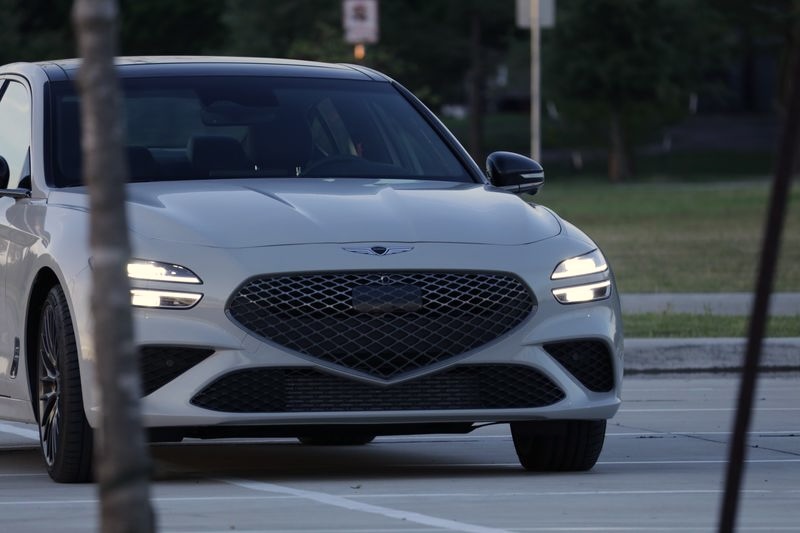
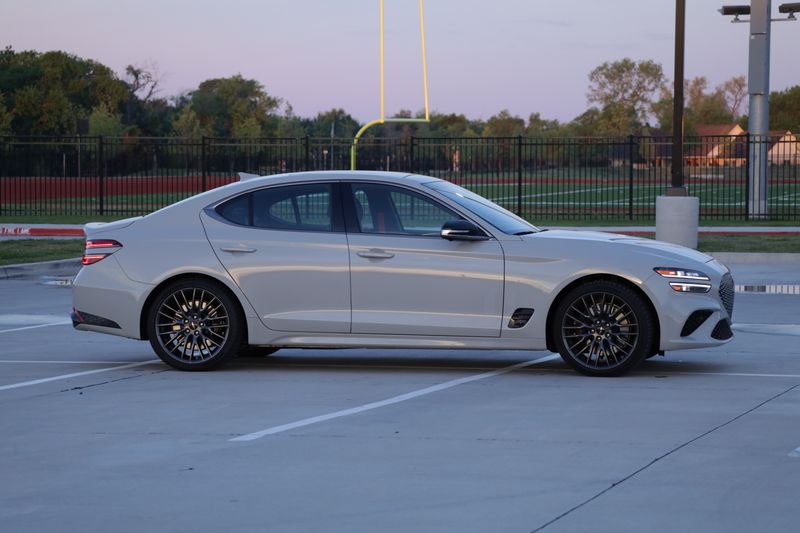
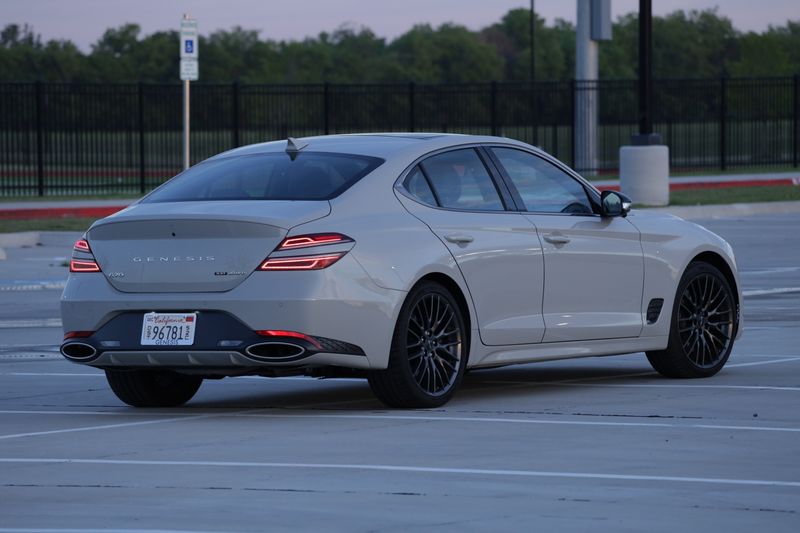
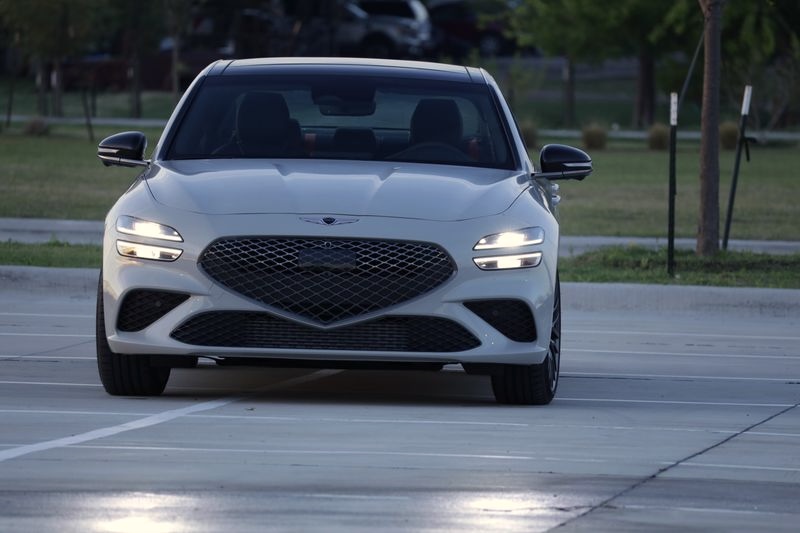
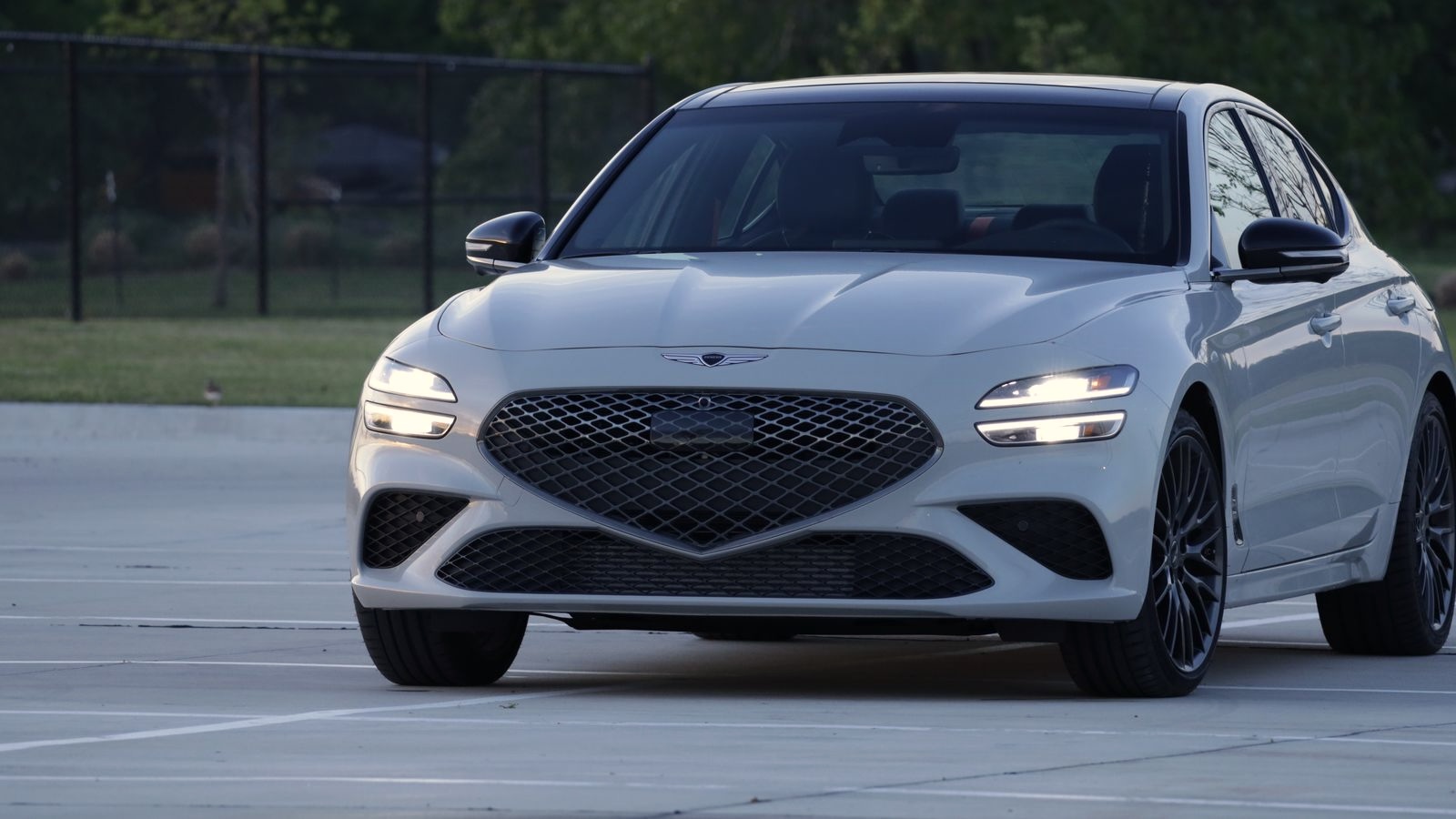
Genesis has settled into a design language that’s athletic without being shouty—tight proportions, short overhangs, and lighting that reads modern without trying too hard. In this white paint, the G70 looked really sharp in person. The low stance isn’t marketing hype; it’s the physics and packaging that make it feel like a proper sport sedan instead of a softened-up luxury car.
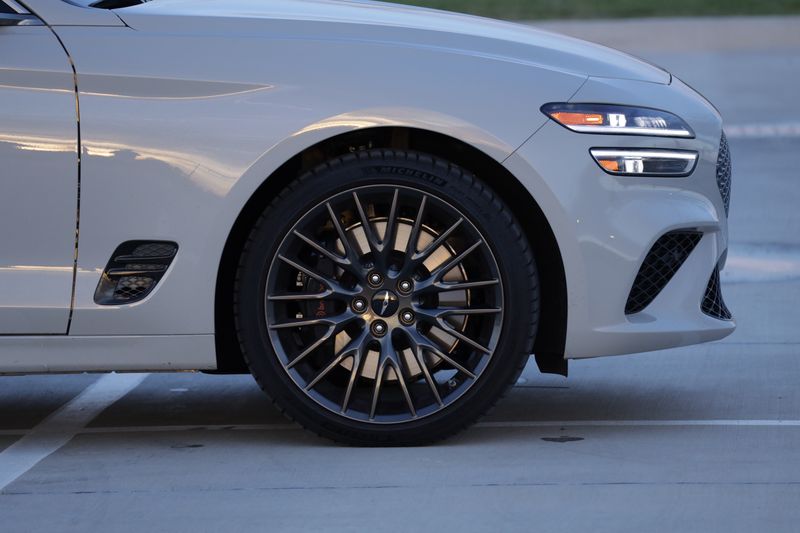
The Prestige Graphite treatment adds the right mood: dark chrome on the grille and daylight opening trim, gloss black mirrors, and black Brembo calipers with red lettering visible behind the spokes. Those 19-inch alloys wrapped in Michelin Pilot Sport 4 summer tires complete the package. They deliver serious grip when conditions are warm and dry, but if you see real winter where you live, plan on swapping rubber before the first freeze.
Trunk and Practicality: Sedan Reality
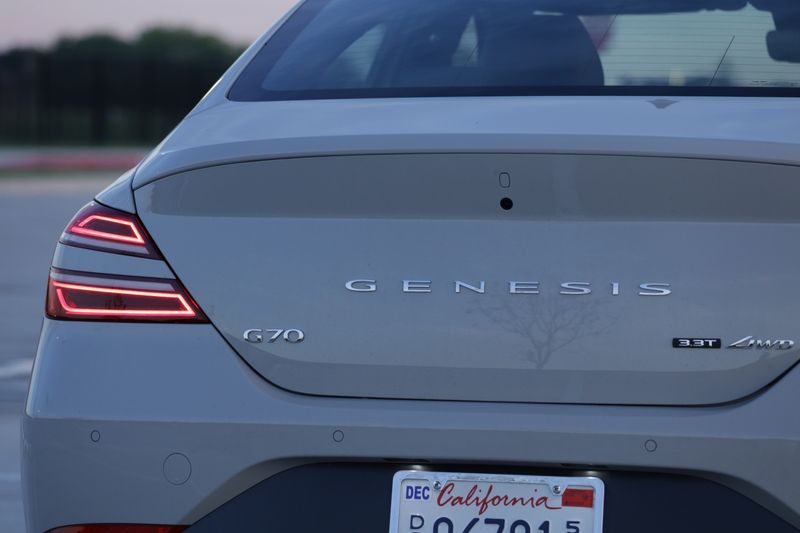
It’s a sedan, so the trunk is a trunk—10.5 cubic feet by the book. Power operation with hands-free open is genuinely useful when you’ve got kids, groceries, or soccer gear in your arms. The 60/40 split-folding rear seats add flexibility for longer items, but let’s be honest: this isn’t crossover territory. If maximum cargo is your top priority, you already know you’re shopping the wrong body style.
I’ve loaded family road-trip haulers for years, and this one handles weekend bags and daily life fine. It just reminds you why so many have traded hips for height.
Powertrain: The Fun Part
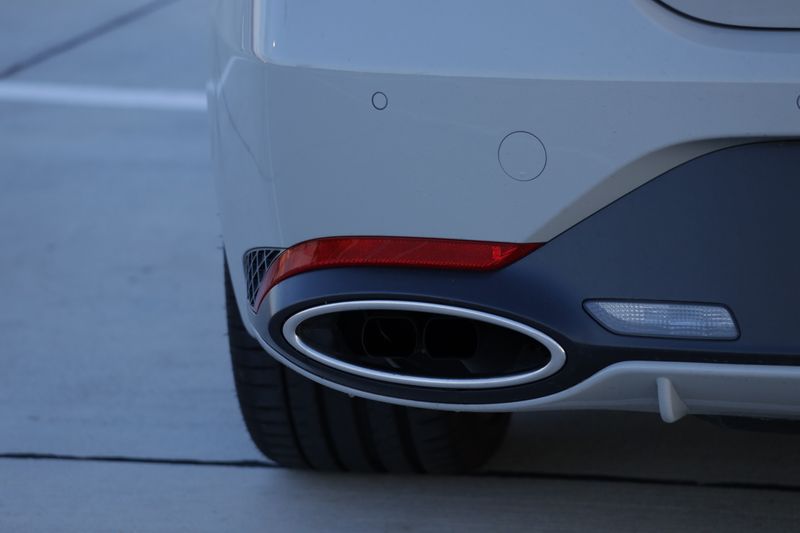
Under the hood sits a 3.3-liter twin-turbo V6 with gasoline direct injection, mated to an 8-speed automatic and all-wheel drive. Genesis rates it at 365 horsepower at 6,000 rpm and 376 lb-ft of torque from 1,300 to 4,500 rpm on premium fuel (some references note a small bump to around 368 hp with the variable exhaust valve system). Either way, it moves.
Paddle shifters and a mechanical limited-slip differential on the V6 models match the mission. Acceleration is strong and immediate with a soundtrack that actually sounds like it’s enjoying itself.
Interior: Sport Sedan Cockpit Done Right
Drop into the driver’s seat and it feels purposeful. At 6’1”, I fit fine, though it’s tighter than the tall-rider SUVs I’ve been living in lately. The seats are comfortable with heating and ventilation, materials feel premium, and the fit and finish is excellent.
Tech includes a 10.25-inch nav screen with wireless Apple CarPlay and Android Auto, a 12.3-inch 3D digital cluster with cool startup graphics on this trim, head-up display, Lexicon audio, wireless charging, surround view, and blind-spot camera views on turn signals. Highway driving assist and the safety suite work without drama.
My honest gripe? It’s still loaded with USB-A ports in places that matter. In 2026, that feels dated. The UI is competent but not class-leading futuristic. Still, heated steering wheel, smart cruise, and the rest make daily driving easy.
Driving Experience: Why Sport Sedans Matter
This is where the G70 shines. I spent most of my time in Comfort mode, where the electronically controlled suspension strikes a nice balance for everyday Texas roads—controlled without beating you up. When the situation called for it, Sport+ mode woke everything up and the car felt more alive.
The ride is stiffer than what many expect from “luxury,” but that’s exactly what a sport sedan should deliver. It feels tied down and willing to play. Steering is connected, handling is sharp, and the powertrain delivers that instant pull without drama. Noise and refinement are appropriate—good isolation without turning it into a library. Brakes (Brembos) have real bite and confidence.
One of the highlights was getting this on a twisty back road—the kind that’s getting harder to come by in the DFW area these days. I pushed the G70 harder there, and everything came together: the grip from those Michelin tires, the strong shove from the twin-turbo V6, the confident bite of the brakes, and precise steering feedback. It all worked in harmony, reminding me exactly why the sport sedan format still matters to those who enjoy driving.
Drive modes—Comfort, Smart, Eco, Sport, Sport+, Custom—actually make a noticeable difference when you want to adjust the car’s attitude.
Fuel economy? The sticker says 17 city, 23 highway, 19 combined for this AWD V6. The annual fuel cost estimate runs about $3,300. It’s thirsty, but that’s the trade-off for the soundtrack and shove. I saw real-world numbers in that neighborhood during mixed DFW driving.
Price, Value, and the Competition
At $60k as-tested, you’re getting a sedan that feels special, drives sharp, and undercuts a lot of the German alternatives on price while delivering strong content. Cross-shop it against the BMW 3 Series, Mercedes C-Class, Audi A4 (or A5 Sportback), Lexus IS, or Cadillac CT4—especially the performance-oriented versions.
The G70 makes a surprisingly strong case that the sport sedan isn’t dead. It just isn’t the default choice anymore.
Final Thoughts
The biggest strength of the 2026 Genesis G70 Prestige Graphite is simple: somebody still builds a sedan that wants to be fun, not just efficient transportation with leather. The biggest weakness? The market has mostly moved on to height.
If you’re the buyer who still appreciates a low seating position, a twin-turbo soundtrack, and a car that turns a boring commute into something you look forward to, this thing delivers without apology. If you need easy entry, massive rear space, and all-weather confidence on stock tires, you already know the answer.
My one-line takeaway: The 2026 G70 is a sport sedan for people who still care about sport sedans. And in that narrow but enthusiastic segment, it’s one of the best options out there.
Note: I was under the weather right before I was scheduled to shoot the full video review for this one. That didn’t stop me from putting serious miles on the G70 and forming strong opinions, so we still got the written story out.
What do you think—still a place for cars like this in your garage? Let me know in the comments.