

Car Reviews
2026 Hyundai Kona HTRAC AWD – MILDLY CAFFEINATED

2026 Hyundai Kona HTRAC AWD
MILDLY CAFFEINATED
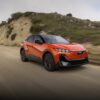
At its launch in the fall of 2017 as a 2018 model, Hyundai’s Kona was – to put it mildly – mildly polarizing. Taking a moderately conventional subcompact hatch as its base, Hyundai threw on an assemblage of cladding that would have required its own rubber plantation, and then coated it in an available green that could have been called Nuclear. While the addition of an optional 1.6 liter turbo was noteworthy, that engine’s connection to a dual-clutch transmission was more appropriate to track days than mall parking. I grew to like it, but in its initial incarnation it was a niche product in what should be a volume segment. Not so the second gen, introduced for 2023, which ditches the pre-teen obnoxious for a serious dose of, well…serious.
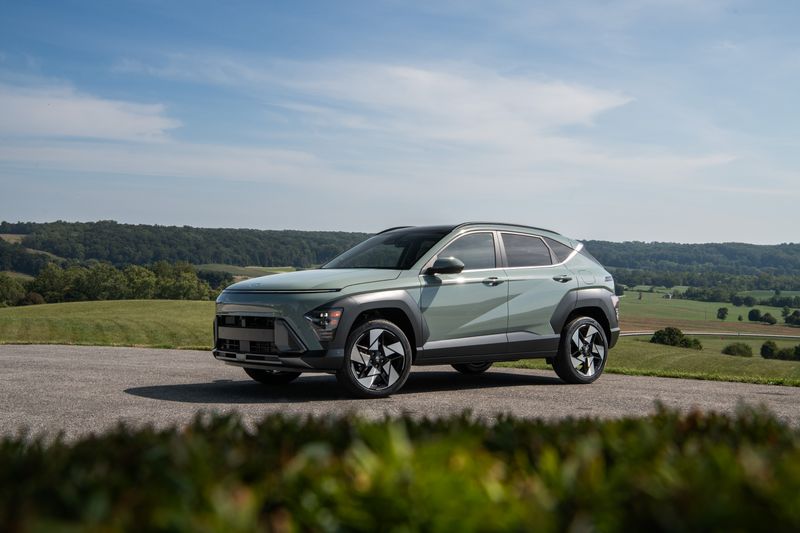
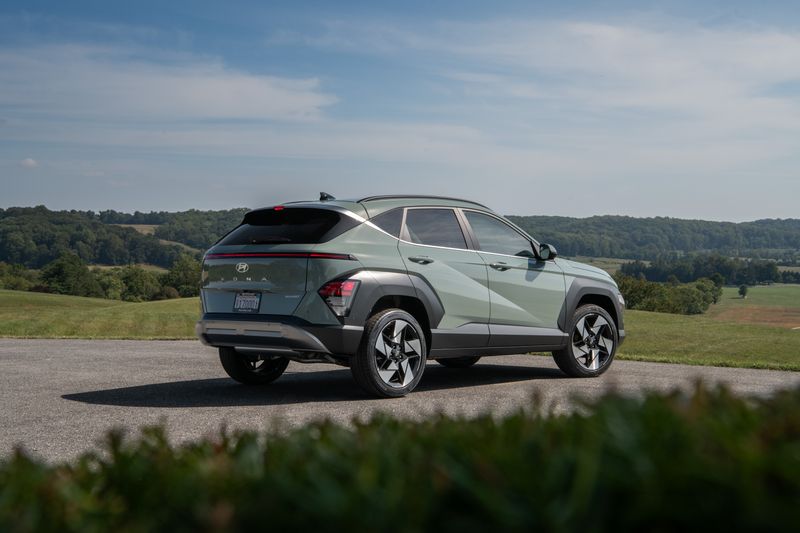
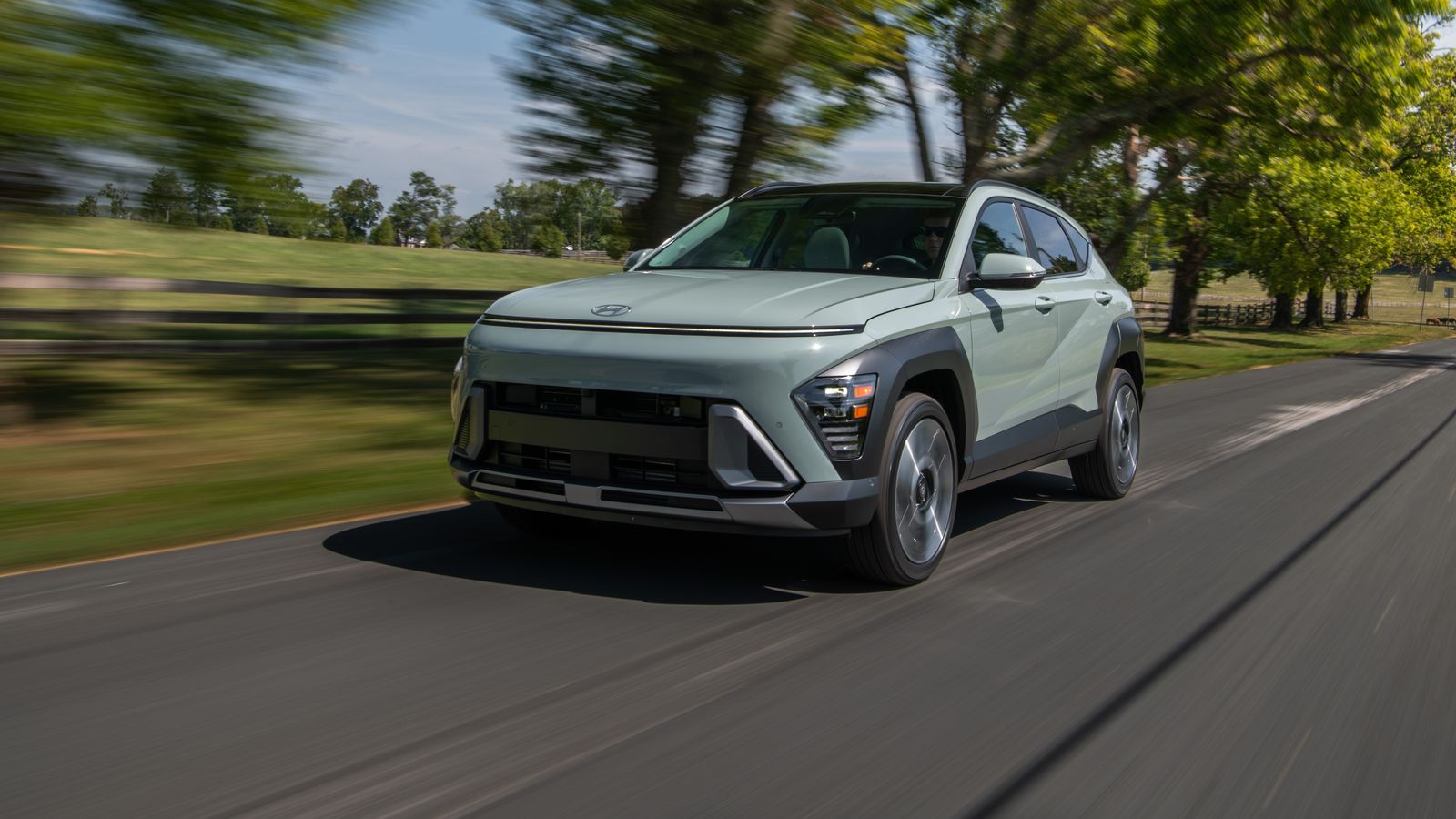
As you’d guess in this second iteration, the Kona is longer by over eight inches, and sits on a wheelbase stretched by 2.3 inches. And while retaining the cladding, in this expanded variant it doesn’t seem as radical as the first Kona; they might have called it Kansas. It’s also – as you would have also guessed – heavier, adding 250 pounds (the equivalent of two girlfriends!) to its kurb weight.
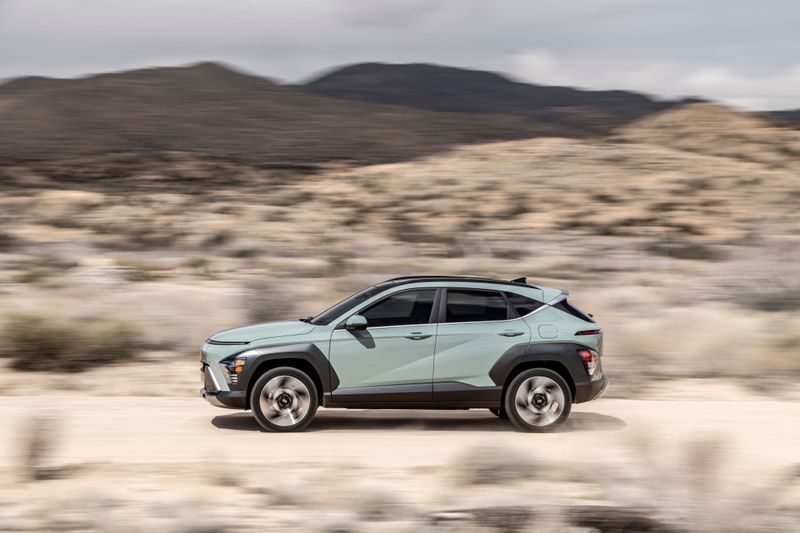
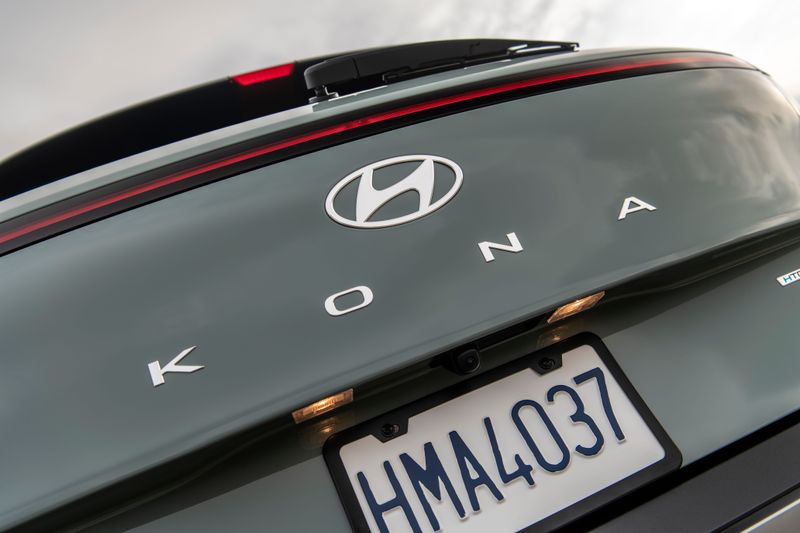
The difference in both size and intent is immediately apparent in the walk-up. The Kona retains curb appeal, but its maturity is almost stupefying – like seeing Abbie Hoffman in a Brooks Brothers suit. (As if you’d remember Hoffman or Brooks Brothers. But I do.) Beyond the larger footprint, the Kona’s creases are softer, and it’s simply not as visually athletic.
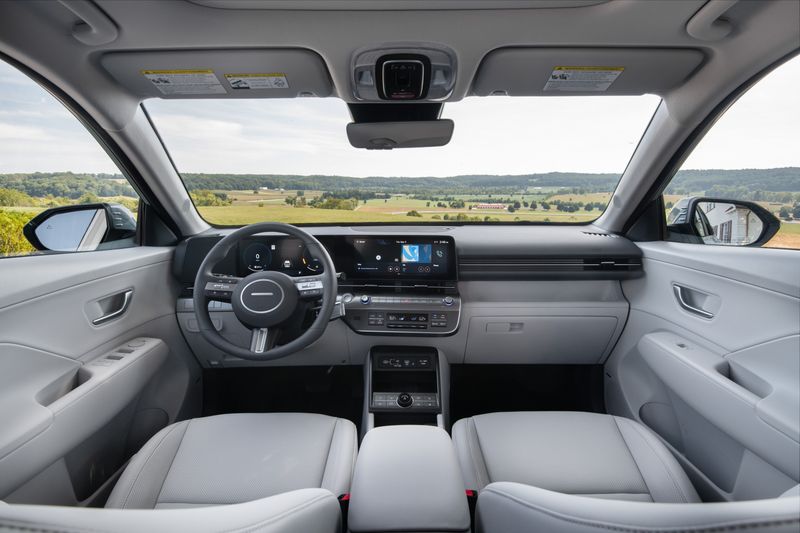
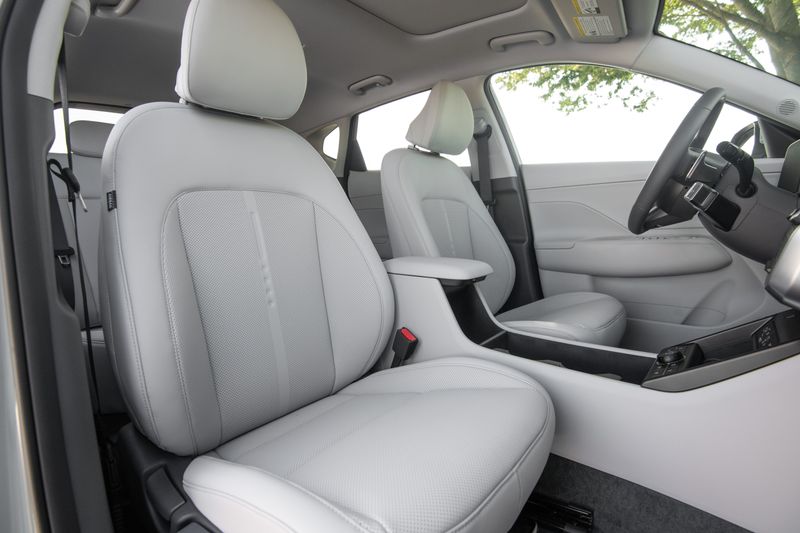
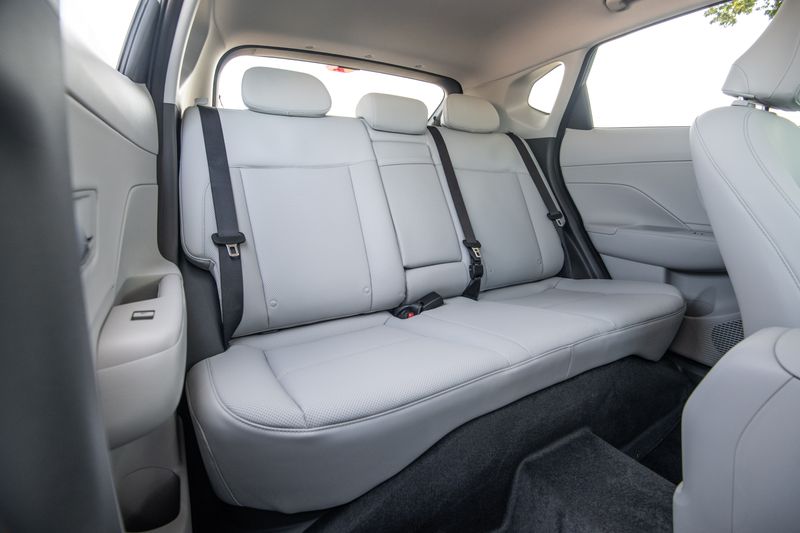
While I’m always pushing back against the growing size of automotive platforms, I’ll admit that this 2nd gen Kona does a better job of transporting families than the first. Up front both driver and front seat passenger enjoy their own space, and there’s no reason two adults won’t be comfortable in the rear seat. Getting inside is helped in no small way by a longish rear door, high roof and easy step-in.
The driver is fronted – in our test example – by 12.3 inches of digital gauge cluster and, to its immediate right, 12.3 inches of infotainment. To Hyundai’s everlasting credit, HVAC and audio controls are immediately beneath that touchscreen, controls you can easily discern in a few minutes, and not – as is often the case – taking a few weeks.
If hauling stuff, the Kona offers 26 cubic feet of cargo room behind the second row and 64 cubic feet when that rear seat is folded. This is a generous area, and while some of that stuff could go to the roof – and with a height of just over 5 feet that roof is accessible – most of it can go behind you. And for those of you in the snowbelt, the roof never works that well, anyway.
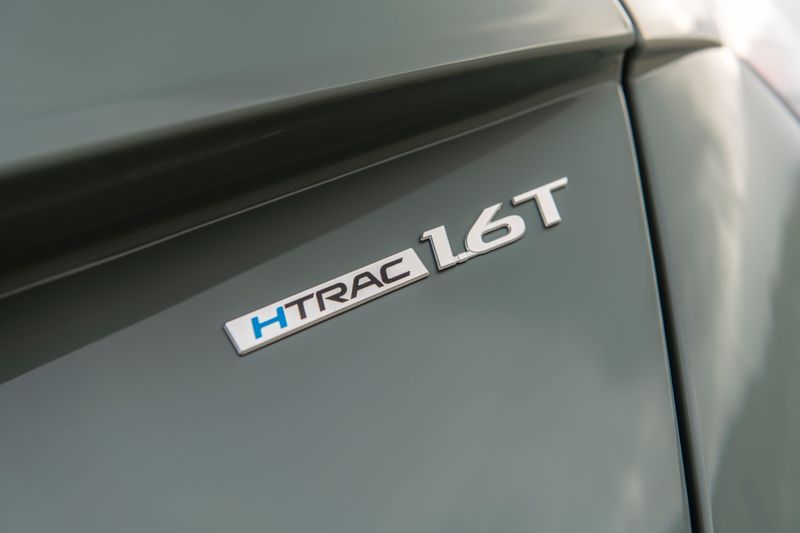
Behind the wheel Hyundai provides you with 147 horsepower from its base 2.0 liter four, connected – if that’s the word – to a CVT automatic. Opt for a higher trim (beginning with the SEL Premium) and you’ll enjoy 1.6 liters of turbocharged four delivering its 190 horsepower via a conventional 8-speed auto to either the Kona’s front wheels or all wheels. If you can have the money for the 1.6 turbo, spend it. And if you don’t have the money wait ‘til you do, as the base 4-cylinder is – at best – tepid.
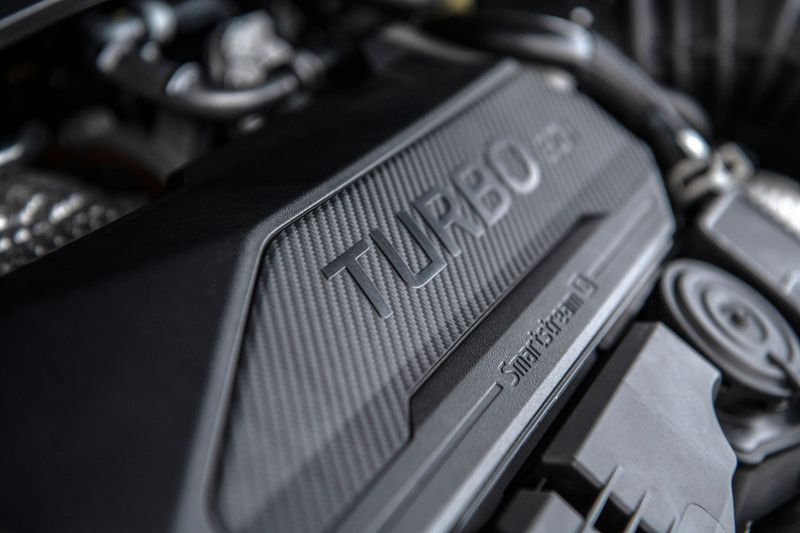
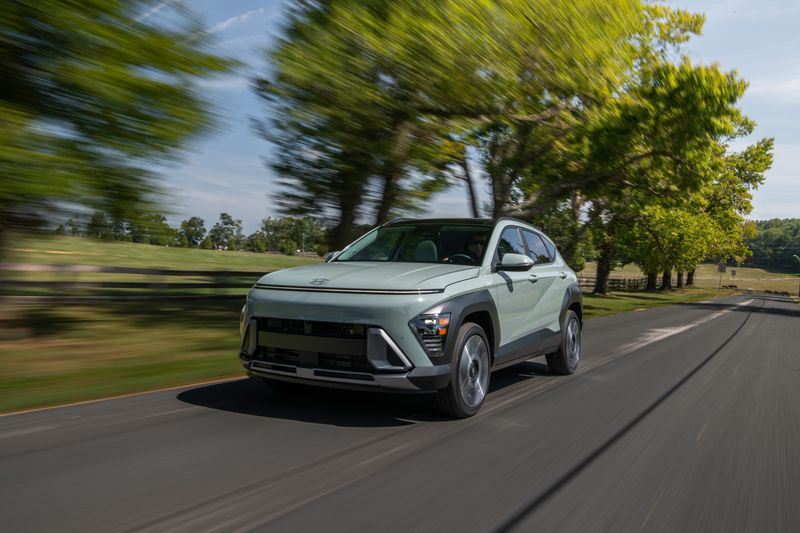
On the road the Kona is comfortable and composed, but the cut-and-thrust of the 1st gen has been notably muted; it ain’t castrated, but comes uncomfortably close. There’s a tad too much body roll, and throttle tip-in doesn’t really feel ‘tipped in’ unless you’re using the Sport mode from the Kona’s ‘Drive Mode’ control. The shoes at Car and Driver claim a 0-60 of 7.5 seconds, and while not fast that figure is adequately quick.
The powertrain is also adequately thirsty. The EPA estimates fuel economy as 24 City/29 Highway/26 Combined with the turbo’d 1.6. Car and Driver observed just 22 in its around town flogging and an admirable 31 in highway driving at 75 miles per hour. Both numbers could be significantly upped with a hybrid, but you can’t buy a hybrid in today’s Kona. Opt for the bigger Tucson and you can choose from hybrid and plug-in hybrid drivetrains, which you can also do at the Kia showroom. But ask for one in a Kona…and its Krickets.
At suggested window stickers of between $27,000 and $35K, Hyundai’s Kona represents a viable purchase for someone wanting just enough practicality to meet the needs of a growing and/or maturing household. And I can’t think of a better car to hand off to a young driver, one that could take him or her through high school, college and the first job.
Finally, this: One week after testing Volvo’s XC40, the top spec Kona came mighty close – at least in its functionality and performance – to Volvo’s smallest. And the Hyundai did so at a price between $10K and $15K less dear. I wouldn’t argue against the XC40 if you can afford it, but for the $57K sticker on our test Volvo you could buy a new, fully equipped Kona and a clean example of the 1st-gen. That’s one for you and one for the kid. No kidding.