

Car Reviews
Toyota’s all-electric bZ – BUILDING THE BUZZ

Toyota’s all-electric bZ
BUILDING THE BUZZ
Range anxiety scares most people away from electric cars, but the truth is not a number on a window sticker; it is whether tomorrow morning’s battery will be ready for tomorrow’s life.
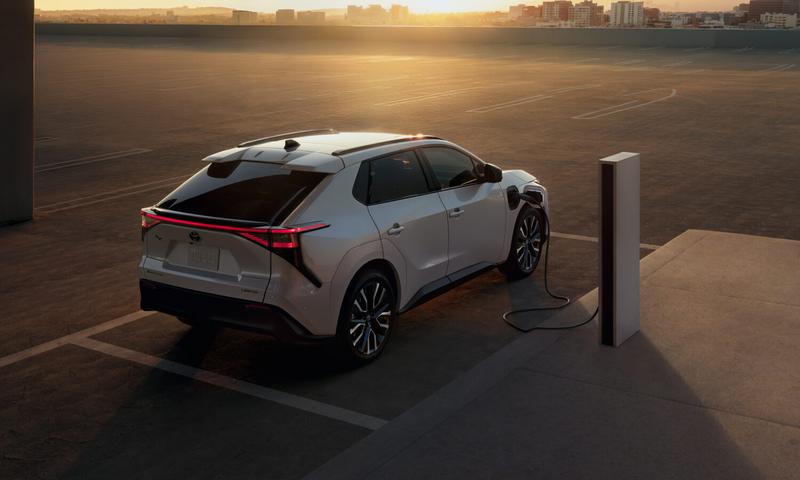
On that score, the affordable 2026 Toyota bZ reports eager for duty every day. The second iteration of Toyota’s EV simplified the nomenclature from bZ4X, which sounds like a laser printer, and added a long series of improvements, like NACS fast charging, better power management, two battery options, and — my favorite — dual-voltage home charging.
From a practical point of view, it meant I could hook up the bZ to a 110-volt, contractor-grade extension cord and it would recover about 20% of battery capacity. On days when all I did was run in-town errands, it meant I awoke to a topped-off battery for about the cost of leaving a lamp on.
It is an easy routine: Plug in phone. Plug in car. Go to bed.
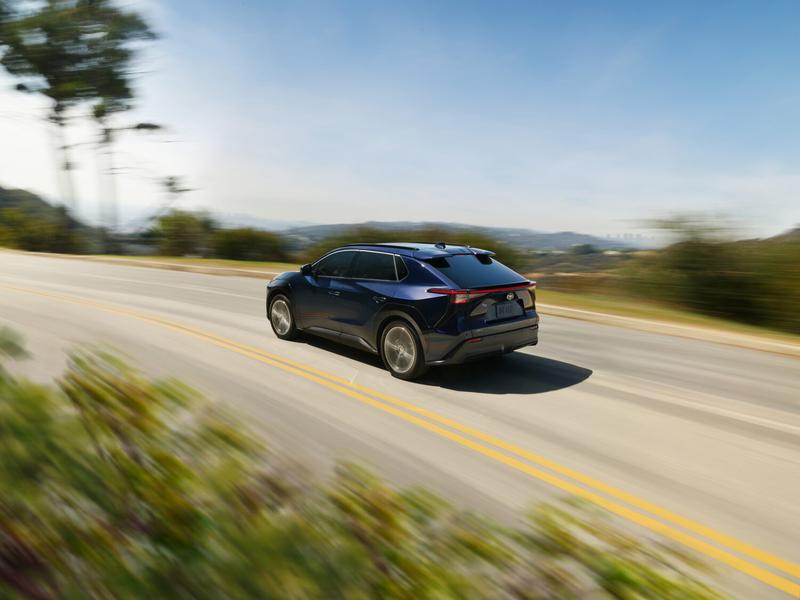
That encouraged me to take the mid-size SUV for a hike in the mountains, a roughly 200-mile round trip. When we started, I looked at the range estimate and concluded I had 40 to 50 miles to spare. When I got home, it still had 85 miles in the battery. When the nice man came to retrieve the car the next morning, it was back up to nearly 60%.
Range anxiety? Here’s the thing about all that fast-charging debate – that only matters on long trips. Full disclosure, I swung by a gas station to clean the windshield. What about you? Buy any gas or diesel last week?
Feels like a Lexus
To tell the truth, I have been lying to you. I decided to take the car on a road trip because it is vicariously pleasing. Switch on, advanced electronics come to life, and the $40,468 car feels like a Lexus. It even has a sound system like one.
It is as serene as a summer afternoon spent sleeping at a still pond — until you hit the accelerator. Mash down hard and the car rockets into freeway traffic as smoothly as a steel zipper on a fine leather coat.
Handling is precise, but not sporty. Toyota designed this car to isolate passengers, not run Pike’s Peak.
The basics
The 2026 bZ starts at $34,900 for the base XLE front-wheel-drive model. That price buys a 57.7-kWh battery good for 236 miles of range and 168 horsepower. The smarter choice for most buyers is the XLE FWD Plus at $37,900, which upgrades to a 74.7-kWh battery, 221 horsepower, and 314 miles of EPA-estimated range. All-wheel-drive versions start at $39,900 and deliver 338 horsepower in XLE form.
Standard features across the lineup include a 14-inch touchscreen, wireless Apple CarPlay and Android Auto, heated front seats, dual wireless phone charging pads, and Toyota Safety Sense 3.0.
The bZ competes against the Hyundai Ioniq 5, Volkswagen ID.4, Ford Mustang Mach-E, and Chevrolet Equinox EV. Here is how the field stacks up:
- Hyundai Ioniq 5: Starts around $42,000. Offers 266-318 miles of range, 800-volt charging architecture that beats Toyota’s peak speed, and more rear legroom. Weakness: smaller cargo area and higher base price.
- Volkswagen ID.4: Starts around $39,000. Offers 206- 291 miles. Strength is a comfortable ride and available all-wheel drive. Weakness: infotainment system frustrates users, and peak charging speed trails the class.
- Ford Mustang Mach-E: Starts around $43,000. Offers 250-320 miles. Strength is engaging driving dynamics. Weakness: higher price and a cabin that feels tighter than the Toyota’s.
- Chevrolet Equinox EV: Starts around $34,000. Offers 285-319 miles. Strength is value and range per dollar. Weakness: less horsepower and a plain interior.
Exterior Design: A Better Suit
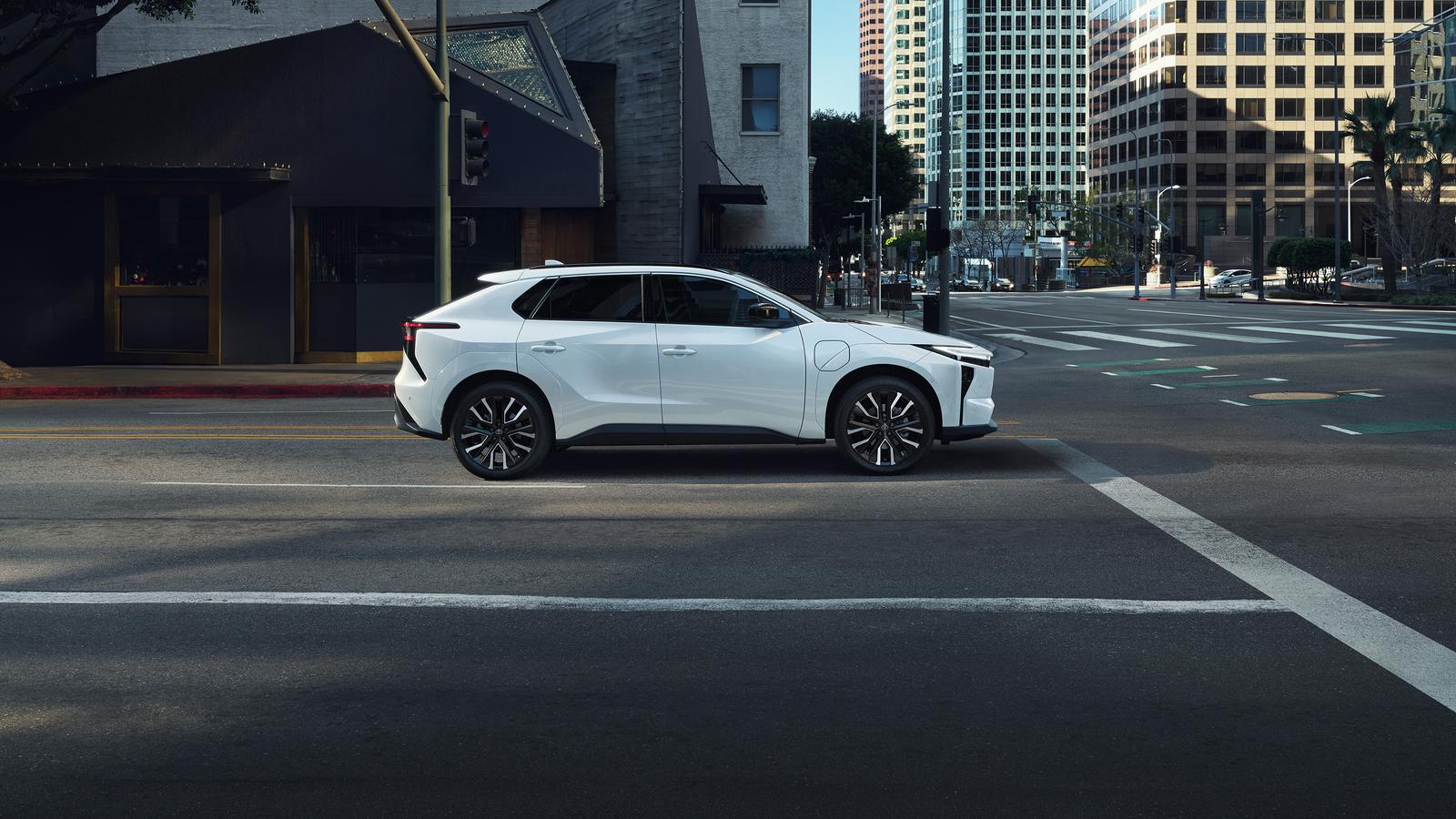
The old bZ4X looked like it was assembled from three different design meetings that never spoke to each other. The 2026 model fixes that. Toyota toned down the strange black cladding and redesigned the fender flares, which can now be color-matched to the body on certain paint colors. The result is a crossover that looks cohesive rather than confused.
The front fascia wears Toyota’s “hammerhead” daytime running lights, a design language shared with the Prius and Crown. A wrap-around light bar ties the squinty headlights together. The overall shape is conventional SUV — tall greenhouse, squared-off rear — which is exactly what this segment wants.
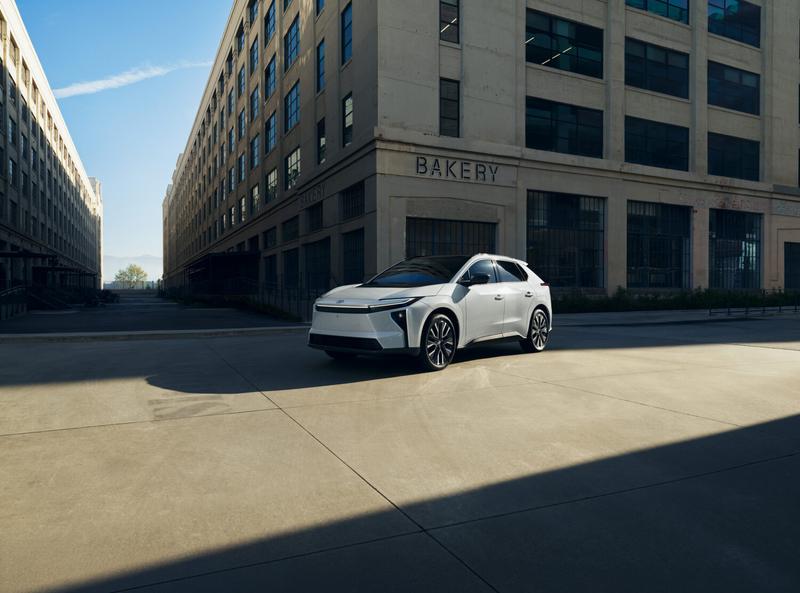
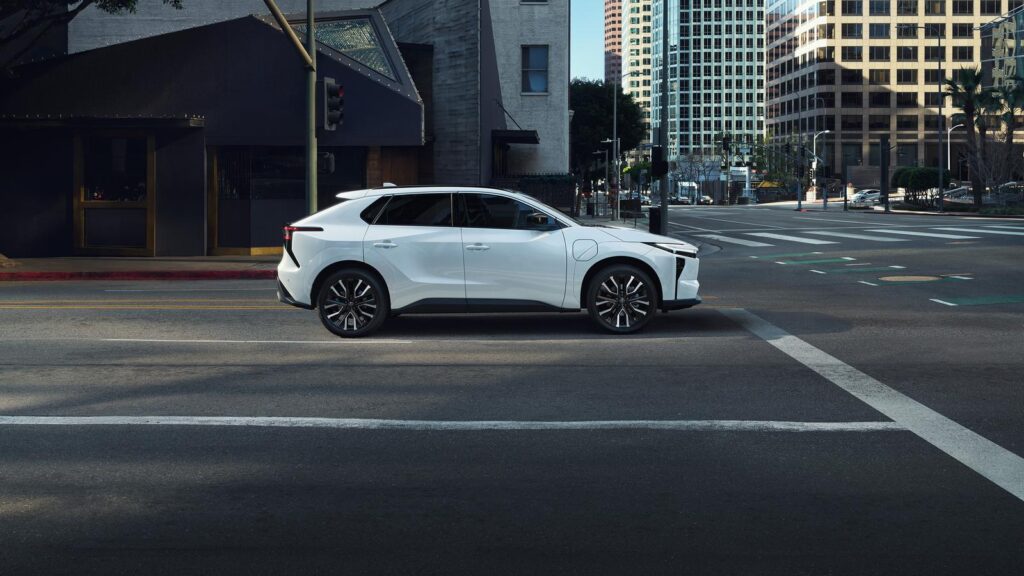
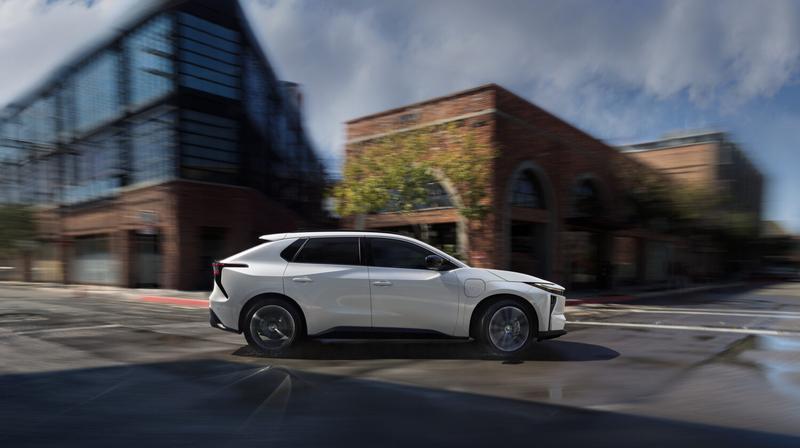
Functional improvements matter more than styling. The new NACS charging port replaces the old CCS connector, giving owners access to Tesla’s Supercharger network. The onboard charger jumps from 7 kW to 11 kW, cutting home charging times. Toyota also added battery preconditioning, which readies the pack for faster DC charging in cold weather.
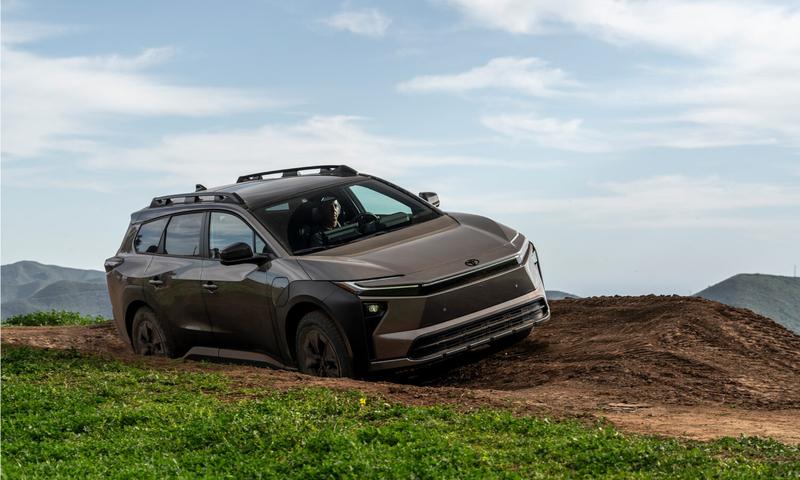
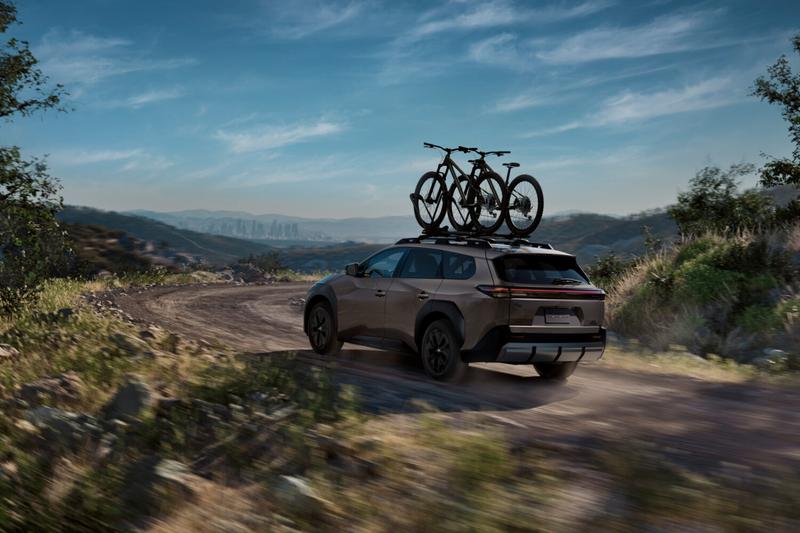
Dimensionally, the bZ stays compact: roughly 184 inches long, 73 inches wide. The Woodland variant adds a slight lift and all-terrain tires for a more rugged look.
A rocket in sensible shoes
The story here is the all-wheel-drive powertrain. Toyota upped output from the old bZ4X’s 214 horsepower to 338 horsepower for 2026. Edmunds tested an AWD prototype and recorded a 0-60 mph sprint of 4.6 seconds. The Woodland version, with its 375-horsepower tune, hits 60 in 4.0 seconds — matching a manual-equipped Toyota GR Supra.
That acceleration feels instant. Electric motors deliver maximum torque immediately, and the bZ has no gear changes to interrupt the surge. In daily driving, this translates to effortless merging and passing.
Handling is a different story. The bZ prioritizes comfort. MotorTrend noted “noticeable understeer” and “some body roll” when pushed hard. Edmunds found the bZ “doesn’t feel quite as agile” as the Hyundai Ioniq 5, with “a tendency to get squirrelly at the rear under heavy braking.” Steering is light and precise but provides little feedback.
For city commuting and highway cruising the bZ shines. The ride absorbs bumps without float. Wind and road noise stay muted. It is, as my introduction noted, serene — until you hit the accelerator.
Reliability is the open question. Toyota’s hybrid drivetrains have a stellar track record. The Prius proved that electric motors and batteries can last hundreds of thousands of miles. But Toyota’s first-generation EV, the bZ4X, was a new design with new suppliers. The 2026 refresh addresses many first-year issues, but the bZ still lacks the long-term track record of a Camry. Buyers are trusting Toyota’s engineering reputation more than a proven EV platform.
Cabin comfort and tech: Quiet confidence
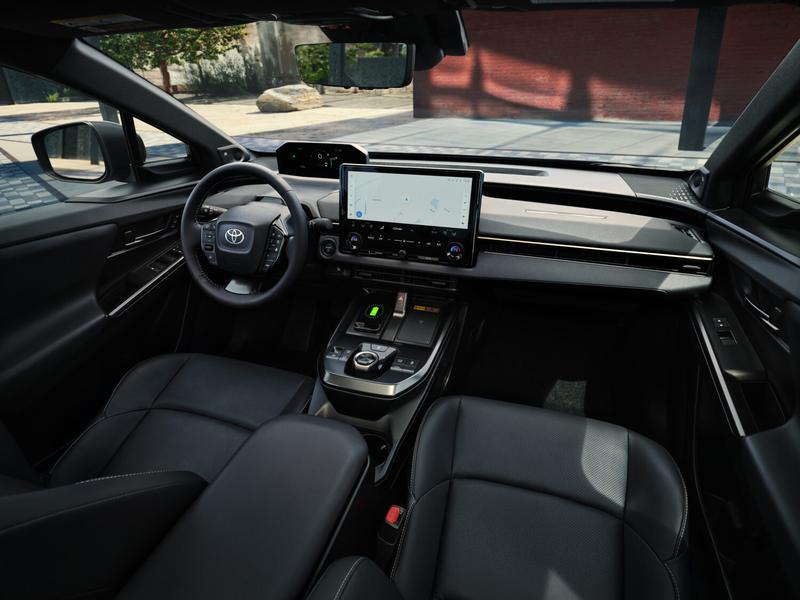
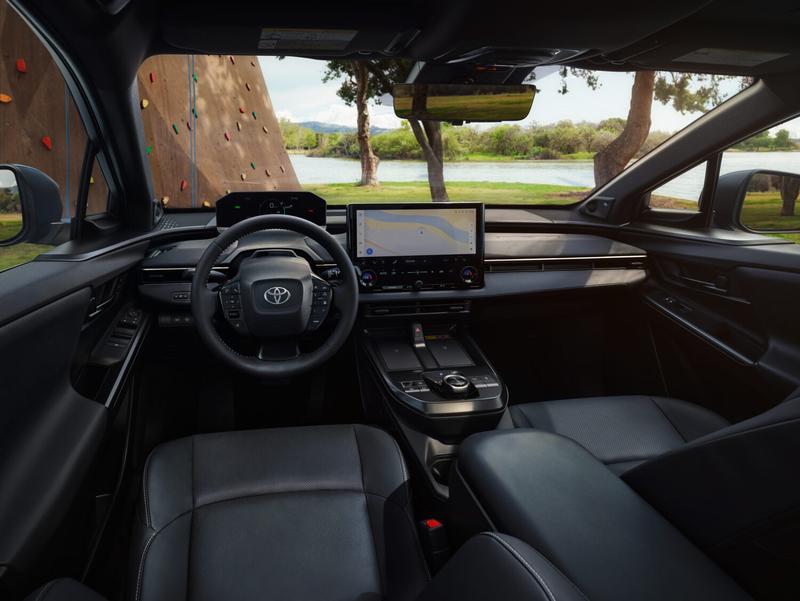
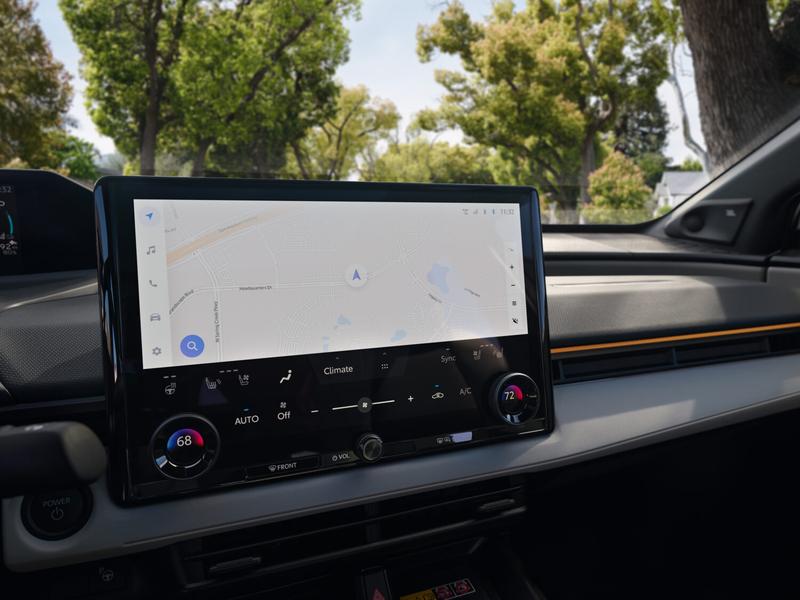
Toyota redesigned the dashboard for 2026, slimming it down and improving sightlines. The previous model’s awkward gauge placement is gone. A 7-inch digital cluster sits directly ahead of the driver, while a 14-inch touchscreen dominates the center.
Materials impress. The dashboard wears fabric rather than plastic. SofTex-trimmed seats come heated in front, with ventilation available on the Limited trim. Ambient lighting offers 64 colors, and dual wireless charging pads sit side-by-side on the console.
The cabin feels open and airy. Front legroom measures 42.1 inches; rear passengers get 35.3 inches. That rear figure trails the Hyundai Ioniq 5’s 41.7 inches significantly. Adults will fit in the back for shorter trips, but the Hyundai is the better choice for regular rear-seat passengers.
Cargo volume maxes at 27.7 cubic feet behind the second row. That matches the Kia EV6 and slightly beats the Ioniq 5. There is no frunk, a missed opportunity for storing charging cables.
The infotainment system earns praise. U.S. News called the 14-inch screen “very easy to use,” noting that “the menu layout is simple and uncluttered.” Physical knobs remain for volume and temperature — a welcome decision. Wireless CarPlay and Android Auto work flawlessly. The available JBL audio system with nine speakers and an 800-watt amplifier delivers clean sound.
Toyota’s voice assistant responds to “Hey Toyota” and handles natural speech for climate, navigation, and audio commands. The system works, though it is not as quick as Tesla’s or Hyundai’s best.
One standout feature: the bZ supports dual Bluetooth phone connectivity, letting two phones pair simultaneously.
Safety features
Toyota Safety Sense 3.0 comes standard on every bZ. The suite includes forward collision warning with automatic emergency braking, adaptive cruise control, lane-keeping assist, lane-centering, blind-spot monitoring, and rear cross-traffic alert. The system detects pedestrians, cyclists, motorcyclists, and guardrails.
Limited trims add Lane Change Assist, Traffic Jam Assist, Front Cross Traffic Alert, and Advanced Park.
The Insurance Institute for Highway Safety rates the bZ ‘Good’ in side crash testing and ‘Acceptable’ in small and moderate overlap front tests. Front crash prevention systems earned Good ratings. The bZ earned a Top Safety Pick+ designation for 2025, and the 2026 model should retain similar ratings. One weakness: IIHS rated the headlights ‘Poor’ for forward visibility – an observation in which I concur.
NHTSA has selected the 2026 bZ for testing but has not yet published results.
Pricing and value
The bZ lineup spans five configurations:
- XLE FWD: $34,900 — 236 miles range, 168 hp
- XLE FWD Plus: $37,900 — 314 miles range, 221 hp
- XLE AWD: $39,900 — 288 miles range, 338 hp
- Limited FWD: $43,300 — 299 miles range, 221 hp
- Limited AWD: $45,300 — 278 miles range, 338 hp
The XLE FWD Plus represents the sweet spot. For $3,000 over the base model, buyers get 78 more miles of range and 53 more horsepower. That transforms the bZ from an also-ran into a legitimate competitor.
Edmunds’ real-world range test found the XLE Plus actually beat its EPA estimate, covering 331 miles on a charge. MotorWeek came close to the rating too, on pace for 307 miles. This is a car that delivers what it promises.
Compared to rivals, the bZ undercuts the Ioniq 5 and Mustang Mach-E on price while offering comparable range and more standard power than most. The base XLE is best avoided — its 236-mile range and 168 horsepower make it a penalty box. Every other trim is worth considering.
Bottom line
The 2026 Toyota bZ is not the best electric SUV on the market. The Hyundai Ioniq 5 charges faster and offers more rear-seat space. The Tesla Model Y has a superior charging network and software ecosystem. The Mustang Mach-E is more fun to drive.
But the bZ is finally a credible choice. It offers competitive range, strong acceleration, a comfortable and quiet cabin, and the standard safety features that Toyota buyers expect. It feels like a Lexus for a Toyota price.
Who should buy it? The commuter who wants an EV but does not want to learn a new interface every morning. The family that values comfort and safety over sporty handling. The Toyota loyalist who has been waiting for the brand to build an EV worth owning. The buyer who wants Tesla Supercharger access without buying a Tesla.
Toyota arrived late to the electric party. The 2026 bZ shows the company has finally brought something worth staying for.