




Book Review
BOOK REVIEW: THE LONGEST, HARDEST RACE

BOOK REVIEW: THE LONGEST, HARDEST RACE
BEFORE THERE WERE ROADS…A ROAD RACE
Sometime around 2008, while working in Suzuki PR, the Arizona-based Overland Expo jumped on my radar. Suzuki was about to launch its Frontier-based Equator, and an up-spec Equator seemed perfect for the off-the-grid Overland Expo, as would the company’s Grand Vitara SUV. Preceding the Overland Expo, however, by almost a century was the country’s first cross-country, truly off-the-grid automotive contest. Dubbed ‘Ocean to Ocean’, it intended to take five automotive entrants from New York City to the Seattle World’s Fair over the country’s still-in-progress road network.
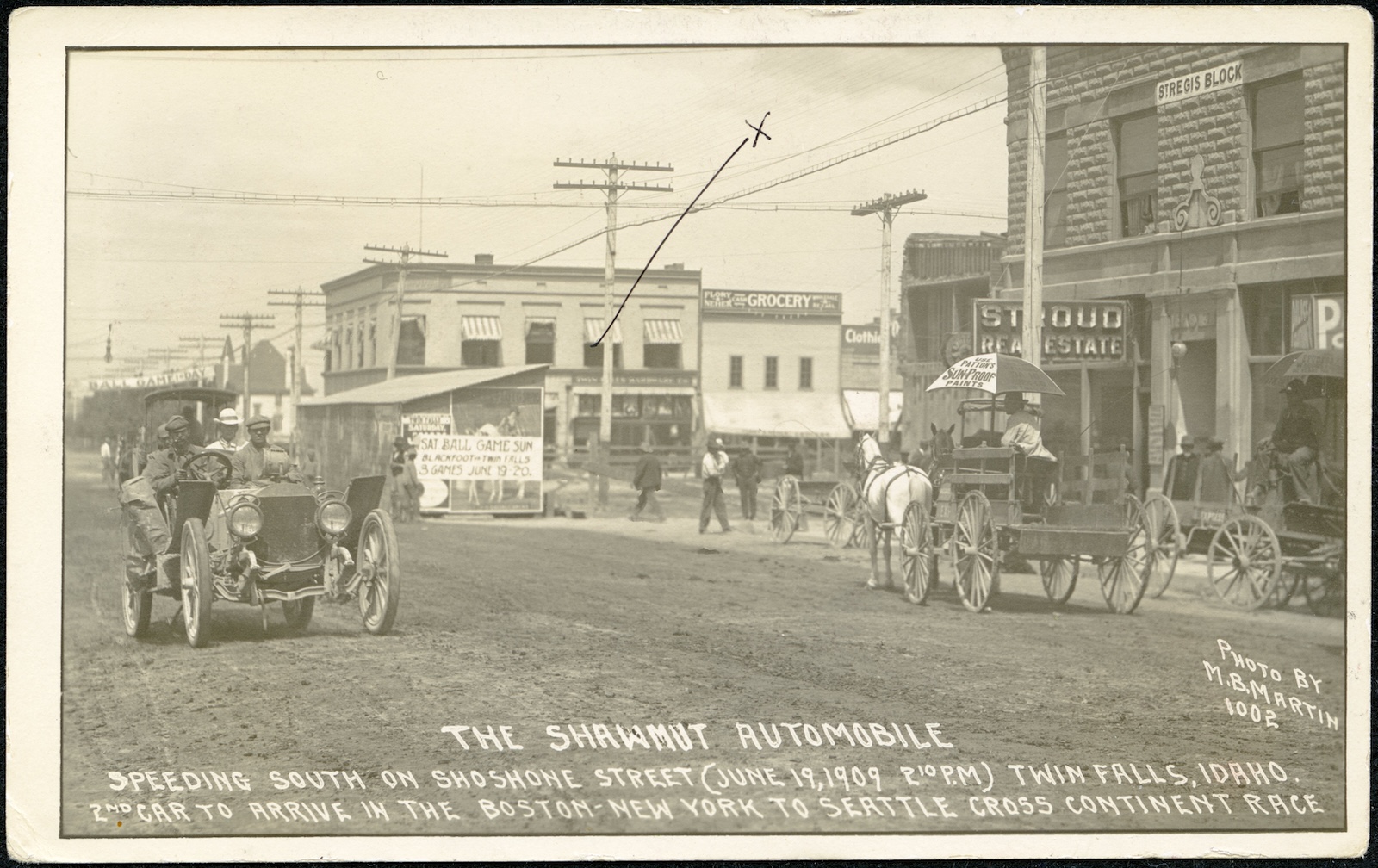
The transcontinental journey was a trial for both man and machine, and the announced winner – Ford’s Model T – served as David to the other two competitive entrants, the Boston-based Shawmut(!?) and the European Itala – they, of course, represented Goliath. The competition is documented (well documented!) by author Eric Moskowitz in the recently published THE LONGEST, HARDEST RACE. If, in 1909, there had been a Duesenberg, this race would have been a Duesy.

As Mr. Moskowitz notes, Henry Ford was well known by 1909, but at that point in the early century he wasn’t the HENRY FORD – you could have called him Hank. And his Model T, officially rolled out the previous year, possessed the earmarks of greatness, but had not yet been sold in its subsequent volumes, and hadn’t – as yet – transformed America and its still horsedrawn population. And the notion that the diminutive Model T could win in a competition against much larger, ostensibly more capable machinery was laughable, rather like a Baja Bug beating Bentley’s Bentayga. Unless, of course, you’re in Baja.
At the turn of the last century these United States were united by a shared philosophy and transcontinental railroads, but little else. Along the eastern seaboard large swaths of cities were paved, thanks to the bicycle. But west of Chicago most bets were off, and west of St. Louis all bets were off. The road network – if you could call them ‘roads’ or a ‘network’ – was still more closely aligned with a pioneer’s pathway than a more modern parkway.
As the author explains, the cross-country contest was the brainchild of millionaire (actually, playboy millionaire) M. Robert Guggenheim, with the enthusiastic backing of the World’s Fair organization in Seattle. Initially perceived a national ‘happening’ with dozens of entrants, automotive politics reduced that entry list to five, only four of which proved credible; the fifth entrant – Acme – took forever just getting to Cleveland. It ultimately boiled down to a contest between two Model Ts – entrants Numbers ‘1’ and ‘2’ – along with the Boston-based Shawmut, entrant Number 5.
With an aggressive assist from Ford’s nascent dealer and distribution network, the Fords benefited from a support system that not only aided them along the route, but would ultimately put the Number 2 Ford in the win column. That’s until, much later, it was discovered that an engine swap not allowed by the race rules took place, and Number 2 was retroactively disqualified. That gave the win to the Shawmut, but as you’d guess given the Shawmut’s rarity on today’s roads, the belated win did nothing to help its business model.
The author’s deep dive into the race, its organization and teams is both monumental and memorable. And given that the majority of its 4,000-mile route traversed rural America, it’s an amazing reminder of just how ‘rural’ turn-of-the-century America was. Almost as compelling is Moskowitz’s epilogue, which details the race’s aftermath – and where the participants went after 1909. Ford’s still around, and the small, light, accessible Ford could still make a comeback.
Eric Moskowitz’s THE HARDEST, LONGEST RACE is published by St. Martin’s Press, retails for $31 and is available at your local bookstore. A review copy was provided by the publisher.