



Car Reviews
The New Mazda CX-5: READY, WILLING AND ABLE

The New Mazda CX-5:
READY, WILLING AND ABLE
Some cars are simply likable. The Mazda CX‑5 is one of them.
This is not a neutral observation. In the crowded, sensible, often soul‑crushing compact crossover segment, likable is practically a radical statement. Most vehicles in this class are chosen the way you choose a refrigerator – by cubic feet, fuel economy, and odds it won’t break. The CX‑5, in its 2026 S Premium Plus guise, dares to be chosen the way you might choose a jacket: because it fits well, feels good, and makes you look slightly more interesting than you actually are.
Mazda has sold more than 1.6 million CX‑5s in the United States and 4.5 million worldwide since the model’s debut in 2012. That number speaks less to marketing genius than to a simple truth: people respond to intention. The 2026 model is the first full redesign in nearly a decade – a 3rd-generation car that replaces the eight‑year‑old 2nd‑generation “KF” model. Mazda calls this generation’s philosophy “New Generation Emotional Daily Comfort” – a mouthful that, against all odds, lands what it’s like to live with this car. Comfortable. Practical. And not nap‑inducing.
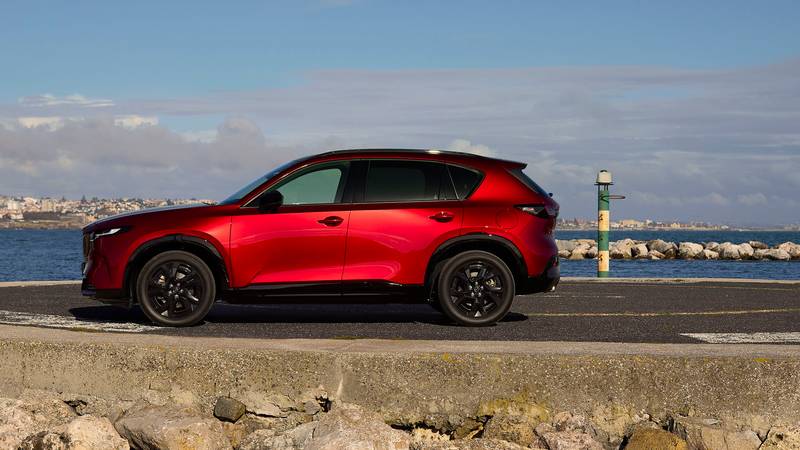
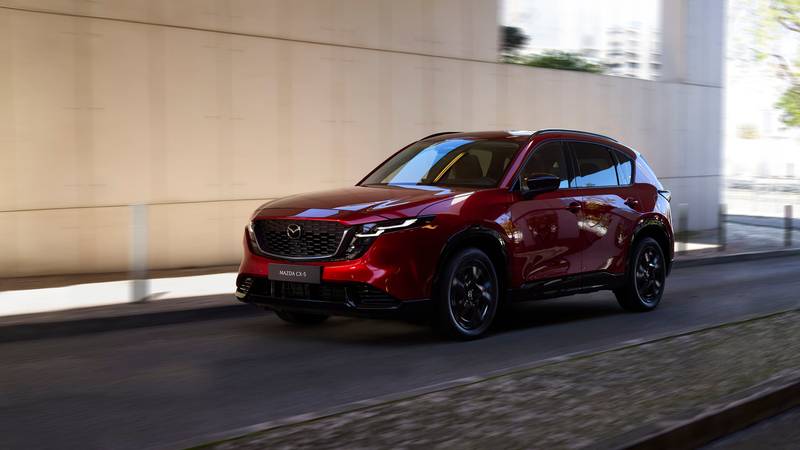
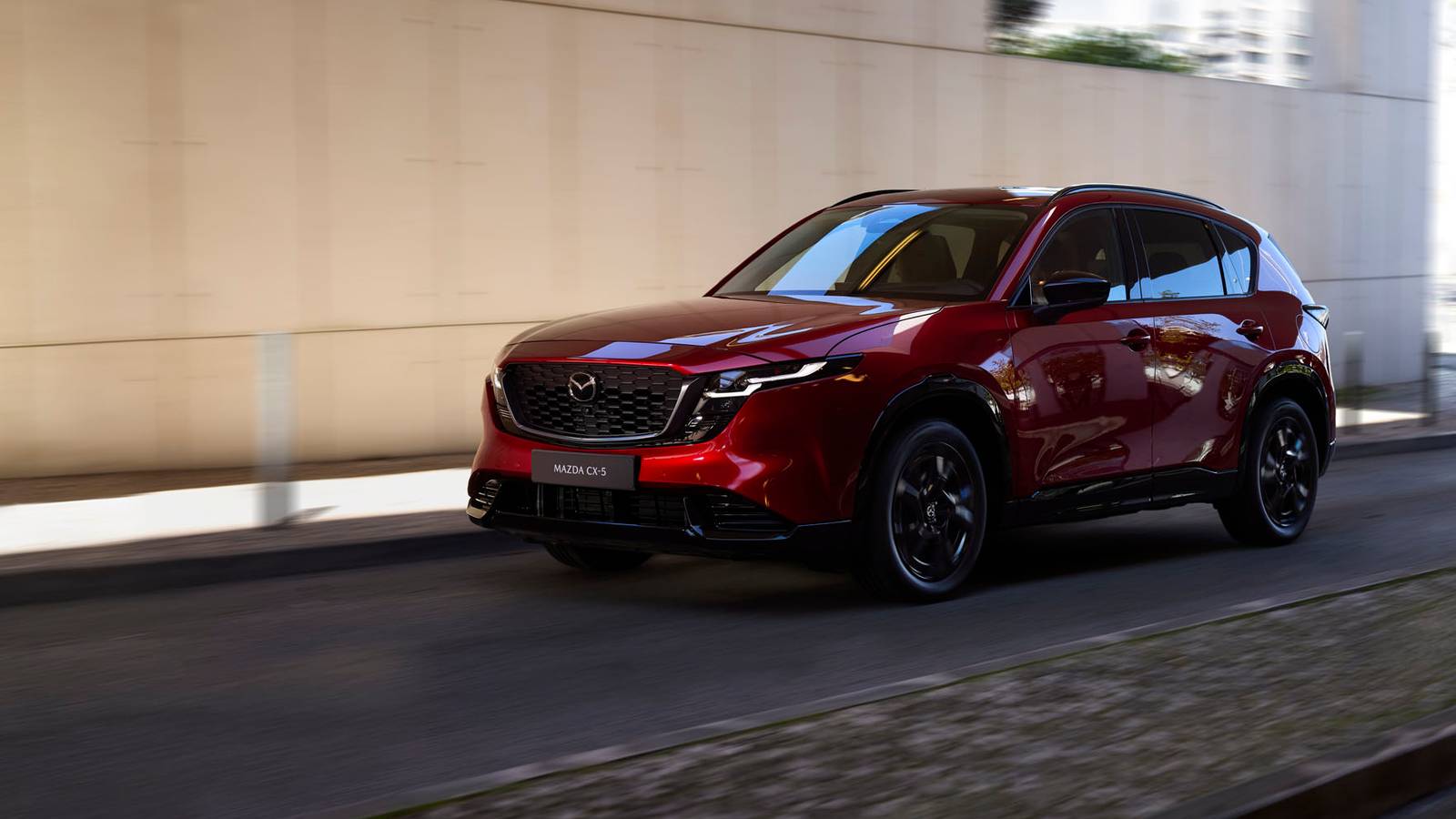
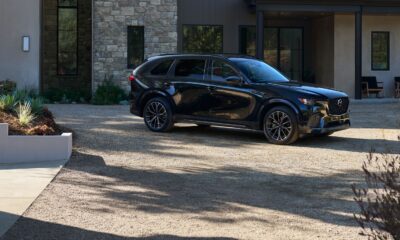
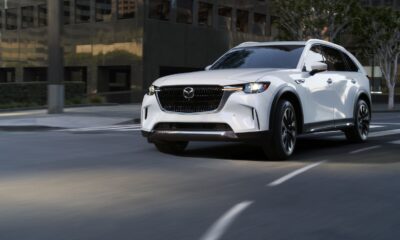
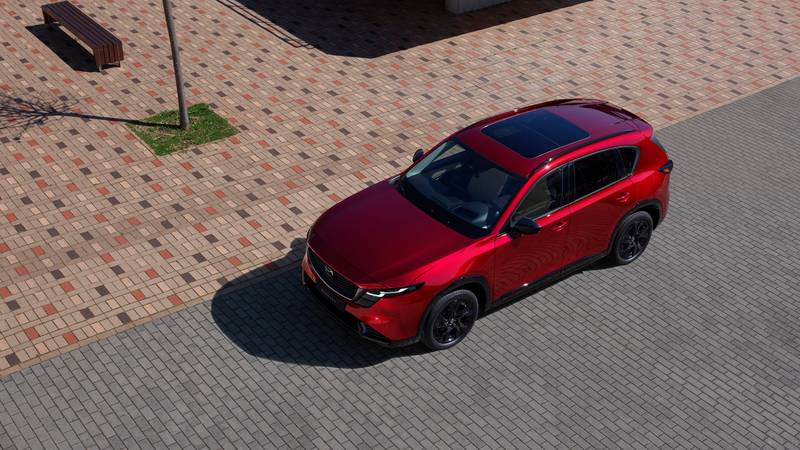
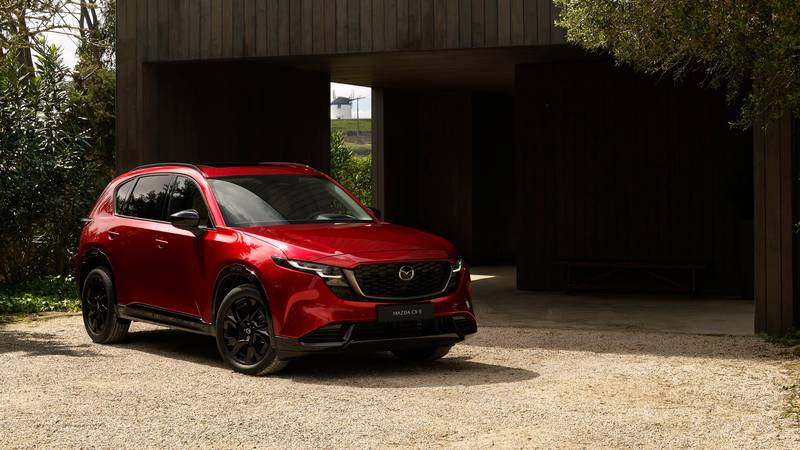
Walk up to it in a parking lot, and you’ll notice the design first. Mazda’s Kodo language is still one of the industry’s more disciplined exercises in restraint. The CX‑5 doesn’t scream for attention; it simply stands there, well‑proportioned, with a wider grille and sharper lighting elements that give it a quietly confident stance. At 184.6 inches long – 4.5 inches longer than before – it fits neatly in the compact class, but its low roofline and smooth body sides make it look more athletic than its rivals. The Honda CR‑V leans toward utility; the Toyota RAV4 aims for ruggedness; the Hyundai Tucson goes for sharp angles that may age poorly. The CX‑5 just looks… right. As Motor Trend notes, it “still looks like the designer cared.”
Fetching design
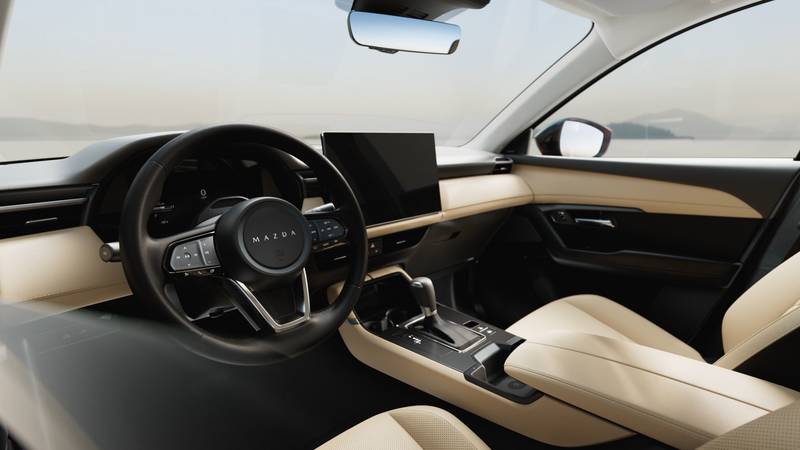
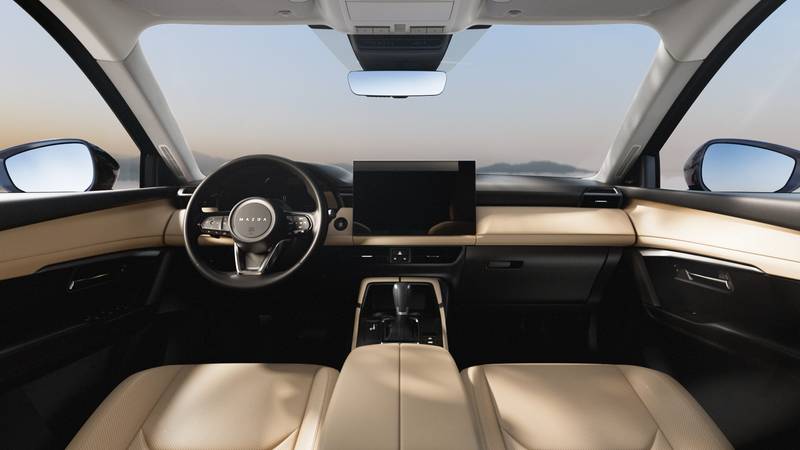
That care extends inside, where the CX‑5 feels more expensive than its $40,485‑as‑tested price suggests. The S Premium Plus trim wraps you in leather, heats and ventilates the front seats, and warms the steering wheel on cold mornings. Materials feel solid, controls fall naturally to hand, and the cabin stays quiet at highway speeds. For 2026, Mazda has finally embraced a full touchscreen interface – a 15.6‑inch unit that dominates the dash – after years of insisting on a rotary dial. Physical controls are gone, but most buyers will appreciate the modern responsiveness. Wireless Apple CarPlay and Android Auto come standard, and the premium audio system fills the cabin with unexpected clarity.
Drives like a Mazda
But the real story of the CX‑5 – the reason you might choose it over a CR‑V or a RAV4 – is what happens when you drive it.
Mazda builds its reputation on “Jinba Ittai,” a Japanese phrase meaning “horse and rider as one.” In practice, it translates to steering that feels direct, a chassis that communicates, and a vehicle that responds to your inputs with something approaching eagerness.
The 2.5‑liter four‑cylinder engine produces 187 horsepower and 186 lb‑ft of torque, and the six‑speed automatic shifts cleanly, without the hunting and hesitation that plague so many CVTs. All‑wheel drive is now standard across the lineup, a welcome move that adds confidence in rain and light snow.
Acceleration is not, by any measure, quick. Mazda itself quotes a 0‑to‑60 time of 9.6 seconds – a figure that feels, from behind the wheel, about as leisurely as it sounds. The turbocharged engine option that once spiced up the CX‑5 lineup is gone for 2026. You will not win stoplight drag races. But here’s the thing: you won’t care. The handling is easily the best in the class.
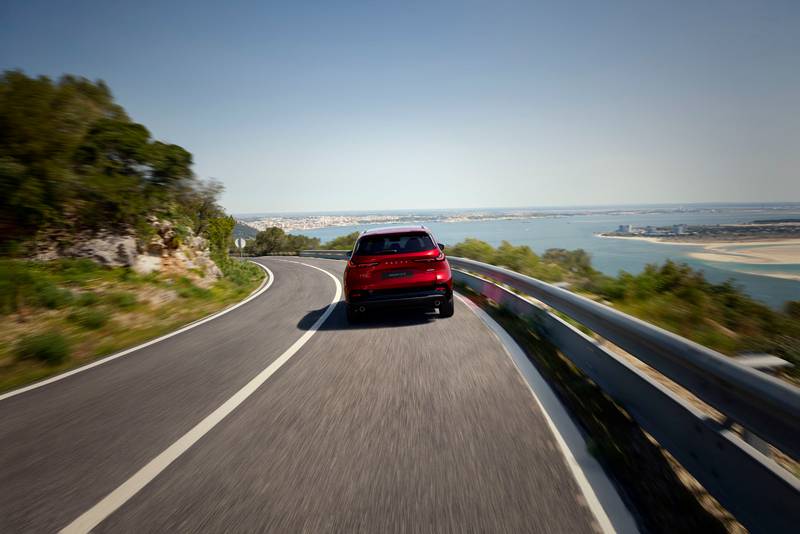
I took the CX‑5 on a long stretch of sparsely inhabited highway between two mountain ridges, a place where a car reveals its character. The little Mazda listened to my demands, gave a little giggle, and set about proving that a production crossover could still have grip and grit. It flew through esses like a hawk tracking a rabbit – quick, composed, and entirely sure of itself. The ride is firm enough to support handling but not so harsh that you dread potholes. It’s the kind of car that makes you take the long way home, just because.
Cabin comfort
Of course, practicality matters. The CX‑5 offers 66.5 cubic feet of cargo space with the rear seats folded – less than the CR‑V or Sportage, but enough for a week’s groceries or a couple of suitcases.
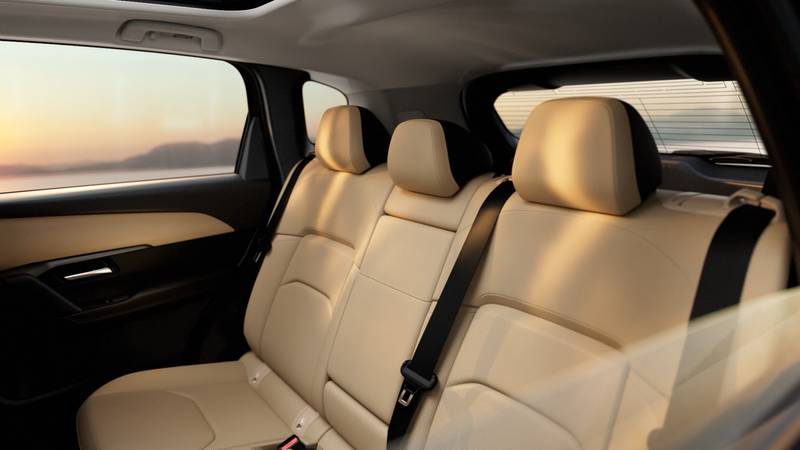
Rear‑seat passengers have enough legroom for adults; Mazda has made meaningful gains in rear knee and headroom for 2026.
Fuel economy comes in at 26 mpg combined, competitive for a non‑hybrid but a step behind a market rapidly moving toward electrification. Mazda says a hybrid – its first with an in‑house system and the new Skyactiv‑Z engine – is coming in 2027. For now, you’ll trade efficiency for driving pleasure.
Safety is a strength. The CX‑5 earns the IIHS Top Safety Pick+ designation, the highest award available, with ‘Good’ ratings across all crash tests. Mazda’s i‑Activsense suite – adaptive cruise control, lane‑keeping assist, blind‑spot monitoring, and automatic emergency braking – works smoothly, avoiding the abrupt interventions that make other systems feel like backseat drivers with anxiety disorders.
Tough neighborhood
Where does that leave the CX‑5 in the competitive landscape?
The Honda CR‑V offers more space and slightly better fuel economy, but its driving feel feels muted, as if the engineers tuned out all the fun. The Toyota RAV4, in hybrid form, delivers an exceptional 40 mpg, but the ride is firm, and the interior feels utilitarian. The Hyundai Tucson and Kia Sportage pack more tech and longer warranties (as they should). The Subaru Forester gives you standard all‑wheel drive and excellent visibility, but its engine feels underpowered, and its interior lacks the Mazda’s polish.
The CX‑5 sits in the middle on price and fuel economy but stands near the top on interior quality, driving precision, and – let’s call it what it is – joy.
One note on price: Mazda charges a $1,495 destination fee for the 2026 CX‑5, a figure that has been climbing across the industry as automakers offset logistics costs and tariff exposure. Domestic brands now average $2,189 in destination fees, a $713 premium over imports. The CX‑5’s fee is competitive, but it’s still money you’ll pay whether you like it or not – so shop the final number, not the headline MSRP.
Bottom line
The question, then, is not whether the CX‑5 is a good crossover. It clearly is. The question is whether you value the experience of driving enough to choose it over a more practical, more efficient, or more spacious alternative.
If you’re the kind of person who sees a car as an appliance, the CX‑5 probably isn’t for you. There’s no shame in that; appliances serve a purpose. But if you’re the kind of person who still turns off the radio on a good road, who notices the way a steering wheel weights up in a corner, who believes that a car should do more than just transport you from Point A to Point B – then the 2026 Mazda CX‑5 S Premium Plus deserves your attention.
It’s not the most practical crossover. It’s not the most efficient. But it is, without question, the most likable.