

Car Reviews
TOYOTA’S TACOMA TRAILHUNTER: BUGGIN’ OUT AT MOSQUITO GAP

TOYOTA’S TACOMA TRAILHUNTER
BUGGIN’ OUT AT MOSQUITO GAP
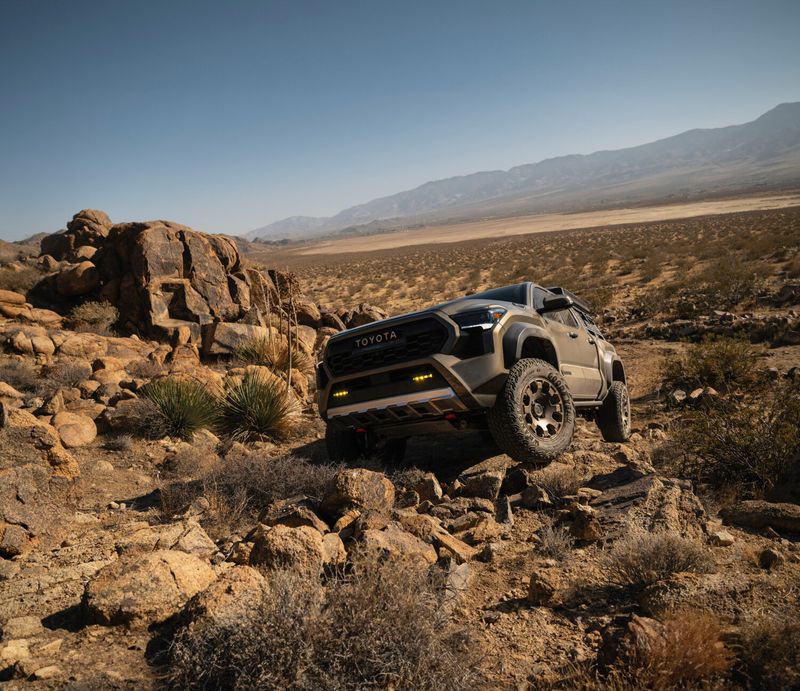
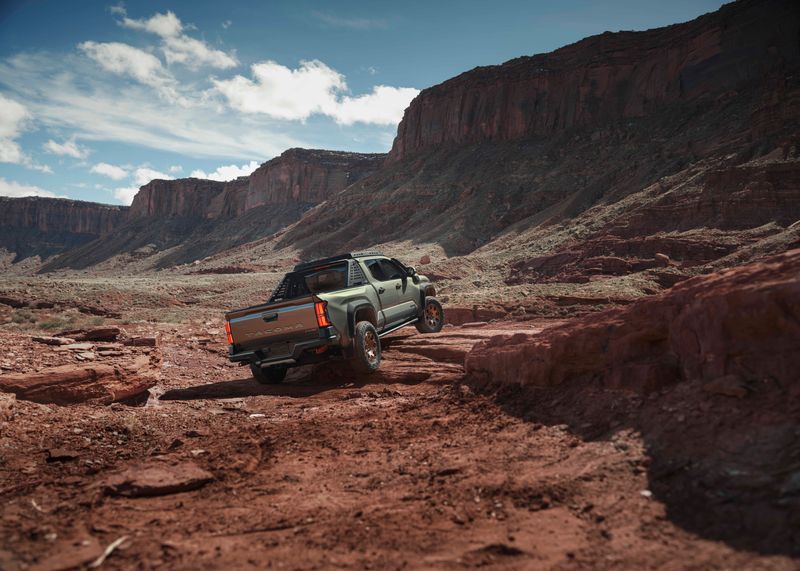
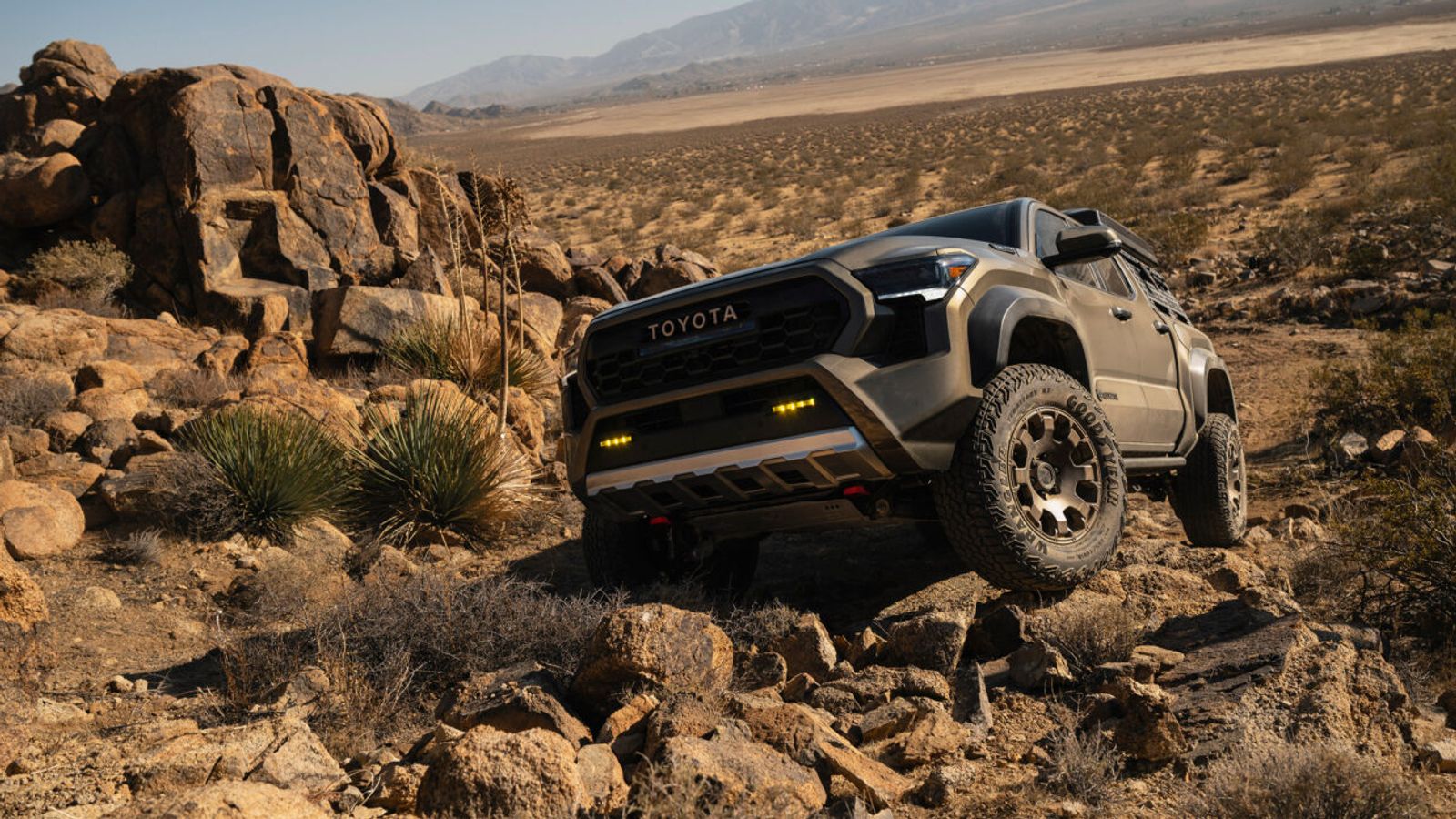
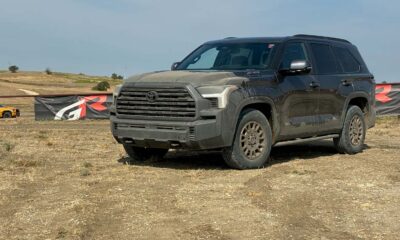
MOSQUITO GAP, Arkansas — The road was treacherous, rocky and steep, but the Toyota Tacoma Trailhunter conquered it. A hero on a mission.
That should come as no surprise, given the truck’s place atop the Tacoma lineup. The 2026 range begins at $32,545 for a basic SR work truck and climbs into the mid-$60,000 range for Toyota’s flagship off-road models. The Trailhunter carries a base MSRP of $63,750 before destination charges; even the mighty TRD Pro starts at $64,750.
Our tester pushed that envelope farther. Equipped with camping gear options and destination charges, it approached the $70,000 mark, placing it squarely in the territory once occupied only by luxury pickups. At that price, buyers have every right to expect something extraordinary. The good news: Toyota’s Tacoma Trailhunter often delivers.
Truck with a mission
The loose rock demanded careful wheel placement. Deep ruts threatened to unsettle lesser vehicles. Sections of the climb appeared designed more for mountain goats than midsize pickups. Yet the Trailhunter dug in and climbed, its tires finding grip where common sense suggested there was none. Moments like these explain why the Tacoma Trailhunter exists.
This is not merely a pickup truck with off-road decals and rugged marketing photos. It is a purpose-built overland machine engineered to carry people and gear deep into places where pavement ends and self-reliance begins. What surprised me most, however, was not the truck’s unquestioned off-road competence. It was how much fun the Trailhunter proved to be when pointed back toward civilization.
The Baby Raptor effect
I love driving the 2026 Tacoma Trailhunter with i-FORCE MAX power, not only because of its uncompromising grip on the trail and the remarkable places it can reach, but because it inspires a deep sense of competence. Few vehicles make the driver feel so capable. Under hard acceleration, the hybrid powertrain delivers a satisfying surge of torque accompanied by an unexpectedly rich exhaust note, adding a layer of excitement to the truck’s already formidable capability.
Despite its overlanding mission, the Trailhunter can feel like a Baby Raptor when the throttle hits the floor, especially under the tree canopy along rolling Forest Service roads.
The secret is Toyota’s i-FORCE MAX hybrid system, which combines a turbocharged 2.4-liter four-cylinder and an electric motor to produce up to 326 horsepower and 465 pound-feet of torque. The electric motor fills the gaps before the turbo reaches full boost, creating an immediate response that makes the truck feel far stronger than its size suggests.
The soundtrack helps. While some turbocharged four-cylinders sound strained under acceleration, the Trailhunter emits a surprisingly deep and satisfying growl. Combined with the instant shove of electric torque, it creates a driving experience that is far more entertaining than one might expect from a vehicle carrying skid plates, recovery gear and enough tie-downs to rig a sailing ship.
Old Man Emu earns its reputation
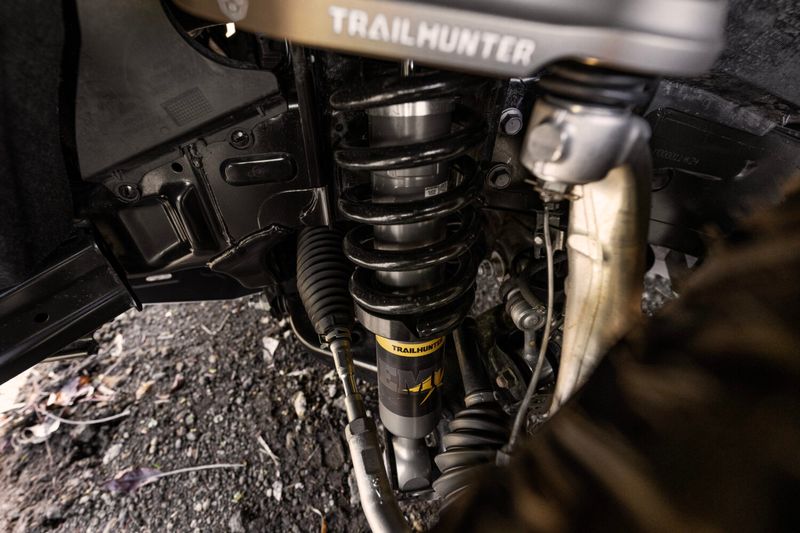
The hardware underneath deserves equal credit. Toyota equipped the Trailhunter with ARB-developed Old Man Emu suspension components engineered specifically for long-distance travel over punishing terrain. The suspension absorbs rocks, washboards, and broken surfaces with impressive composure while supporting excellent body control – the Raptor feel.
The Tacoma never feels delicate. Instead, it feels built for abuse, as though every part was designed with the expectation that owners would eventually find themselves miles from pavement and cell service. That confidence becomes addictive.
Fuel economy question
Yet living with the Trailhunter raises a legitimate question.
My tester arrived showing an average of 16.1 mpg across nearly 10,000 miles of press-fleet service. Driving in what might be called ‘Old Man Mode’ — avoiding Interstate speeds, staying close to posted limits and letting the hybrid system do its work — I managed to raise that figure to 21.3 mpg. Even then, I never approached the EPA’s 23-mpg combined estimate.
This is not an argument against hybrid technology. After more than a decade with a 2007 Highlander Hybrid, which still delivers 28 mpg, I have yet to spend a dime repairing a hybrid component. The electric motors, power electronics, battery systems, and regenerative brakes are remarkably durable. Toyota hybrids have proved to have one of the strongest reliability reputations in the automotive industry. The question is different: Where is the fuel-economy benefit?
The Trailhunter’s hybrid system unquestionably delivers more torque, stronger acceleration, and greater capability than the V6-powered Tacomas that came before it. Yet in everyday driving, the fuel-economy gains feel modest. This hybrid is best understood not as an economy hybrid but as a performance hybrid. Toyota is spending its electrons on power rather than efficiency. By that measure, the company succeeded brilliantly.
Looking beyond torque
Still, as we move deeper into the second quarter of the 21st century, it is reasonable to ask whether that is enough?
The world is slowly coming to grips with the economic and environmental costs of climate change. Consumers are increasingly looking for ways to stretch fuel and maintenance dollars. Against that backdrop, a hybrid pickup that delivers enormous gains in torque but only modest gains in fuel efficiency feels less revolutionary than it might have a decade ago. However, none of this diminishes Toyota’s accomplishment.
More than any other automaker, Toyota spent decades advancing hybrid technology and bringing electrification into the mainstream. The company helped build the bridge between traditional internal-combustion vehicles and an increasingly electrified future. It is preparing more advances for production in 2027. The next few years will be fascinating.
One would not be surprised to see plug-in hybrid technology eventually reach Toyota’s truck lineup, followed perhaps by solid-state battery technology if the company’s development efforts bear fruit. Imagine a future Trailhunter able to travel meaningful distances on electricity alone before unleashing hybrid torque for long-range adventures far from the grid. That would change the equation.
The verdict
The current Tacoma Trailhunter shows what happens when electrification primarily enhances capability. It can scramble up a rocky Arkansas mountainside like a goat. It can sound like a Baby Raptor under full throttle. It can make its driver feel completely confident that the trail ahead, however rough, is still accessible. For many buyers, that may be enough.
For the future, Toyota’s challenge is to deliver the same sense of competence while making equal strides in efficiency. Now that would be a brave new world.