




Book Review
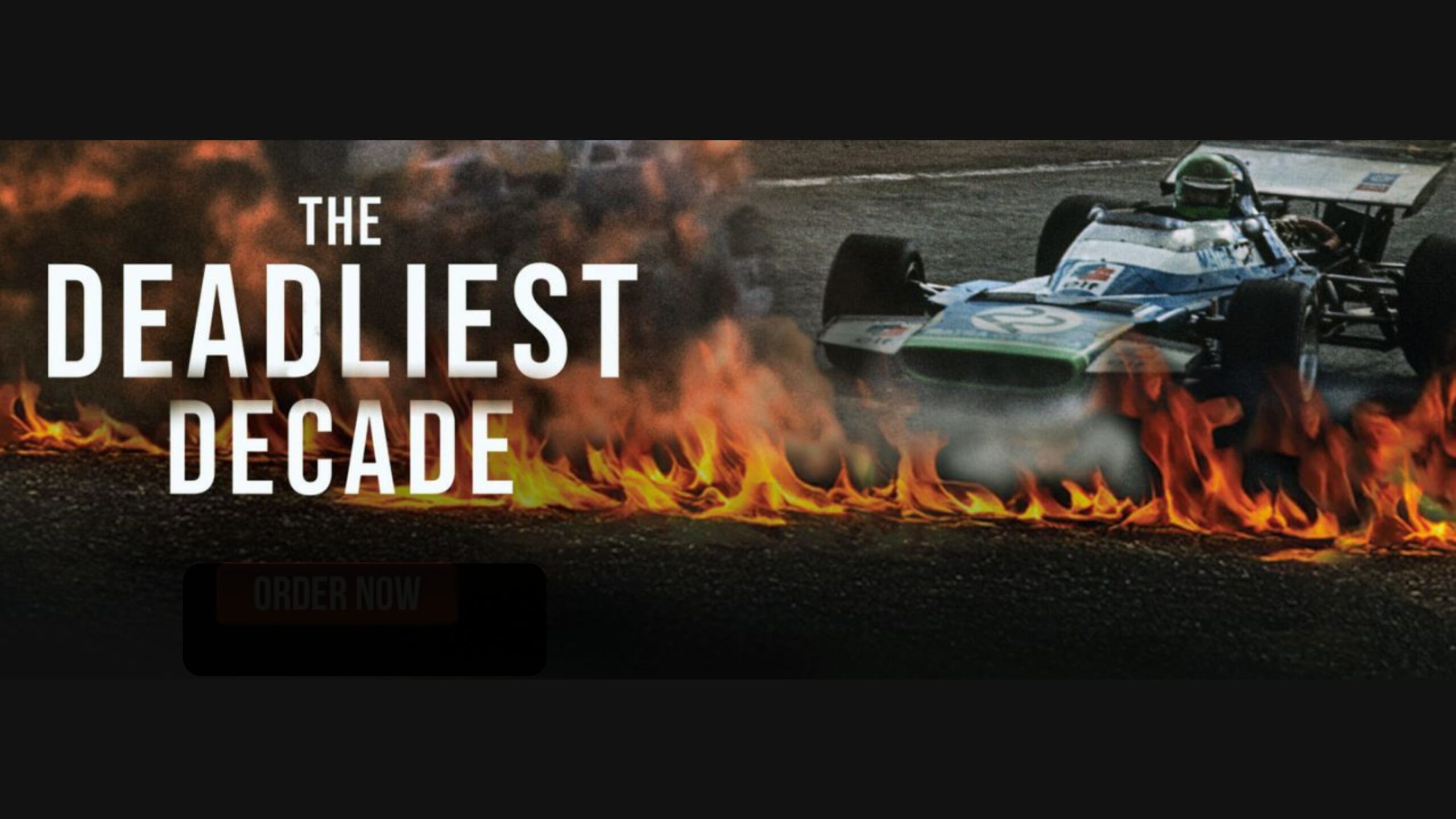
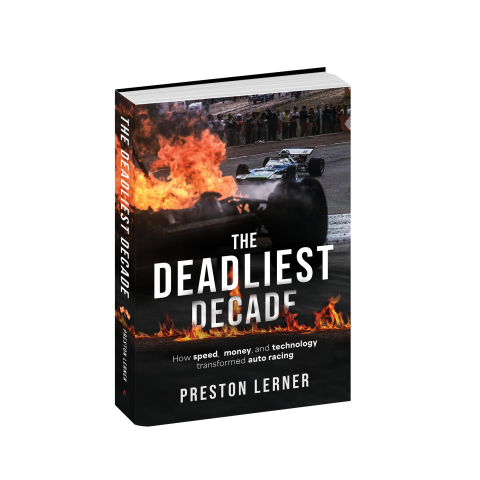
THE DEADLIEST DECADE

THE DEADLIEST DECADE
How speed, money and technology transformed auto racing
Preston Lerner and I are heading toward our 40th anniversary, having met in the late ‘80s. At that time Preston was freelancing for the Dallas Morning News, while I would have been freelancing for Northstar Lincoln-Mercury-Lotus (I was the ‘Lotus’) in Plano. Before joining the Morning News, Preston had worked as a reporter in Abilene, while I – before hooking up with Northstar Lotus – had managed the Classic Ferrari showroom in Richardson. In short, Preston was on an upward trajectory, while I – wrapping up my first decade in automotive retail – was headed downward. That would explain, some 40 years later, why Preston has written an outstanding book – THE DEADLIEST DECADE – and I’m writing its review…
Preston grew up absorbing as much racing as was possible at a time when print was still dominant, and race reporting came two months after the actual race. Inevitably, with the race reporting came an all-too-predictable obituary. THE DEADLIEST DECADE focuses on the period between the mid-‘60s and mid-‘70s, and while the many fatalities during that time (and the decades-long effort to reduce those fatalities) are the principle focus, the book – and the work that went into it – encompasses so much more.
Surprisingly, the opening chapter doesn’t begin with the deaths of Eddie Sachs and Dave McDonald at Indy in ’64, nor does it start with the accident that claimed the life of Grand Prix legend Jim Clark at a Formula 2 race in 1968. Instead, Preston begins with Joe Weatherly, a NASCAR entrant at the dawn of NASCAR in the late ‘40s and racing into the early ‘60s. As you might guess, Joe Weatherly was killed, racing at Riverside in 1964. And his death was at a relatively low speed in what was then regarded as one of the safer series in racing. But Weatherly’s death is simply an early example of the tragedies that surrounded racing and its entrants.
The dangerous conditions had, of course, many fathers. First and foremost, during the period from racing’s inception in the early part of the 20th century to the ‘70s, was the completely callous acceptance of that danger. Racing accidents were often lethal, and those that drove simply accepted it. That acceptance was exacerbated by the hidebound conservatism of many of those racing. Mr. Weatherly, for example, believed a seatbelt or shoulder harness would restrict his movement while driving; that restriction would have been a godsend as his stock car collided with a Riverside barrier. But Joe weatherly was resolute in his attitude…and subsequently dead.
Mr. Lerner also gives appropriate attention to the increasing performance throughout that decade, with top speeds going significantly up as lap times came dramatically down. Those increasing speeds were fueled by the powerplants, more aerodynamic design and rapidly evolving tire technology. At Indianapolis those faster speeds were accelerated by the switch, beginning in the early and mid-‘60s, to a mid-engine layout, while in Formula 1 that same mid-engine formula was merged with a doubling of displacement. And when you go faster you’re gonna’ hit harder.
Preston’s work encompasses not only a look at technology, but also the safety issues at many of the tracks – from Ascot to Zandvoort! – and the eventual safety improvements implemented. By the beginning of the ‘70s Indy was some six decades old, while many British and European venues – including Germany’s fabled Nürburgring – predated World War II. Despite drivers forming an association for the improvement of safety, track owners were slow to recognize the need, and if recognized reluctant to write the necessary checks.
Take one look at the book’s 400+ pages and you’ll know it was an immense project. But then, the book’s bibliography is 6+ pages, and the index runs 25. Mr. Lerner undertook a massive amount of work and organized it into a comprehensive – albeit entertaining – read. Perhaps the best part is reawakening the memories of those that raced – from Alboretto to Yarborough – and the many we lost. Thanks to Preston, for succeeding generations of readers those that were lost have now been found.
That’s if, of course, they read the book. Preston Lerner’s THE DEADLIEST DECADE is published by Austin’s Octane Press (octanepress.com) and retails for $39.95. The review copy was provided by the publisher.