
Car Reviews
2027 Volkswagen Atlas SEL Premium R-Line: Refinement for Real Families

Strong interior quality and third-row space position it against the Telluride and Palisade
Does the all-new second-gen 2027 Volkswagen Atlas work for larger families that need those back seats? That’s the question with this SEL Premium R-Line.
We put 415 miles on it. This one is the 7-passenger bench, not captain’s chairs. Captain’s chairs are a $695 option, and this loan doesn’t have them. The door jamb says seven seats, two up front and five in back. What surprised me most was the overall refinement and the interior quality. I had a 2018 Atlas, so I know the nameplate. This one feels more finished inside than I expected, and it still works as a family SUV.
The 2027 Atlas comes in four trims: SE, SE with Tech, SEL R-Line, and SEL Premium R-Line. We’re in the top one, with the 8-speed automatic and Tiptronic. 4MOTION is standard on this trim, not a box you check.
Design
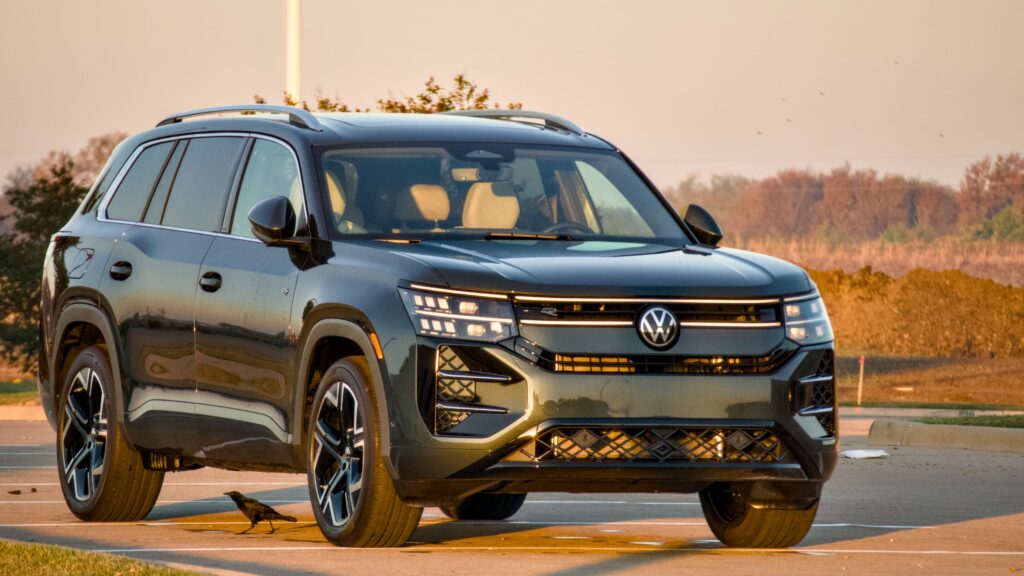
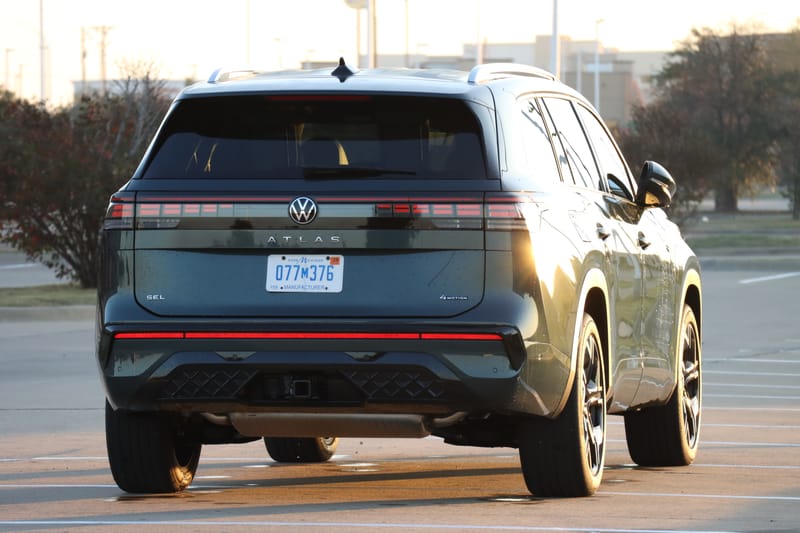
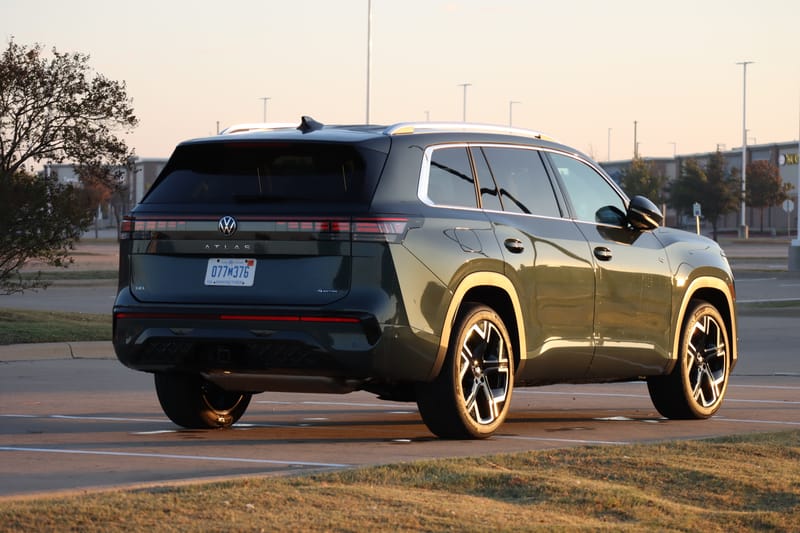
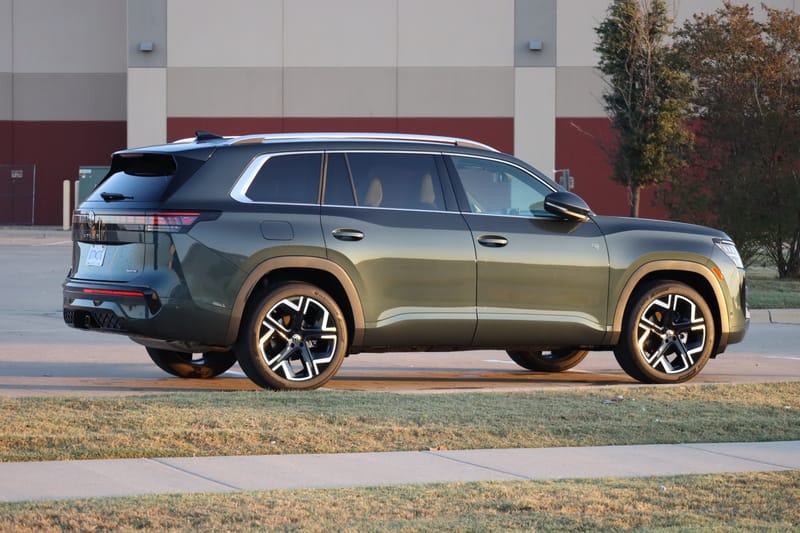
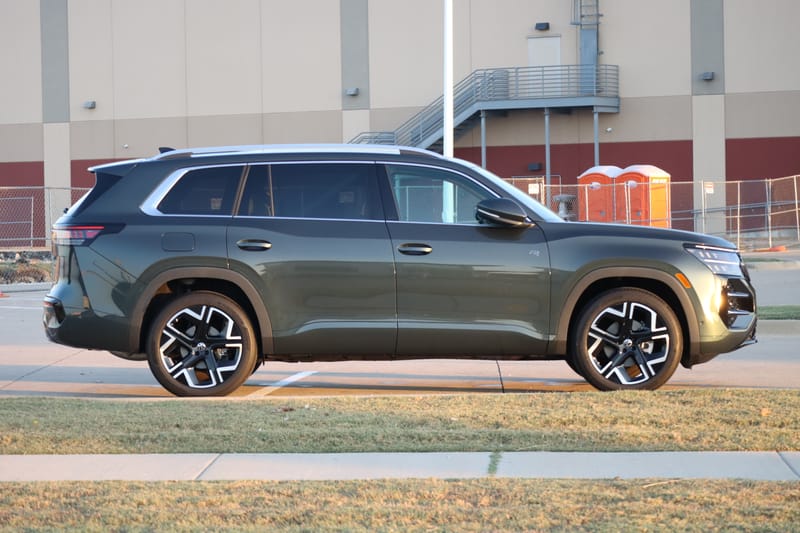
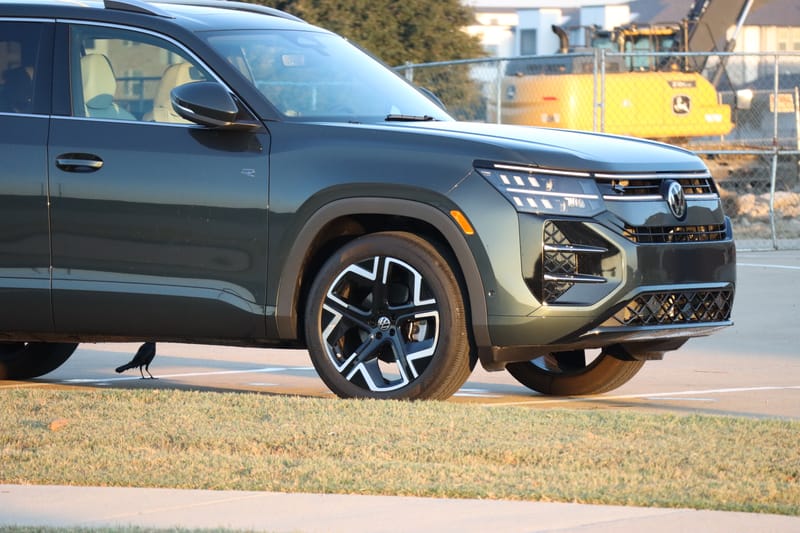
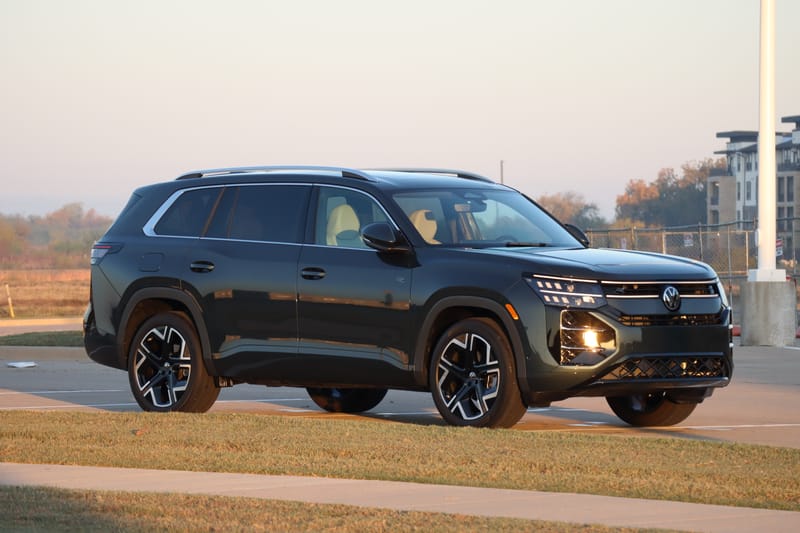
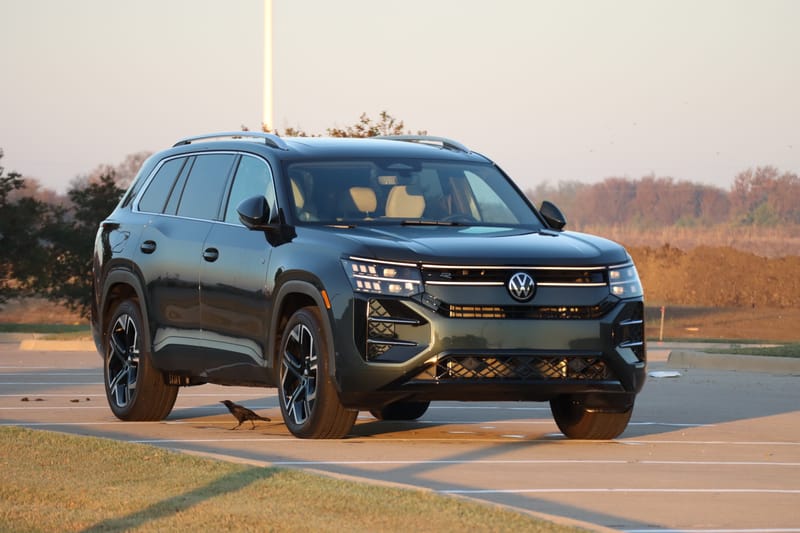
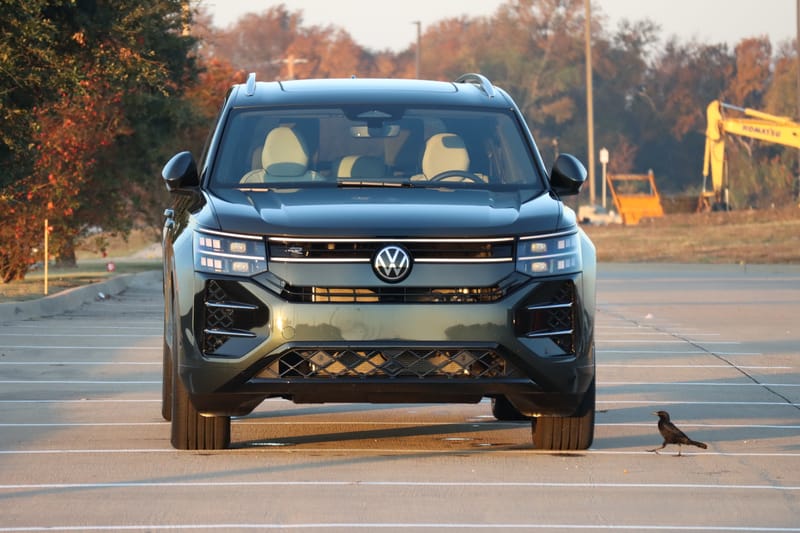
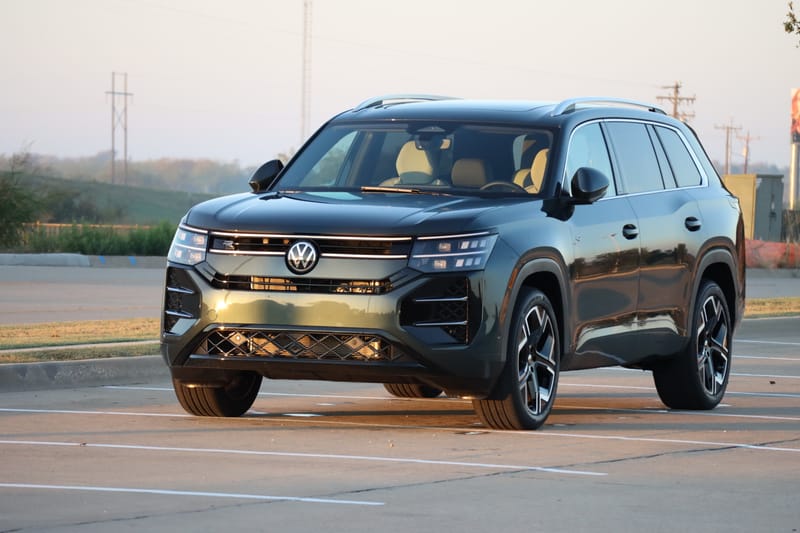
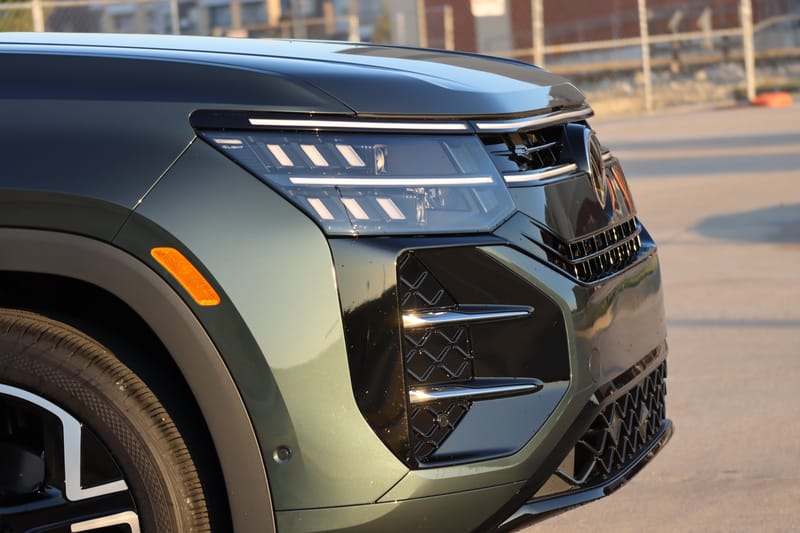
I like this Sacramento Green Metallic. It’s a no-charge color, and I’ve had compliments on it. The exterior design is really good, especially the new headlights. You get double-stacked LEDs, with a light line through both lamps and across the grille to an illuminated VW logo. At night that front end looks wide. The puddle lamp by the driver’s door throws a VW logo on the ground.
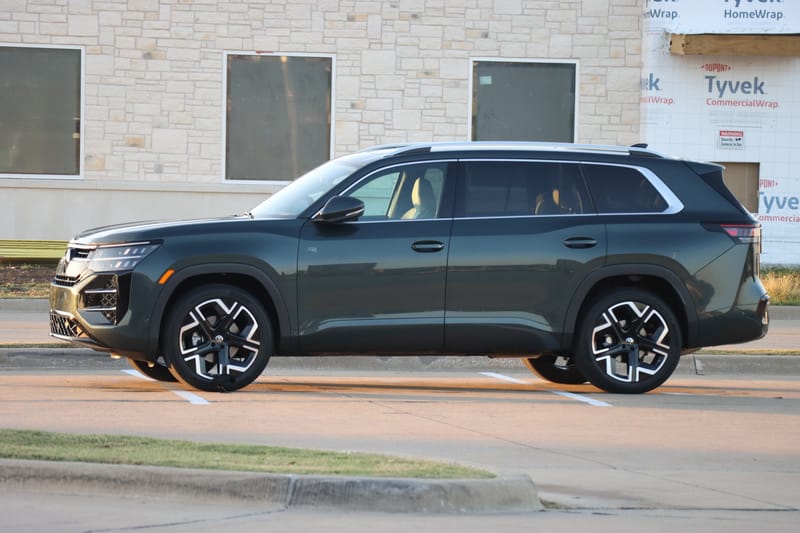
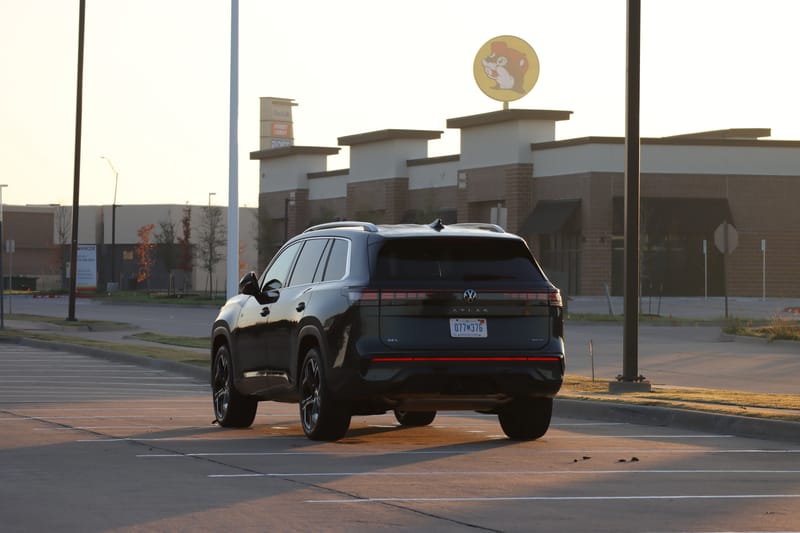
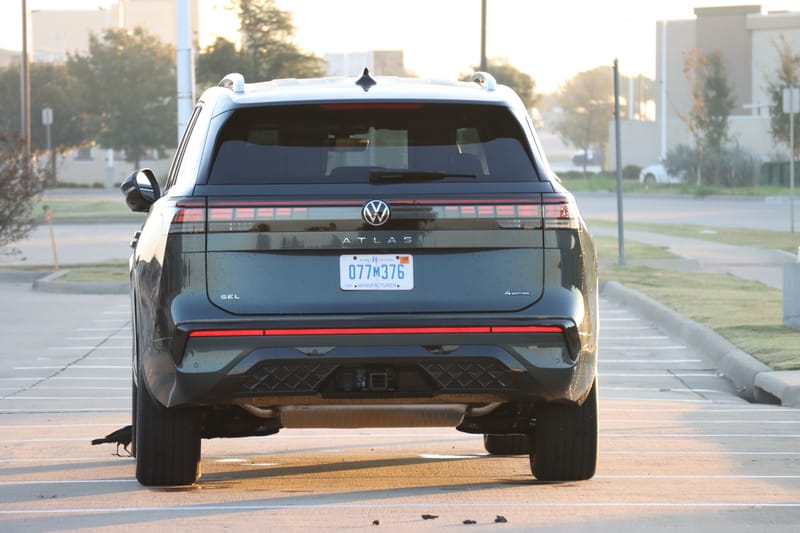
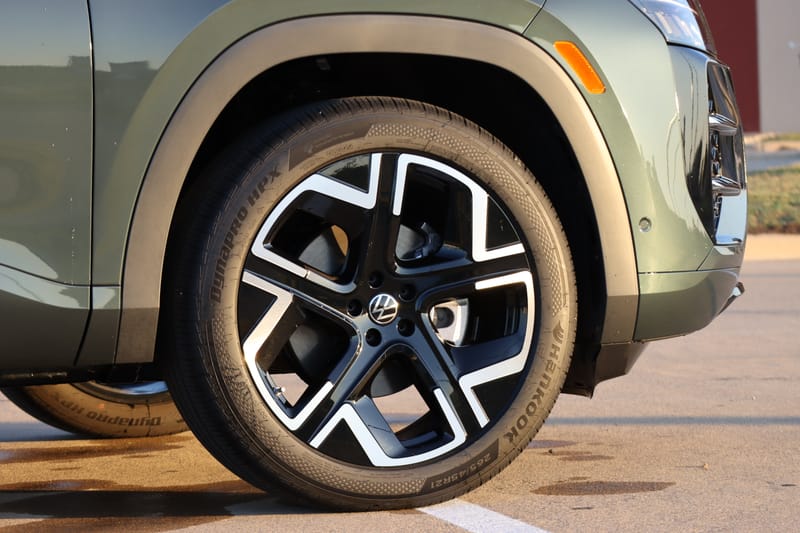
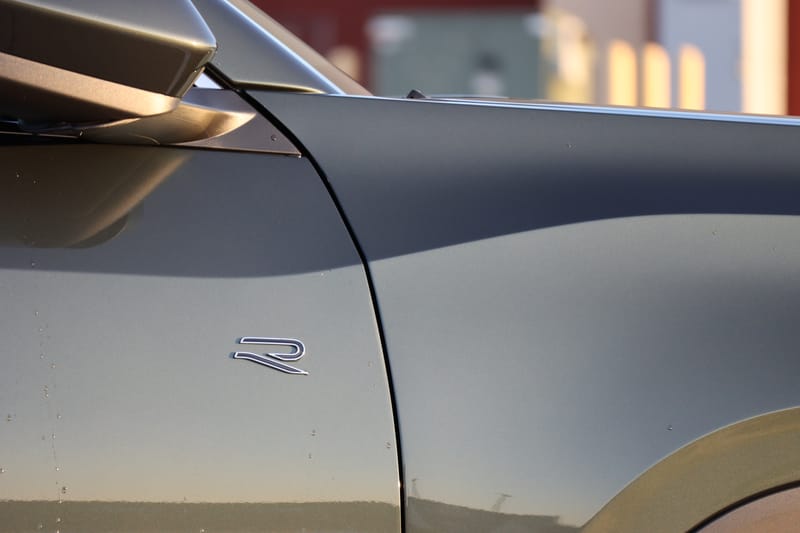
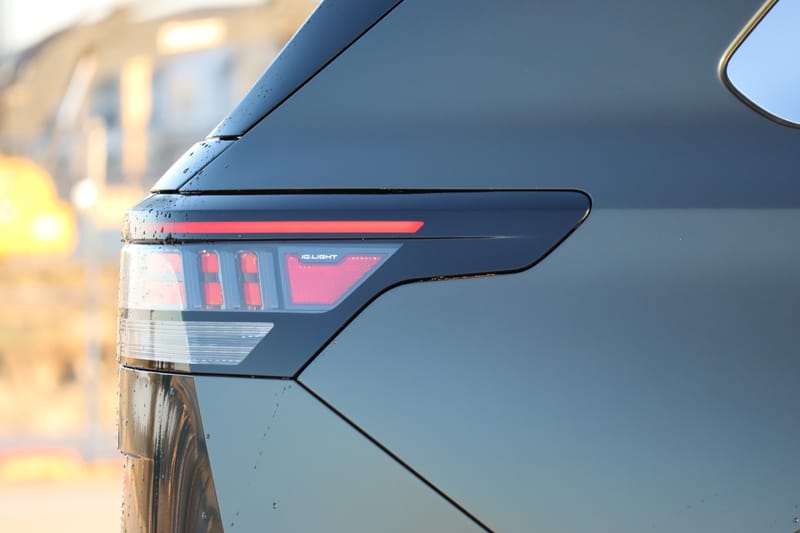
Down the side you’ve got silver anodized roof rails, stainless window surrounds, an R badge on the front fender, and 21-inch machined R-Line wheels on 265/45 R21 all-season tires. The door jamb calls for 36 psi, and the spare is a T165/80 R17. Out back the taillight bar runs the full width, the rear VW logo lights up red, and the lower bumper finishes in a gloss-black diffuser. R-Line grille and exterior trim come with the trim, along with a power tilting and sliding panoramic sunroof.
On paper it’s 203.1 inches long, 78.3 inches wide, and 70.3 inches tall, on a 117.3-inch wheelbase. Turning circle is 40 feet. Curb weight for this 2.0T all-wheel-drive Atlas is 4,568 lb. Final assembly is Chattanooga, Tennessee, with the engine from Mexico and the transmission from the United States.
Interior and tech
The Nappa leather seats are comfortable. Front seats are heated and ventilated, with full-back massage, lumbar, memory on the driver’s side, and a manual thigh extension. Outboard second-row seats are heated and ventilated, and they get Nappa too. The wheel is a heated, leather-wrapped R-Line unit with shift paddles. Interior color is Mistral, also no charge.
Multi-color ambient lighting is great. It lights the dash and the door panels. You also get three-zone automatic climate, a head-up display, a 115-volt outlet in the second row, USB-C ports in all three rows, and dual Qi2 wireless charging. Keyless access includes the liftgate, with easy open and easy close, plus remote start.
The driver info display and the settings menus are confusing to navigate. The cluster is Volkswagen Digital Cockpit Pro, and the center screen is 15 inches with navigation. I like having the screen. I don’t like hunting through the menus to change a setting.
The nanny beeps are a lot, and that’s new for VW. IQ.DRIVE on this trim includes Travel Assist, adaptive cruise with stop and go, lane assist, emergency assist, front assist with automatic emergency braking, active side assist, and rear traffic alert. The equipment list is long. Living with the chimes is the part I’d warn you about.
Compared with my 2018 Atlas, the cabin feels a bit smaller than I remember. The kids were a lot smaller then, so some of that is memory. VW’s passenger volume is 153.6 cubic feet. Headroom is 41.3 inches up front, 40.4 in the second row, and 38.3 in the third. Legroom is 41.7, 37.6, and 34.1. That third-row number is why this makes more sense with smaller kids than with adults sitting back there for a long drive.
Even so, the whole interior still lands in a good place. The 15-inch screen and the Harman Kardon system are a big part of that. This trim is the one that gets the 14-speaker Harman Kardon setup, with a center speaker and a subwoofer. The seats, the lighting, and the materials are what surprised me. Refinement is the right word for it.
Driving
Under the hood it’s a 2.0-liter turbo four, the EA888 evo5, rated at 282 hp and 258 lb-ft. Horsepower and torque are VW’s figures. They’re not printed on the Monroney. The sticker lists a 2.0L TSI 16-valve DOHC turbo four with stop-start. Official ratings are 282 hp from 6,000 to 6,500 rpm and 258 lb-ft from 1,900 to 5,750 rpm, from 1,984 cc, on regular unleaded.
It runs through an 8-speed automatic with Tiptronic. 4MOTION is standard here, with Active Control and driving mode selection. The fuel tank is 18.6 gallons.
I left Rockwall for Crowley for a game. About 67 miles one way, 134 round trip, and it took over two hours to get there. The drive was good. In that pre-rush traffic the power was just fine, and managing a bigger SUV in a lot of traffic was good too.
Coming back through downtown Dallas at night, the drive home was quicker until we got stuck. That’s the city, not the vehicle.
Take a corner a little quicker and the steering is a bit light. It doesn’t feel very connected. Same gripe I had with my Atlas back in the day. The week was still a good drive. This just isn’t a steering setup that tells you much.
Window sticker fuel economy is 20 city, 27 highway, 23 combined. This week we saw 21.1 mpg. That’s under the combined number, and it fits the kind of week this was, with a long drive to a game and a lot of sitting in traffic. The Monroney lists annual fuel cost at $2,000, and it says you spend $2,000 more in fuel over five years compared with the average new vehicle. A front-drive Atlas is rated 22 city, 29 highway, and 25 combined. This one is 4MOTION, so 20/27/23 is the figure that counts.
NHTSA has not rated this one yet. Overall, frontal, side, and rollover are all printed Not Rated on the sticker.
Utility
Open the hatch and you’ve got 21.2 cubic feet behind the third row. Fold that row and you’re at 55.9 cubic feet behind the second-row bench. Everything folded flat opens up 95.4 cubic feet. Max load on the door jamb is 1,102 lb combined for occupants and cargo. GVWR is 6,041 lb.
The second-row bench is 60/40. It folds flat, slides, and reclines, and it slides forward for third-row access. VW says it tilts and slides forward with a child seat installed. The third row is a 50/50 split that folds flat. That’s the family hardware. If you need the seat, look at the bench before you spend $695 on captain’s chairs and give one up.
This one came with the $296 Monster Mats and heavy-duty trunk liner with VW CarGo blocks. The mats are a two-row set of four. The liner and the blocks are what keep bags and gear from sliding around. It’s a small option that actually gets used.
There’s a hitch receiver, rated to tow 5,000 lb. We didn’t tow anything this week, so I’m not going to turn that rating into a towing story. If you need the number, it’s on the window sticker.
Price and what else you could buy
The SEL Premium R-Line starts at $56,610 before destination. Destination is $1,525, so with destination and no options this trim starts at $58,135. Our as-tested total is $58,431 before tax and title. That extra $296 is the mats and the heavy-duty trunk liner. Sacramento Green and Mistral are no charge, and so is the 8-speed 4MOTION powertrain on this trim. You can read this sticker without a calculator, and it still lands at $58,431.
Warranty is Volkswagen’s new-vehicle coverage, 4 years or 50,000 miles, and that includes powertrain. Corrosion perforation is 7 years or 100,000 miles. Scheduled maintenance is included at 1 year or 10,000 miles and at 2 years or 20,000 miles. Roadside assistance runs 3 years or 36,000 miles. Connected services on the sticker include Vehicle Insights for 7 years, Remote Access and Safe & Secure for 3 years, and a 3-month in-vehicle premium plan.
For the money, there are a lot more big 3-row SUVs out there than when I bought my 2018 Atlas, and that’s great. The Telluride and Palisade are still some of my favorites, but I like this Atlas along with a lot of others. Interior quality is the argument, along with a real second-row bench and third-row space that works for kids. You’re paying top-trim Atlas money. You’re not paying for a pile of packages this particular one doesn’t have.
We own a Kia Carnival now. We picked the minivan because it feels bigger inside, my wife can see out of it better, and it’s going to beat SUVs like this on economy. Over 415 miles we saw 21.1 mpg in this Atlas, against an EPA 23 combined. That’s the trade if you want the SUV shape. I still like this Atlas, and it sits with the Telluride and Palisade on the list of 3-rows I’d actually consider.
Final thoughts
I really enjoyed my week with the Volkswagen Atlas. It’s a great SUV for families, and I’d definitely recommend it, especially with smaller kids. If I were in the market for a 3-row, this would be on my list.
The steering is a bit light. The menus are confusing. The nanny beeps are a lot, and 21.1 mpg trails the window sticker. I knew those things by the end of the week. They didn’t outweigh the cabin, the bench, or how easy this was to recommend to a family that actually needs the seats.