






Car Reviews
Hyundai’s Ioniq 5 EV – THE DRIVE IS ELECTRIC!

Hyundai’s Ioniq 5 EV
THE DRIVE IS ELECTRIC!
SHADY LAKE, Ark. – Finally, an EV I can take to explore the Ouachita Mountains – there and back, fun along the way, home with electrons to spare.
Steep mountains and rolling forests blanket this land, but getting there in an electric vehicle first requires the spirit of pioneers, easy to spot by the arrows in their backs. Prior attempts at the 170-200 mile roundtrip foray into the mountains left us peeling off $20 bills at the few working charging stations we could find and at least twice rolling into one with the car screaming at us about imminent battery-death.
Places with high traffic counts, such as Texarkana, now have multiple choices, meaning equipment that works and competitive pricing, but in places like Mineral Springs, Dierks and Umpire…not so much. The best place to top off is at home. Here in eastern Texas and Arkansas, electricity runs about 13 to 16 cents per kilowatt-hour. A Level 1 charger will max out most batteries for $8-10; Level 2, $15-20. Out on the road, Level 2 charging can double that, and fast charging triple it. Experience teaches the further one gets from competition, the higher the multiples.
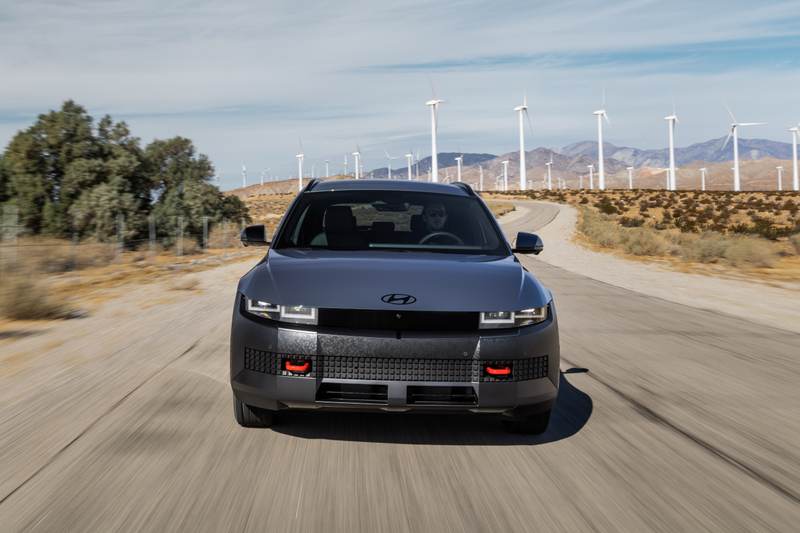
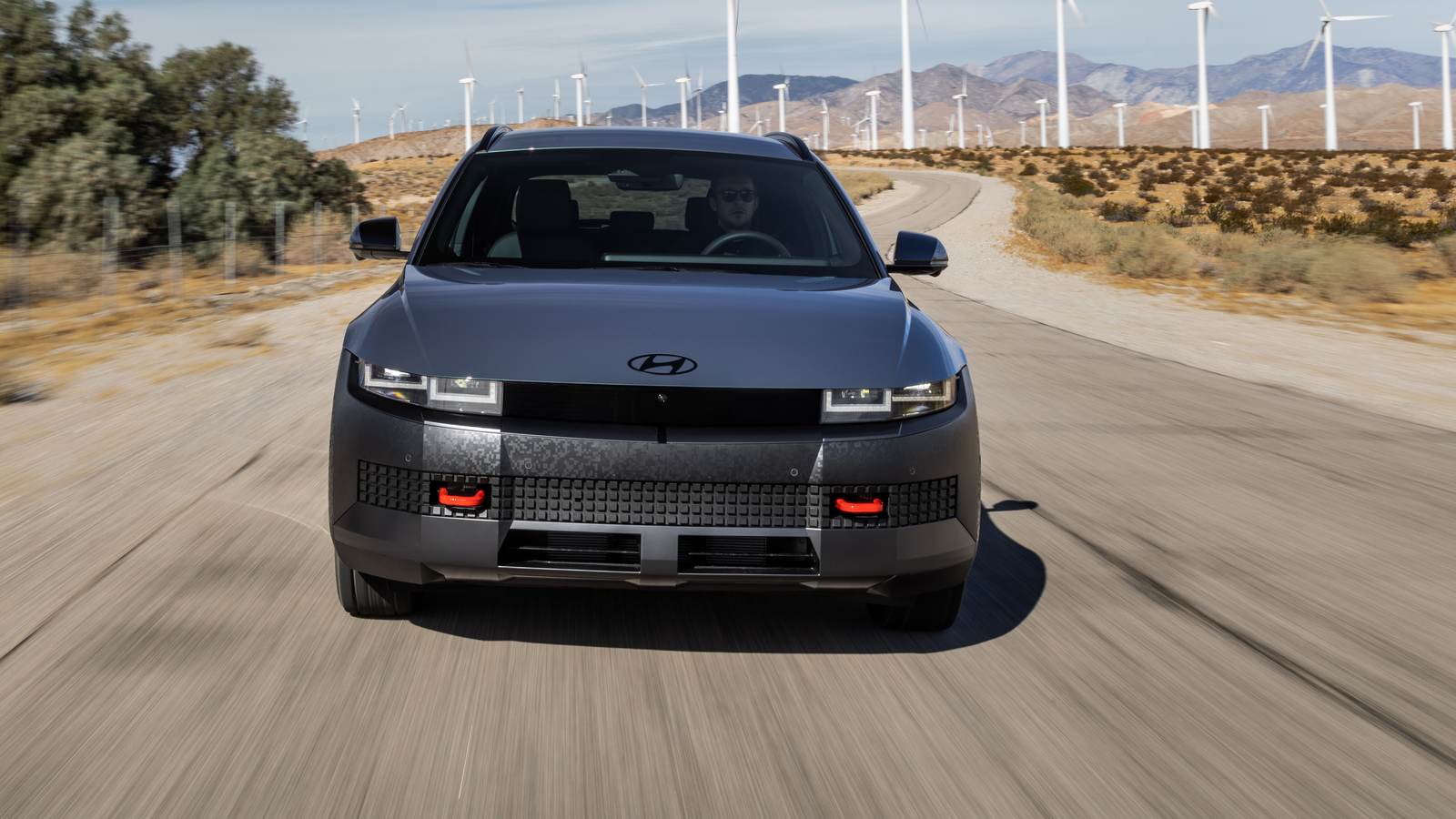
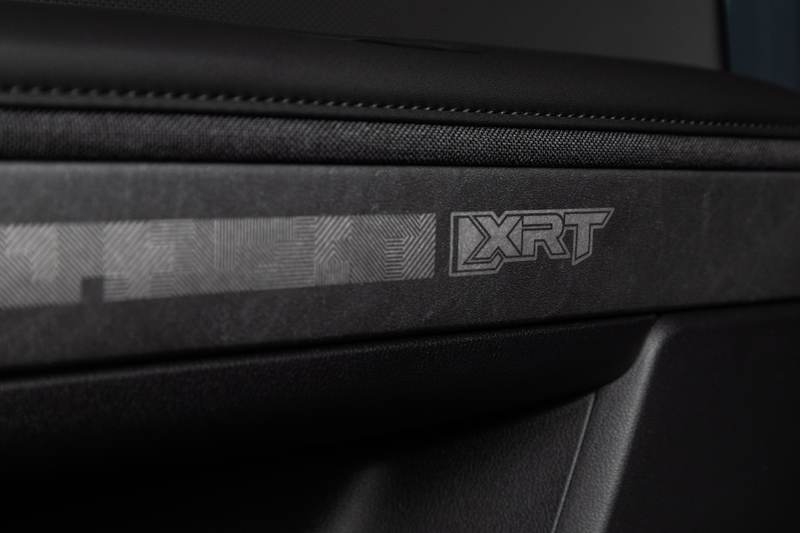
Thus, I am less than thrilled to learn I will spend a week as a foster parent to an EV with an eye-watering price tag. Still, Hyundai sent out its well-regarded Ioniq 5 with an XRT badge, meaning it was reporting for duty as an Overlander. The drive through Spring Lake Park is hardly a fair test.
Hyundai turns page
The Hyundai Ioniq 5 is a battery-electric compact crossover in production since 2022. Built on Hyundai’s dedicated E‑GMP platform, it offers rear‑ or all‑wheel drive and multiple battery packs. For 2026, the Ioniq 5 gains a built-in NACS port, making it compatible with Tesla’s Supercharger network – a significant real-world convenience for road-trippers. Prices for 2026 start at around $36,600 and peak at nearly $46,300 for the XRT before destination charges. Its chief rivals are the Tesla Model Y, Ford Mustang Mach‑E, Kia EV6, and Honda Prologue.
The Ioniq 5 has amassed an extraordinary trophy case. In 2022, it swept the World Car Awards – taking World Car of the Year, World Electric Vehicle of the Year, and World Car Design of the Year in a single year, an unprecedented triple crown. It was Motor Trend’s 2023 SUV of the Year (the first EV to win) and has made Car and Driver’s 10Best list for three straight years. It also holds a Top Safety Pick+ rating and was named Best Electric 5‑Passenger Vehicle in the 2026 Best Family Cars Awards.
In more than 30 years of automotive reporting, I may have laid hands on a better car, but it cost twice as much. The Ioniq 5 signals a fundamental shift in Hyundai’s engineering soul. For decades, the Korean automaker was known for inexpensive, utilitarian cars whose mechanical refinement trailed its Japanese rivals – competent, but forgettable. The Ioniq 5 changes that. Its 800‑volt architecture delivers 10-to-80-percent charging in about 18 minutes, among the fastest on the market, and its platform offers dynamics and interior space that invite comparisons to premium European brands.
The company that once competed on price now competes on electrical and software sophistication. The old mechanical indifference is gone. This is what ambition looks like.
Good start
Sunrise’s first rays pierced a crystal sky when I tapped the start button. Seeing 100% and a range estimate of 264 miles were encouraging signs – a testament, perhaps, to my conservative driving the night before. Though I love the back road through Fulton to Dierks, that would have meant 10 more miles, all on that high-speed, crash-car circuit called I-30. Driving more than 75 mph, I have discovered, sends estimated range plummeting, electric or petrol.
Instead, I stuck to roads with speed limits of 55 mph and set the cruise control to something remarkably close to that number. This habit avoids bullies after my lunch money, which you call gas stations. Sure, I miss my conversations with state troopers, but this is a far more relaxed mode of travel.
Once we hit the mountains I did not press the Ioniq 5, though my hands and derriere were telling me this AWD compact with electronic torque vectoring had some serious road talent. Shooting the curl and hanging ten through winding curves is fun until you glance down and realize you just lost 20 miles of range.
Still, it was tempting. This is a fast car. Car and Driver clocks the XRT’s 0-60 mph sprint at 4.5 seconds, which is quick enough to get you in and out of trouble with equal ease.
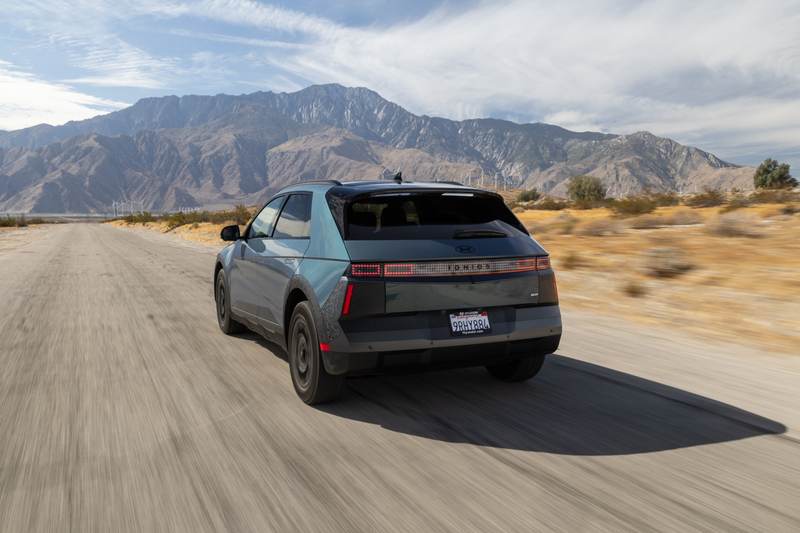
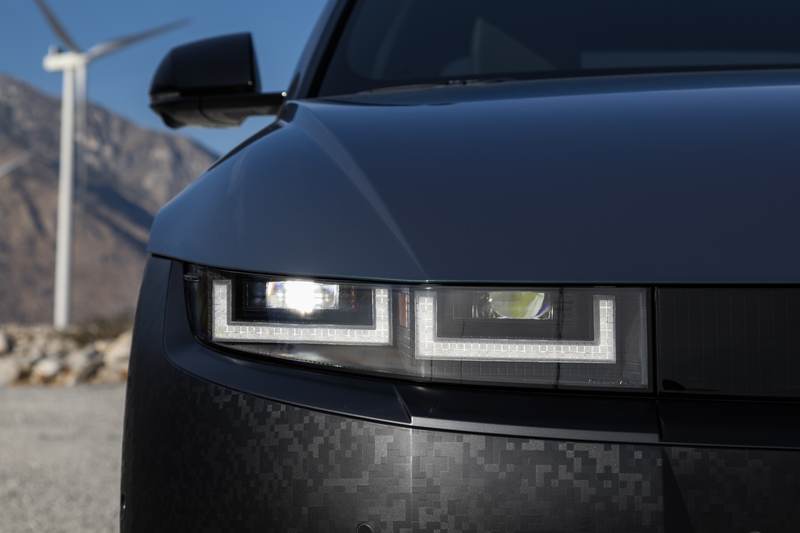
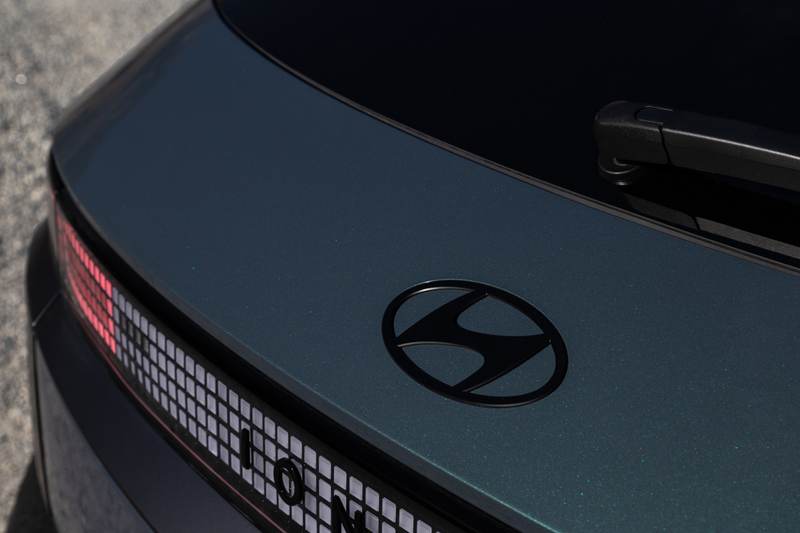
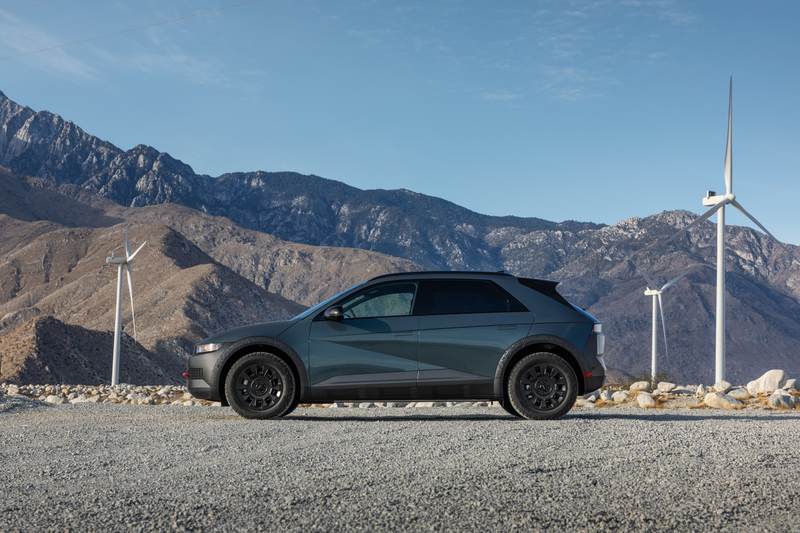
Instead, I relaxed, let the car keep itself inside the lines, and enjoyed the comfortable visibility of sitting a little higher. It is just one way the compact feels like an SUV. The XRT trim adds nearly an inch of suspension lift along with all-terrain tires and unique front and rear fascias. MotorTrend notes that this trim “benefits from a raised suspension that allows for more wheel and body travel, resulting in beautifully smooth damping.”
The interior features carefully chiseled lines, storage nooks and power outlets galore, and plenty of roominess front and rear. This vehicle would make a fine people hauler or car camper – plenty of room in back to roll out an air mattress and sleeping bag. With up to 2,700 pounds of towing capacity, it can also haul a small trailer or teardrop camper for longer overlanding excursions.
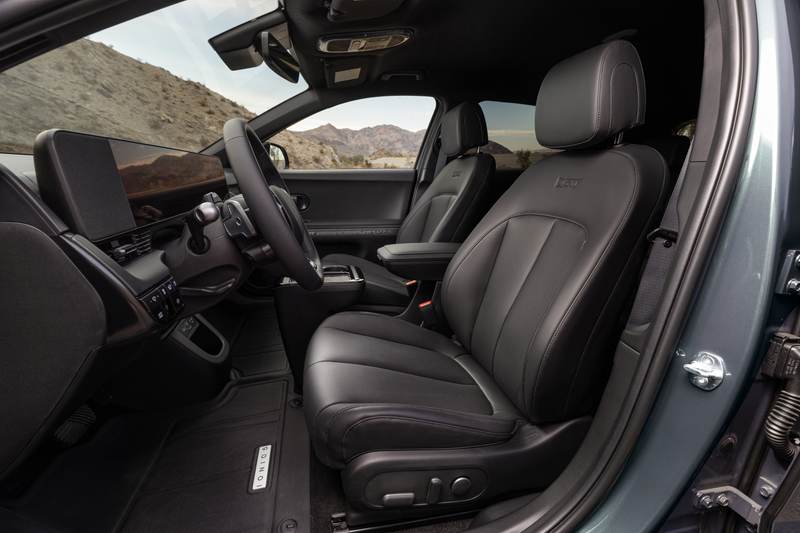
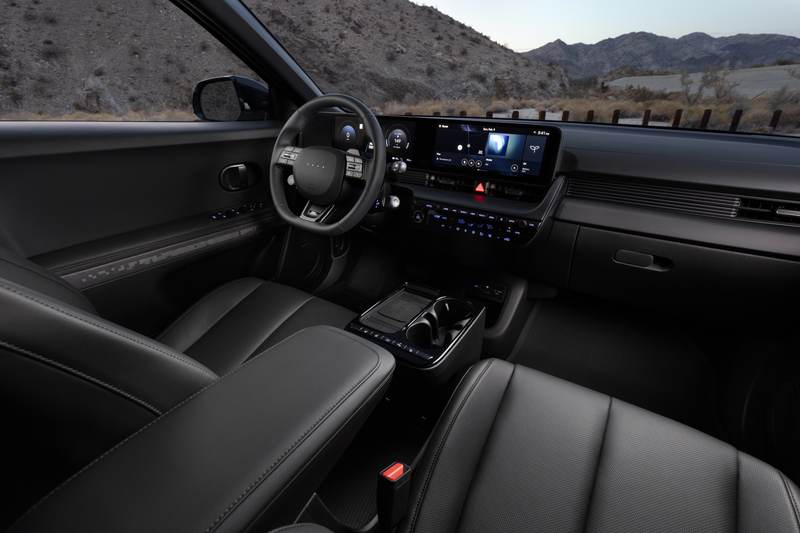
I marveled at the depth and wide range of the premium Bose sound system. The system sounded terrific, and a quiet cabin let every note land clean. The slight whine of the electric motors fades in normal conversation, and the car is well insulated from wind and road noise. The all-terrain tires do their highway job well, providing enough grip while not howling like a grieving wolf. Indeed, I was basking in Eagles’ six-part harmony as the mountain range came into view.
I kept a hawk’s eye on the range meter. The XRT’s trail-tuned suspension, knobby all-terrain tires and nearly one-inch lift are, collectively, an affront to efficiency. Where rear-wheel-drive compacts routinely top 300 miles on a charge, this overlander trades range for aggression. The EPA rates the XRT at 259 miles – the cost of the AWD setup and off-road hardware. Yet when we rolled into the trailhead, having burned through 85 miles of backroad, the dashboard still showed 202 miles in reserve.
A grin wider than the hood itself spread across my face.
Two immediate benefits:
- I could relax on the trail, not ceaselessly worry and use every precious moment of phone access to seek a place to buy more electrons. Been there, done that.
- Since we had the early start – 72 degrees at 7:45 – we could finish with the challenging, 12-mile drive over to Albert Pike. The road would eat power like Cookie Monster on a chocolate chip binge, and add 20 miles to the trip, but we had room to spare.
Three hours and seven miles later, the temperature was 88 degrees. Still, the Ioniq 5’s air conditioner quickly overpowered the heat, even though driving across mountain streams clearly requires stopping and putting all the windows down.
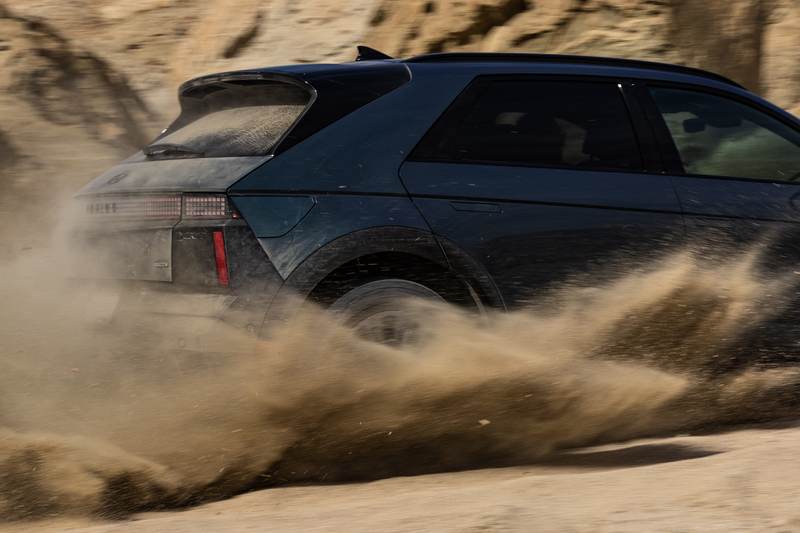
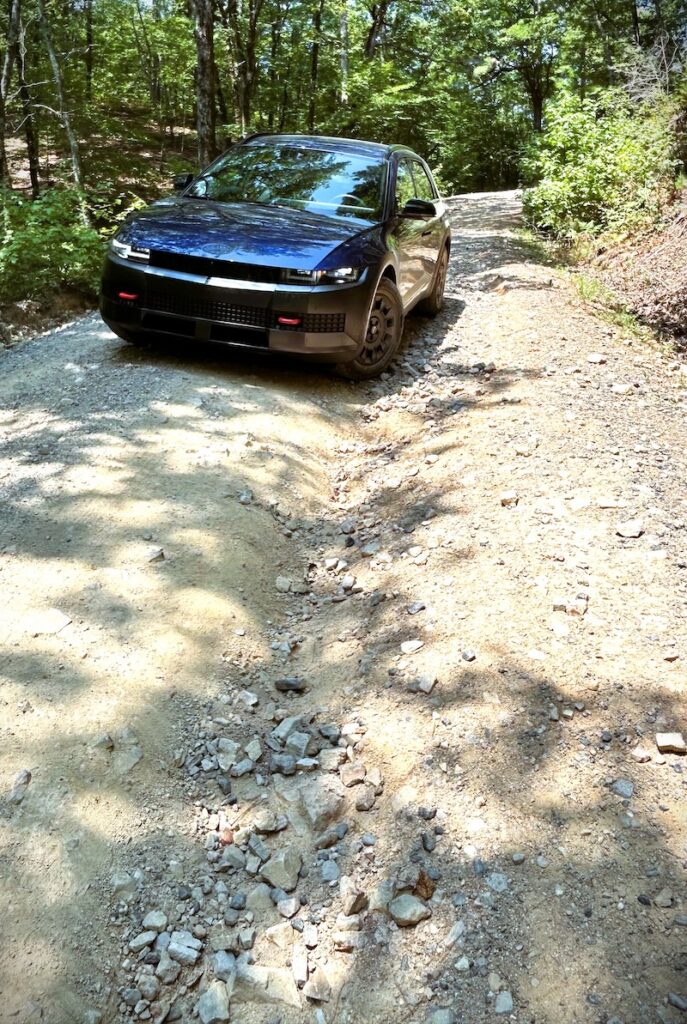
A few Jeeps and ATVs were all we encountered on the road along Babcock Creek over to Little Missouri River. It seemed rockier and more deeply rutted than before, but the XRT handled it like a champ. The suspension and bigger tires have both a floaty and controlled quality that absorb impacts well. The most difficult part of the road was the frequent backing up to take pictures.
Kelley Blue Book, which named the Ioniq 5 its 2026 Electric Vehicle Best Buy, found the XRT surprisingly capable in the rough stuff. One editor noted that “I never felt like the Ioniq 5 couldn’t handle the uneven terrain we drove on. To me, driving over the bumps felt pretty smooth.”
When we made the turn for home, the sirens of the curves touched my soul. I just had to see, and the Ioniq 5 did not disappoint. At its core, it is a nicely balanced and responsive machine. It inspires great confidence, though the AT tires tend to break loose in the back when one powers through a curve.
It took me milliseconds to figure out what was happening. By then, the car, which thinks in nanoseconds, diagnosed and corrected the problem, turning the incident into a pleasant little sashay.
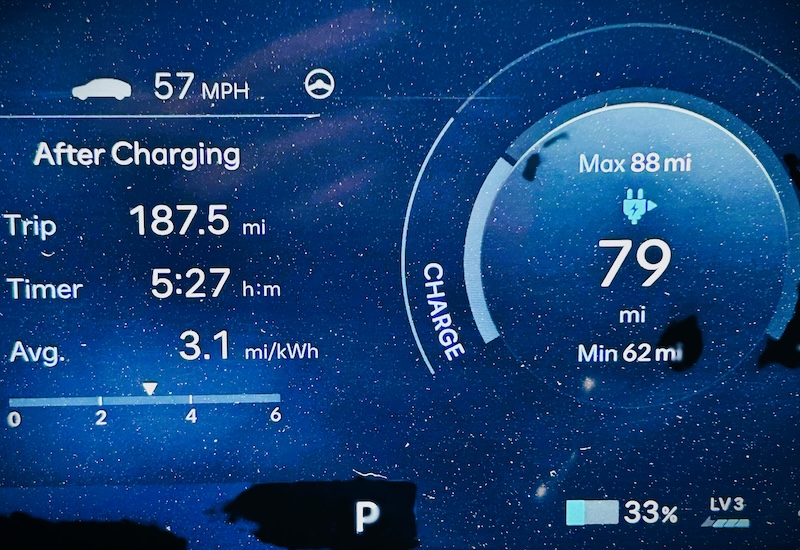
The mountain drive and brief road race cut into range, but only a little. When I arrived home, the car had 79 miles left in the battery, and we enjoyed 187.5 miles of fun. The rest of the week, I was able to add 25-30 miles a night plugged into a 120V outlet.

Bottom line
Edmunds sums up the XRT succinctly: “The rugged-ish Ioniq 5 XRT is pretty solid too.” This is not a Jeep Wrangler. It is not a Toyota 4Runner. It is an electric crossover that Hyundai has dressed in hiking boots and sent out to play in the dirt. MotorTrend calls it “proper fun in mild dirt” and “great as an everyday do-it-all crossover.”
The Ioniq 5 XRT does not ask you to be a weekend warrior to appreciate it. It asks you to be someone who occasionally looks at a dirt road and wonders where it goes. Plugging it in at night gave me more than 100 miles for the price of half a gallon of gas, but I did not give a dime to the bullies at the gas station. How about you? Did they get your lunch money again?